Wool Fabric Mills
Wool fabric mills weave and knit the oldest apparel fiber into suiting, coating, blankets and knitwear cloth - cloth that insulates, breathes, resists odor and tailors beautifully. This page explains woolen and worsted cloth and lists the mill and wool links in this directory.
Shop Wool Fabric Now
Shop Wool Fabric on Amazon Shop Wool Fabric on eBayThese links open the Apparel Search shopping guides for Amazon and eBay, where the product links are kept in one place.
Woolen and Worsted Cloth
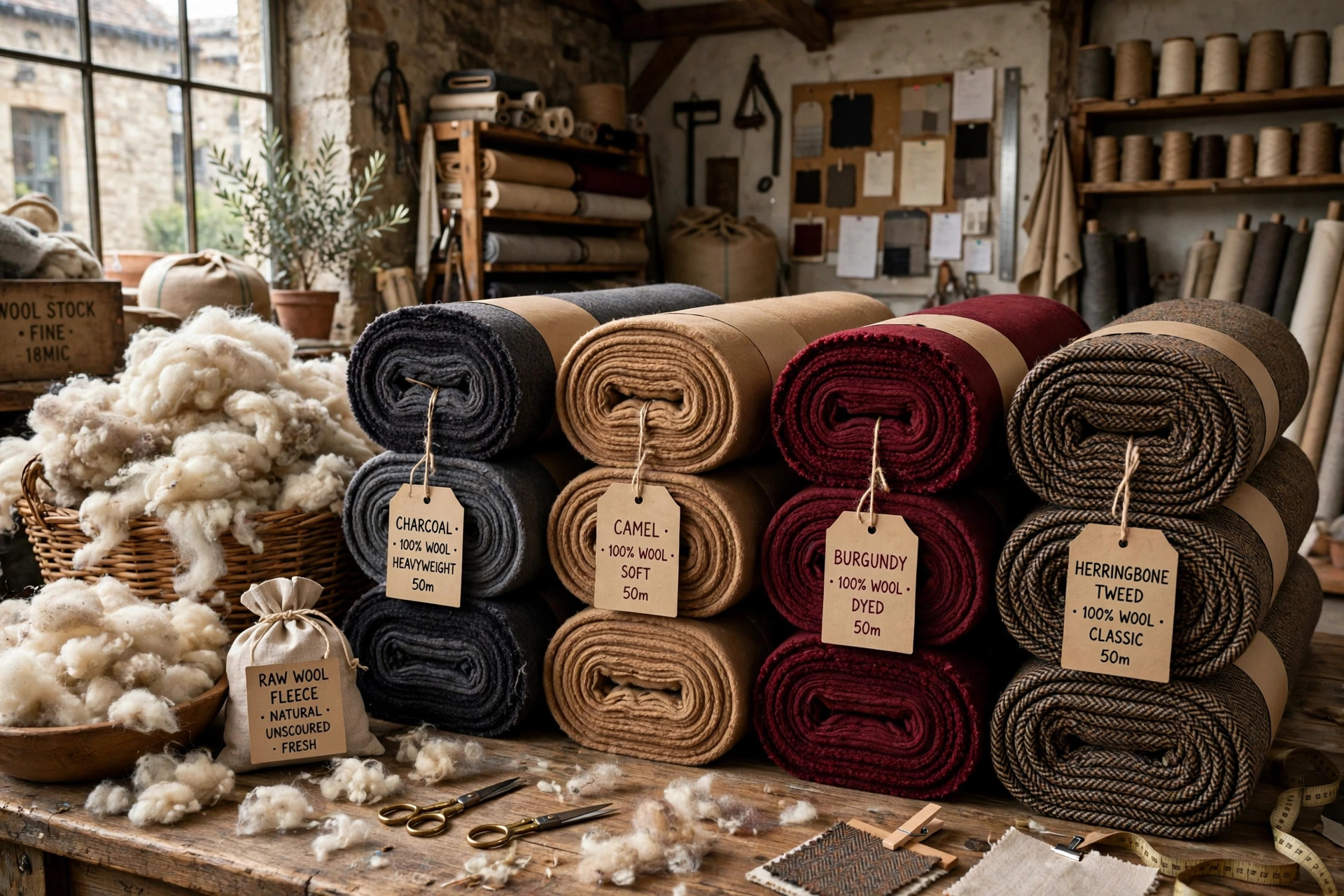
Wool mills divide their output into two great families. Worsted cloth is spun from long, combed, parallel fibers into smooth, tight yarns, then woven into the crisp, flat fabrics of tailoring - suitings, gabardines, serges and tropical dress cloth that hold a crease, resist wrinkling and show patterns like herringbone and pinstripe sharply. Woolen cloth is spun from shorter, carded, jumbled fibers into loftier yarns, then woven and often heavily finished into soft, fuzzy fabrics: flannels, tweeds, coatings, blankets and meltons whose surface hides the weave under a warm nap.
The fiber explains the cloth's reputation. Wool crimps naturally, trapping insulating air; it absorbs moisture vapor without feeling wet, releases warmth as it does so, resists odor through a wear, bends without breaking so garments recover from wrinkles, and is naturally flame resistant compared with most fibers. Grades run from coarse carpet wools to fine merino measured in microns - learn more about wool grades from the link in this page's links below.
Where Wool Fabric Is Used
Tailoring takes the finest worsteds: suits, trousers, skirts, blazers and uniforms where drape, crease recovery and a clean finish matter. Woolen cloth covers the colder half of the wardrobe and the home - overcoats, jackets, scarves, blankets, throws and upholstery - and traditional tweeds and tartans remain woolen cloth's public face. Knitted wool serves jersey for dresses and tops, sweater knits, and the felted and boiled wools used for hats, slippers and crafts, where the fibers are deliberately matted into a dense, cut-edge-proof fabric.
Blending is normal mill practice, not adulteration: wool with polyester gains abrasion resistance and easier care, with silk gains luster for evening cloth, with elastane gains the stretch modern trousers and jackets expect, and with cotton or linen gains summer weight. A buyer reads the blend as a specification, checking which properties the added fiber was meant to supply, and asks for the wool's micron count and origin alongside it, since two cloths both labeled wool-polyester can sit at opposite ends of the quality range.
Care and Handling
Wool's enemies are agitation with heat and water, which felt it, and clothes moths, which eat it. Most wool garments want gentle washing or dry cleaning, drying flat or on shaped hangers, and rest days between wears so the fibers recover their loft; storage should be clean, since moths target soiled wool first, and cedar or sealed storage protects off-season pieces. Pressing uses steam and a press cloth - wool tailors beautifully under steam, which is how lapels are rolled and trouser creases set - but a hot dry iron can shine and scorch the surface.
Mills finish wool cloth to improve exactly these points: shrink-resist treatments let machine-washable wool exist, mothproofing protects carpets and blankets, and modern easy-care finishes keep school and uniform cloth presentable through institutional laundering. When sourcing, ask which finishes are applied and whether they survive the care method the finished garment will carry on its label, because a finish and a care label that disagree produce returns neither the mill nor the maker can fairly settle afterward.
The Mill in This Directory
One listing follows: Shanghai Sanmao Textile Co., Ltd. of China, linked to its profile in the Fabric Mills by Name directory. Wool weaving is a worldwide trade centered historically in Britain, Italy, Japan, China, India, Australia and New Zealand; this directory profiles one wool mill here and covers wool more widely in the Wool Fiber Directory and Wool Fabric Search pages, both linked below.
A buyer sourcing wool cloth should specify woolen or worsted construction, micron count or grade, weight per square meter, weave and pattern, blend if any, width, and finishes, and should handle a production cutting under both daylight and store light - wool shades shift less than pile fabrics but suiting patterns must match exactly across a garment's panels. Confirm also whether the cloth is piece-dyed or yarn-dyed, since yarn-dyed patterns weave their design in and piece-dyed solids take color after weaving, with different minimums and lead times for each.
Fabric Mills and Factories in This Directory
Each name below opens the company's profile in the Fabric Mills by Name directory, and each listing gives the company's country.
Shanghai Sanmao Textile Co., Ltd.
Country: China.
Common Questions
What is the difference between woolen and worsted fabric?
Worsted cloth uses long, combed fibers spun into smooth yarns, giving crisp, flat tailoring fabrics. Woolen cloth uses shorter, carded fibers spun into lofty yarns, giving soft, fuzzy fabrics such as flannel, tweed and coating.
Why does wool fabric cost more than synthetics?
The fiber itself, careful sorting by grade and micron, combing or carding, spinning, weaving and finishing all add cost - and the cloth repays it in drape, crease recovery, insulation, odor resistance and years of wear.
Which mill does this directory list for wool fabric?
One: Shanghai Sanmao Textile Co., Ltd. (China). This page also links to the Wool Fiber Directory, the Wool Fabric Search and the wool grades page.
More to Explore
- Antibacterial Fabric
- Bamboo
- Basalt
- Boucle
- Breathable
- Broadcloth
- Brocade
- Burlettes
- Canvas
- Carbon
- Chambray
- Chenille
- Chiffon
- Circular
- Clothing Industry Employment
- Clothing Industry Factories
- Conversion Charts
- Corduroy
- Cotton
- Crepe
- Crochet
- Damask
- Denim
- Dobby
- Double Knit
- Drill
- Duck
- Dyed Fabric
- Embroidered
- Embroidery Directory
- Fabric Definitions
- Fabric Directory
- Fabric Retail
- Fabric Wholesalers
- Fashion Industry News
- Fiberglass
- Fibers Directory
- Fil-a-Fils
- Filter Cloth
- Flame Retardant
- Fleece
- French Terry
- Gabardine
- Gauze
- Georgettes
- Ginghams
- Greige Fabric
- Herringbone
- Horse Hair
- Interlining
- Interlock
- Jacquard
- Jersey Fabric
- Lace
- Lacoste
- Linen
- Lining
- Long Fiber Reinforced Thermalplastics
- Mesh
- Metallic
- Muslin
- Narrow
- Net
- Non Woven Fabric
- Novelty
- Nylon
- Ottoman
- Oxford
- Percale
- Pile
- Pique
- Pointelle
- Polar Fleece
- Polyester
- Poplin
- Printed
- Printing Directory
- Quilted
- Raschel
- Reflective
- Rib
- Sateen
- Satin
- Seersucker
- Shanghai Sanmao Textile Co., Ltd.
- Silk Fabric
- Single Jersey
- Smart Fabrics
- Stretch
- Suede
- Taffeta
- Tassars
- Terry
- Textile Machinery
- Thermal
- Tricot
- Tulle
- Tweed
- Twill
- Velcro
- Velour
- Velvet
- Viole
- Vynil
- Waffle
- Waterproof
- Waterproof Systems for Fabric
- Wool Fabric Search
- Wool Fiber Directory
- wool grades
- Yarn Dyed
- Yarn Factories
Looking for Fabric Mills and Suppliers?
The wider directory behind this page is the Fabric section hub, which opens the whole Apparel Search fabric mill directory: fabric types from A to Z, the Fabric Mills by Name profiles, and the dyeing, printing and finishing directories that support them.