Waterproof Systems for Fabric
Waterproof systems are the materials and treatments that make a fabric resist penetration by water - applied at the factory or to finished clothing afterward. This page gives the definition of a waterproof fabric and explains each system it names.
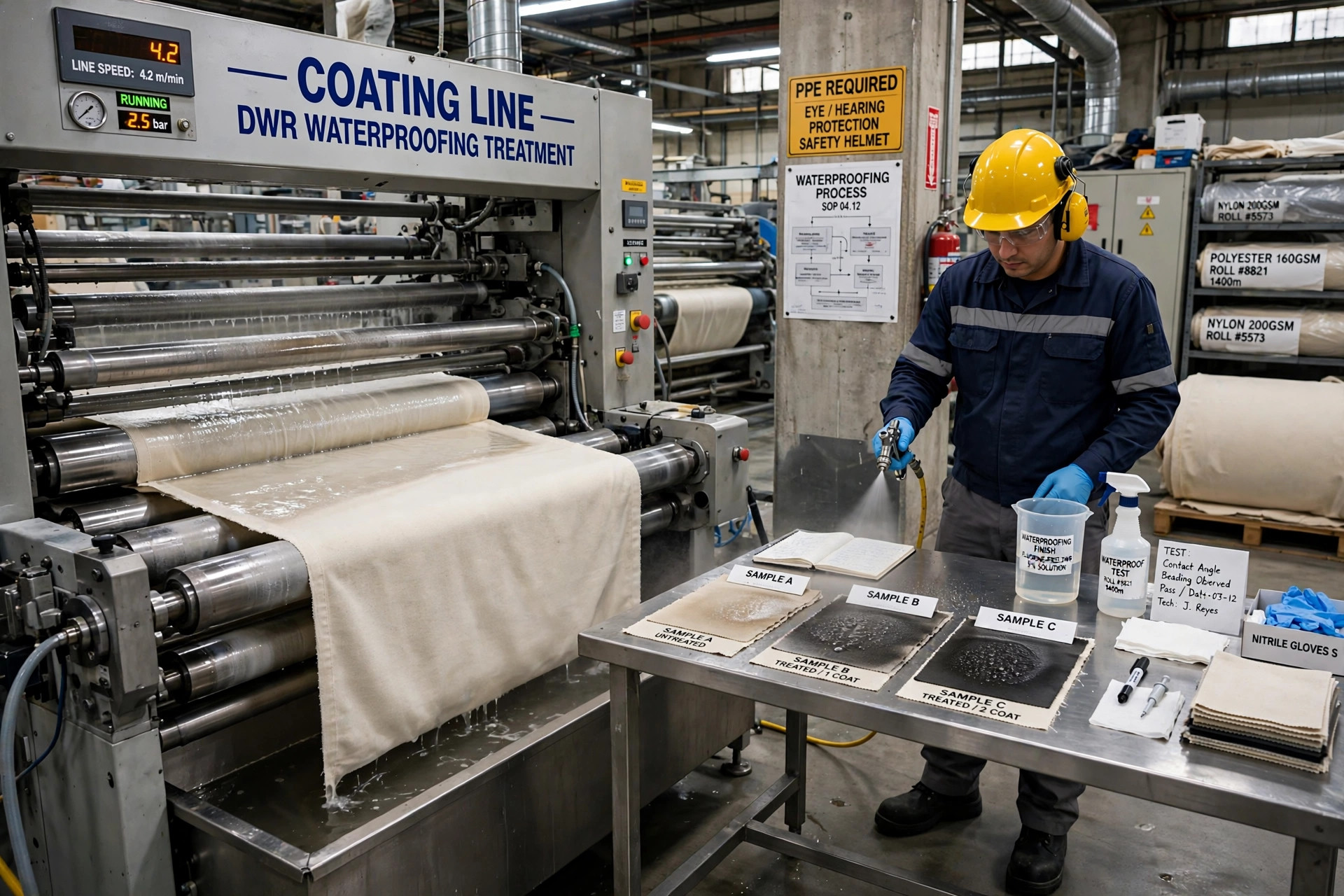
The Definition
A waterproof fabric is defined as follows: "Waterproof fabrics are fabrics that are inherently, or have been treated to become, resistant to penetration by water and wetting. They are usually natural or synthetic fabrics that are laminated to or coated with a waterproofing material such as rubber, polyvinyl chloride, polyurethane, silicone elastomer, fluoropolymers, and wax. Treatment could be either of the fabric during manufacture or of completed products after manufacture, for instance by a waterproofing spray."
Every element of that short paragraph maps to a real branch of the finishing trade. Inherently resistant fabrics - tightly woven synthetics, silicone-impregnated nylons - start from the fiber and weave. Treated fabrics take their performance from what is added. And the closing sentence divides the whole field in two: factory systems applied to cloth by the roll, and after-treatments applied to finished garments and gear by makers, retailers and owners, which is where the sprays, washes and re-proofing products named in the references below belong.
Coating and Laminating Materials
Rubber was the first waterproof coating, sandwiched between cloth layers in the raincoats of the nineteenth century, and rubberized cotton still serves for traditional outerwear and industrial cloth. Polyvinyl chloride - PVC - coats heavily and cheaply, welds into waterproof seams, and dominates tarpaulins, rain suits and protective clothing where weight matters less than absolute barrier and price. Polyurethane coats lighter and softer, is the standard coating on rainwear and tent nylon, and in microporous forms adds a measure of breathability the older materials cannot offer.
Silicone elastomer impregnates or coats nylon for very light, strong, ultraviolet-resistant fabrics used in tents and sails, and cannot be seam-taped, so silicone fabrics are sewn and sealed differently. Fluoropolymers appear both as the famous expanded membranes laminated inside performance shells and as durable water repellent finishes that make face fabrics shed water. Wax, the oldest treatment of all, is rubbed or melted into cotton for the classic waxed jacket: not waterproof under pressure, but durably showerproof, renewable by re-waxing, and still chosen for its look and longevity.
Factory Treatment and After-Treatment
Factory systems are engineered into the cloth: coating weight, membrane type, repellent finish and seam compatibility are set before the fabric ships, tested by the mill, and quoted with hydrostatic head and breathability figures a garment maker can design against. The companion page in this section, Waterproof Fabric Mills, lists the factories that do that work, and the links below include the Waterproofing Textiles glossary entry, under the anchor "waterproofing fabrics & clothing".
After-treatment is the maintenance half of the system. Water repellency fades as dirt, abrasion and washing strip the finish; wash-in and spray-on re-proofers renew it on finished jackets, footwear and gear, and specialist cleaners remove the residues that block breathability. One such treatment maker is Nikwax, at the address given in References below. Re-proofing restores surface beading and comfort; it cannot repair a delaminated membrane or a cracked coating, which is why honest product guidance separates refreshing a finish from restoring a failed barrier.
Choosing a System
The right system follows the product. A fashion raincoat wants a soft polyurethane laminate and taped seams; a fishing bib wants PVC that hoses clean; a backpacking tent wants silicone or polyurethane coated nylon at the lowest weight; a heritage jacket wants wax and the willingness to maintain it. Cost, hand feel, seam method, breathability, ultraviolet exposure and end-of-life repair all change with the choice, and a system specified for one use will usually disappoint in another even when its waterproof rating looks similar on paper.
This page is the explanation page for the section and carries no mill listings of its own: waterproofing systems are specified and bought as industrial treatments and specialist care products, not as yardage. Readers sourcing fabric should continue to the Waterproof Fabric Mills page linked below, and readers maintaining finished clothing should follow the glossary and reference links below.
Common Questions
What is a waterproof fabric?
Fabrics that are inherently, or have been treated to become, resistant to penetration by water and wetting - usually natural or synthetic fabrics laminated to or coated with a waterproofing material such as rubber, polyvinyl chloride, polyurethane, silicone elastomer, fluoropolymers, and wax.
Can waterproofing be added after a garment is made?
Yes. Waterproofing can be applied to completed products after manufacture, for instance by a waterproofing spray. Wash-in and spray-on re-proofers renew surface repellency on finished clothing and gear, though they cannot repair a failed membrane or coating.
What is the difference between coating and laminating?
A coating is spread directly onto the fabric as a liquid layer that sets in place. A laminate bonds a pre-made waterproof film or membrane to the fabric. Both create the barrier; they differ in feel, weight, breathability options and the seam methods they allow.
More to Explore
- Antibacterial Fabric
- Bamboo
- Basalt
- Boucle
- Breathable
- Broadcloth
- Brocade
- Burlettes
- Canvas
- Carbon
- Chambray
- Chenille
- Chiffon
- Circular
- Clothing Industry Employment
- Clothing Industry Factories
- Conversion Charts
- Corduroy
- Cotton
- Crepe
- Crochet
- Damask
- Denim
- Dobby
- Double Knit
- Drill
- Duck
- Dyed Fabric
- Embroidered
- Embroidery Directory
- Fabric
- Fabric Definitions
- Fabric Directory
- Fabric Retail
- Fabric Wholesalers
- Fashion Industry News
- Fiberglass
- Fibers Directory
- Fil-a-Fils
- Filter Cloth
- Flame Retardant
- Fleece
- French Terry
- Gabardine
- Gauze
- Georgettes
- Ginghams
- Greige Fabric
- Herringbone
- Horse Hair
- Interlining
- Interlock
- Jacquard
- Jersey Fabric
- Lace
- Lacoste
- Linen
- Lining
- Long Fiber Reinforced Thermalplastics
- Mesh
- Metallic
- Muslin
- Narrow
- Net
- Non Woven Fabric
- Novelty
- Nylon
- Ottoman
- Oxford
- Percale
- Pile
- Pique
- Pointelle
- Polar Fleece
- Polyester
- Poplin
- Printed
- Printing Directory
- Quilted
- Raschel
- Reflective
- Rib
- Sateen
- Satin
- Seersucker
- Silk Fabric
- Single Jersey
- Smart Fabrics
- Stretch
- Suede
- Taffeta
- Tassars
- Terry
- Textile Machinery
- Textiles
- Thermal
- Tricot
- Tulle
- Tweed
- Twill
- Velcro
- Velour
- Velvet
- Viole
- Vynil
- Waffle
- Waterproof Fabric
- waterproofing fabrics & clothing
- Wool
- Yarn Dyed
- Yarn Factories
References & Further Reading
Looking for Fabric Mills and Suppliers?
The wider directory behind this page is the Fabric section hub, which opens the whole Apparel Search fabric mill directory: fabric types from A to Z, the Fabric Mills by Name profiles, and the dyeing, printing and finishing directories that support them.