Narrow Fabric Mills Directory
Narrow fabrics are the textile industry's supporting cast: webbing, elastics, tapes, ribbons, braids and cords woven or knitted in widths from a few millimetres to about a hand's breadth. This directory explains how they are made and where they work, and carries the mill this section lists under narrow fabric factories, LaGran Canada Inc. of Canada.
Shop Narrow Fabrics & Elastic Now
Shop Narrow Fabrics & Elastic on Amazon Shop Narrow Fabrics & Elastic on eBayThe Amazon and eBay links on this page are affiliate links. If you make a purchase through them, Apparel Search may earn a commission.
What Counts as a Narrow Fabric
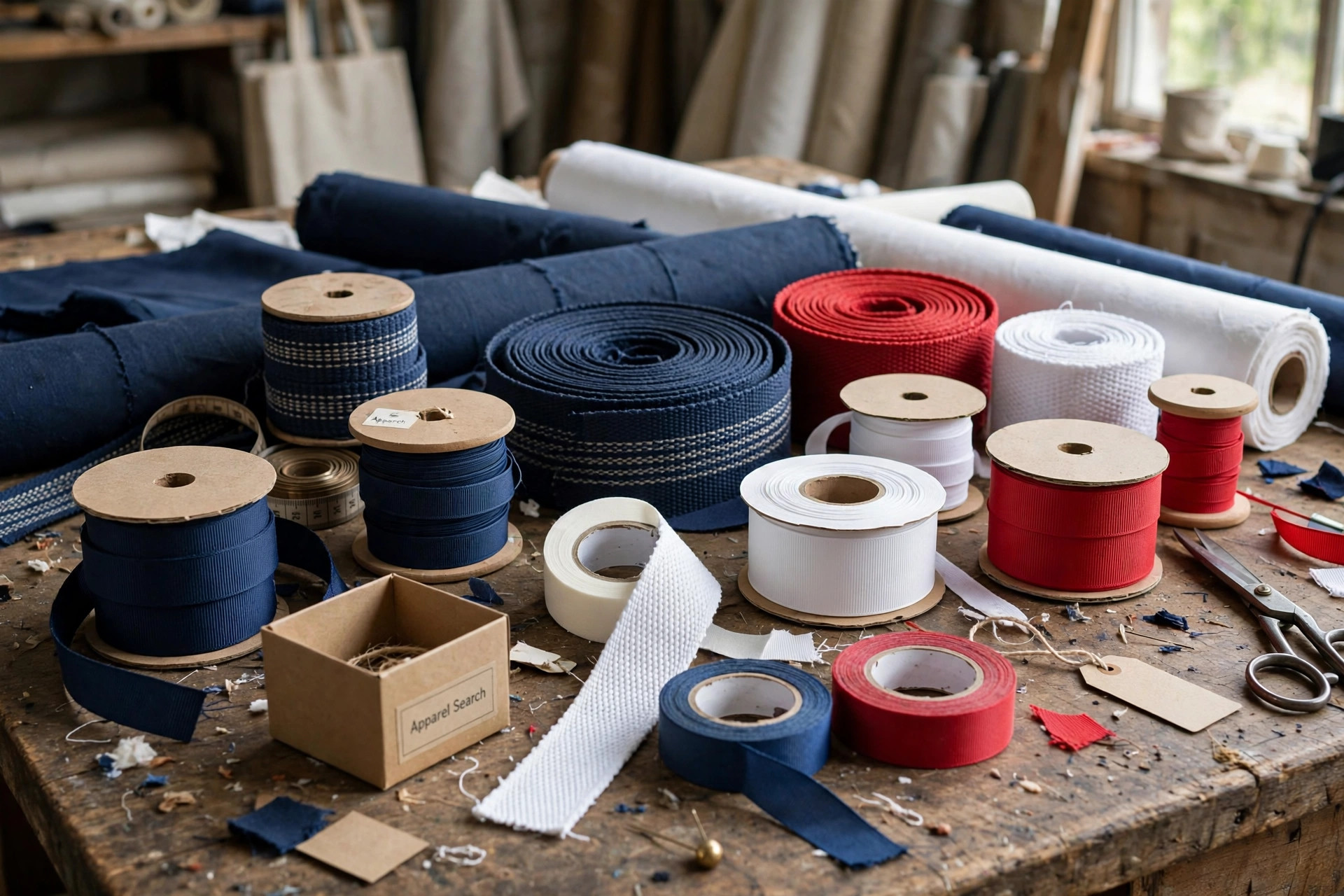
A narrow fabric is defined by its width and its finished edges. Unlike broadcloth, which is woven wide and cut, a narrow fabric comes off the loom or knitting machine at its final width — commonly anything up to 300 millimetres, and usually far less — with woven selvedges on both sides so it never needs hemming or binding. Webbing straps, elastic waistbands, grosgrain and satin ribbons, bias and twill tapes, braided cords, hook-and-loop fastening tapes and the straps inside a bra are all narrow fabrics, and most garments carry at least one of them even when the wearer never notices it.
The classic narrow loom is a shuttleless needle loom that weaves several tapes side by side across its width, each with its own warp of yarns; braiding machines interlace yarns diagonally into cords and laces, and warp knitting produces elastic and lace edgings. Fibres follow the job: cotton for soft tapes and bindings, polyester for strong, UV-resistant webbing, nylon where abrasion resistance matters, polypropylene for cheap, light strap webbing, and rubber or elastane cores wherever the fabric itself must stretch and recover.
Where Narrow Fabrics Work
Inside clothing, narrow fabrics do the quiet engineering: waistband and bra elastics, drawcords, shoulder straps, placket tapes, seam bindings, zip tapes and the stay tapes that keep knitted necklines from stretching out of shape. Outside clothing they carry loads and lives — seat belts, cargo and tie-down straps, pet leads, bag and luggage webbing, parachute harness, medical strapping and military webbing are all narrow fabrics specified to breaking strength rather than to fashion. Decorative narrow fabrics run the other way: ribbons, braids, fringes and lace edgings exist purely to be seen, and the trimming trade buys them by the card and the roll.
This directory lists one company under narrow fabric factories: LaGran Canada Inc. of Canada, carried below with a link to its Fabric Mills by Name profile. Readers working through the wider trims picture should also see the More Narrow Fabrics page, which covers the subject beyond the mill listings. A single mill listing is normal in a speciality like this — narrow weaving is concentrated work, and many broadcloth mills buy their tapes and elastics from specialists instead of weaving them. Thank you for using the Apparel Search Fabric Mill Directory.
Specifying and Buying Narrow Fabrics
A useful narrow-fabric specification names the width, the fibre, the construction (woven, braided or knitted), the thickness or weight, and — for load-bearing webbing — the tested breaking strength, or for elastic, the stretch percentage and recovery the garment needs. Check samples the way the end product will be used: webbing should not fray at a cut end or curl off the roll, elastic should return evenly after repeated stretching without waviness, and dyed tapes should be checked against the garment fabric under shop light, because a near-black tape against a true-black cloth is a classic production argument. Widths are quoted in millimetres by most mills even where buyers still think in eighths of an inch, so confirm the unit before the order is written.
Elastic deserves one extra test of its own: stretch a measured length to the extension the garment will demand, hold it, release it, and measure again after a rest. Good elastic returns close to its starting length and keeps doing so after washing; tired elastic grows, and a waistband that grows in the wash is a return waiting to happen, however sound the fabric looked on the roll.
Narrow Fabric Mills Listed Here
LaGran Canada Inc. (Canada)
Listed in this directory. Follow the company name to its Fabric Mills by Name profile, which carries its full directory record.
Common Questions
What is a narrow fabric?
Any textile produced at its finished width — usually up to about 300 mm — with woven edges on both sides: webbing, elastic, tapes, ribbons, braids and cords. Because the edges are formed on the loom, narrow fabrics need no hemming and are sold by length rather than cut from broad cloth.
What is webbing used for?
Straps and load-bearing bands: bag and luggage straps, pet leads, cargo tie-downs, seat belts, harness and outdoor gear. Inside clothing, related narrow fabrics serve as waistband elastic, drawcords, zip tapes and seam bindings.
Which mill does this directory list for narrow fabrics?
LaGran Canada Inc. of Canada, linked to its Fabric Mills by Name profile on this site, where its directory record is carried.
More to Explore - The Full Fabric Directory A-Z
- Net Textiles
- Nonwovens
- Novelty Fabric
- Nylon Fabric Mills
- Mesh Fabric Mills
- Tulle Fabric
- Raschel Fabric
- Polyester Fabric Mills
- Fabric Mills - Fabric Section Hub
- Textile Machinery
- Embroidery Directory
- Printing Directory
- LaGran Canada Inc.
- More Narrow Fabrics
- Clothing Industry Factories
- Yarn Factories
- Fabric Retail
- Fabric Wholesalers
- Fibers Directory
- Fabric Definitions
- Fashion Industry News
- Clothing Industry Employment
- Conversion Charts
- Textiles
- Fabric
Looking for Fabric Mills and Suppliers?
Return to the Fabric Directory hub for the full fabric section, or browse the Fabric Manufacturers Directory page for the wider mill trade.