Polyester Fabric Mills Directory
Polyester fabric mills are factories that produce polyester fabrics from a variety of raw materials, turning polymer into the strong, lightweight cloth that resists shrinking, wrinkles and fading across apparel and home furnishings. This directory explains how polyester cloth is made and finished, and carries the manufacturers this section lists, from vertically integrated groups in Taiwan, Thailand and Korea to specialists in Turkey, Italy, the USA, China and the United Kingdom, with their original directory descriptions kept with each name.
Shop Polyester Fabric Now
Shop Polyester Fabric on Amazon Shop Polyester Fabric on eBayThe Amazon and eBay links on this page are affiliate links. If you make a purchase through them, Apparel Search may earn a commission.
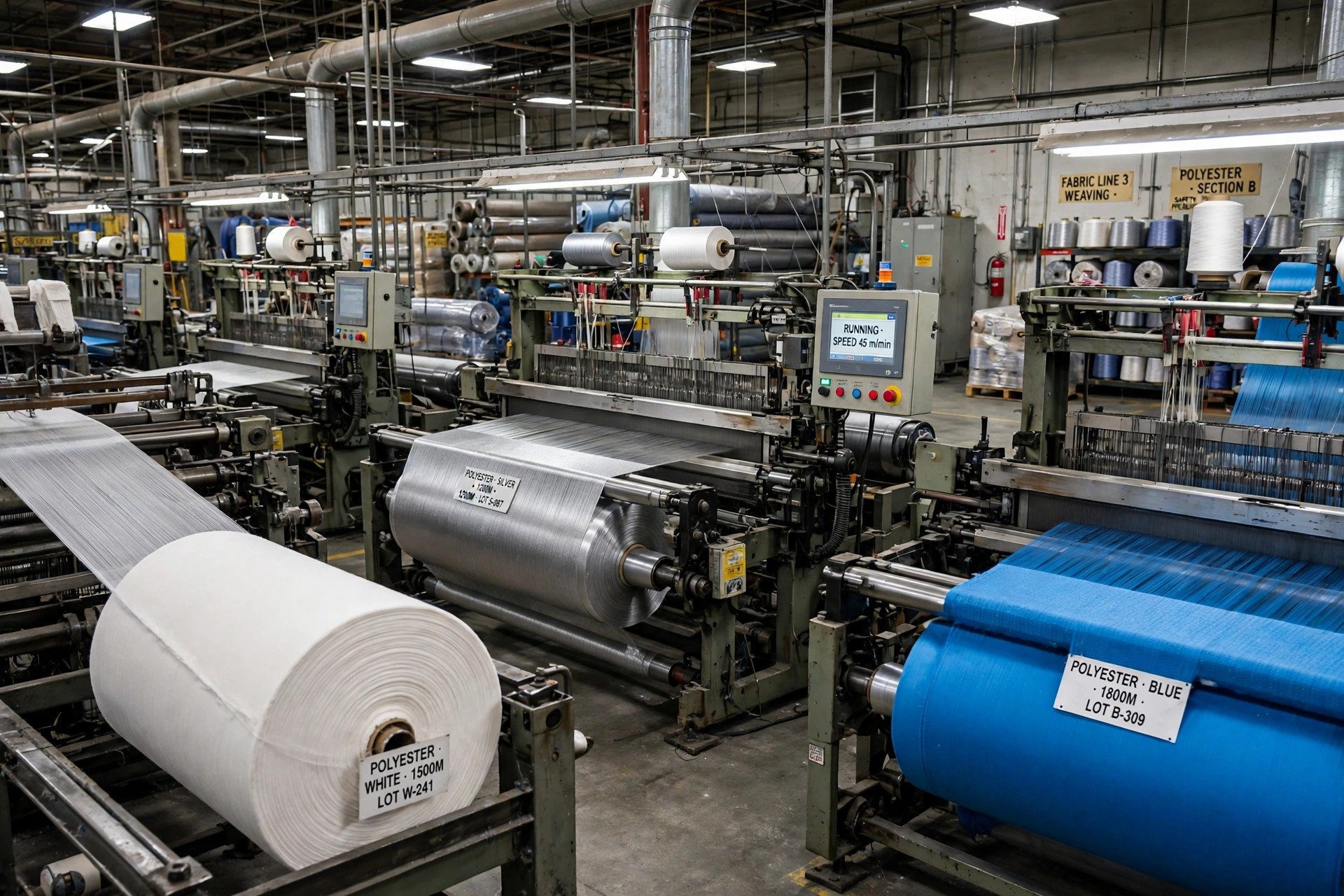
How Polyester Fabric Is Made
Polyester fabric mills first use raw materials such as polyethylene terephthalate and other polymers to create polymer resin, which is then melted and extruded into fibers. The fibers are then spun into yarn and woven or knitted into fabrics. Finishing processes such as dyeing, printing and coating may be used to give the fabric desired colors, textures and finishes. Polyester fabric mills may also be involved in the production of finished products such as clothing and bedding. That chain, polymer to chip to filament to yarn to cloth, is why the polyester trade is dominated by integrated groups that control several stages, and why the listings below so often describe a company as vertically integrated.
The fibre's character explains its market. Polyester is a synthetic fiber that is strong, lightweight, and resistant to shrinking, wrinkles, and fading. It takes disperse dyes to bright, wash-fast colours, holds pleats and texture set by heat, dries quickly because it absorbs little water, and blends readily with cotton, wool and elastane to lend them its easy care. Its weaknesses are the mirror of its strengths: it can feel clammy next to skin in flat constructions, it holds odour more than natural fibres, and it melts rather than chars near flame, all of which mill finishing, textured yarns, microfibres, wicking profiles and blended constructions, works to offset for apparel use.
Where Polyester Fabric Is Used
Apparel takes polyester everywhere durability and easy care lead: sportswear and performance outerwear, uniforms and workwear, dresses and blouses in filament crepes and satins, linings, and the polyester face of fleece and softshell systems described elsewhere in this fabric section. Home furnishings take it for curtains, upholstery, bedding and outdoor cushions that must shrug off sun and washing, and industry takes it for luggage, tents, awnings, umbrellas and coated fabrics, the applications several listings below name as their speciality. Read the listings as a map of that breadth: dobby and plain weavers for outerwear in Taiwan, water-jet loom houses for taffeta and taslan in Thailand, coated-fabric makers in China and Korea, and long-established filament weavers in Italy.
The listings below keep the descriptions the original directory published with each manufacturer, from Acotex and Asia Fiber to Everest Textile and Seong An, whose Startex and Sofsil brands the original entry describes in detail, including its yarn, weaving and dyeing facilities in series and its history since 1953. Two further names, Nuwa Textiles and Rainbow Jersey of the United Kingdom, link to their Fabric Mills by Name profiles in this directory. None has been removed: no listing was verified dead, and this directory's standing rule is to keep a listing when in doubt. Thank you for using the Apparel Search Fabric Mill Directory, and learn more about the benefits of polyester fabric for clothing elsewhere on Apparel Search.
Specifying Polyester Fabric
Specify polyester by construction first, woven or knitted, filament or spun, textured or flat, then by denier, weight, and finish, because the name covers everything from a silk-like charmeuse to a luggage oxford. For apparel, handle matters most: microfibre and textured-yarn polyester reads far softer than flat filament, and a wicking or brushed finish changes next-to-skin behaviour entirely, so judge a washed, worn sample rather than a loom-state swatch. Confirm heat-setting and dyeing quality on deep shades, check pill resistance on spun polyester, and for coated cloth confirm the coating system and its bond strength, since a coating that delaminates ends the fabric's life regardless of the base cloth.
Care is polyester's selling point and mostly takes care of itself: it washes warm, dries fast, resists wrinkles and keeps its colour through repeated laundering. Keep it from excessive iron heat, which glazes and can melt filament, wash dark colours inside out, and treat oily stains promptly since polyester attracts oil and holds it through a casual wash. In blends, follow the more delicate partner fibre on the label. For the trade buyer, the real care question is upstream: a mill that dyes, prints and coats in-house, as many listings below do, controls colour and finish consistency across repeat orders in a way a converter chain cannot always match.
Polyester Fabric Manufacturers Listed Here
Acotex Co., Ltd (Taiwan)
Development and manufacture of dobby and plain woven and knitted, dyed, printed and finished fabrics for performance outerwear and sportswear, from polyester and polyamide. Detailed fabric catalogs, including technical information.
Asia Fiber Public Co., Ltd (Thailand)
Vertically integrated textile manufacturing company. Water-jet loom taffeta, oxford, twill, satin and taslan woven, yarn and solid dyed, finished, and water and down proof fabrics for outerwear, tent and sleeping bag applications, from polyamide. Also, polyamide chips, fully drawn, partially oriented and fully oriented yarns, dyed textured polyamide filament yarns, and polyester and polyamide blended fabrics.
Avci Tekstil, Ltd (Turkey)
Vertically integrated textile manufacturing company. Pile woven fabrics and faux furs for furnishing, paint rollers, polishing and cleaning, and toy applications, from wool, and acrylic, polyester and polyamide regular and microfiber.
Baixing Group (China)
Diversified group of companies, active in textiles, plastic films and biotechnology. Manufacturers of water-jet loom woven, PVC coated polyester and polyamide fabrics for outerwear, tents and awnings, luggage and bags, and umbrellas.
Batra Group (Taiwan)
Diversified multi-national group of manufacturing companies, active in textiles and neoprene rubber products. Woven and knitted fabrics for apparel, outdoor and home textile applications, from viscose, acrylic, polyester, spandex and blends.
Bokwang Textile Co., Ltd (Korea)
Manufacturers of coated and plain, woven fabrics for apparel, luggage, sports and casual wear, and tents, from polyamide, polyester and blends.
Brookwood Companies, Inc (USA)
Versatile group of textile manufacturers and service providers. Design and manufacture of polyamide and polyester fabrics for back packs and high-performance apparel. Also, dyeing, coating, laminating and converting services.
Buan Textile AS (Turkey)
Manufacturers of high-pile woven and knitted fabrics for paint rollers, garments, home textiles, toy manufacturing and artificial fur applications, from cotton, wool, acrylic, modacrylic and polyester.
Cheang Fang Textile Co., Ltd (Taiwan)
Manufacturers of dobby and plain, rapier, and water- and air-jet loom woven, yarn and solid dyed, rigid and stretch fabrics for apparel, sports wear and outerwear, from polyester, polyamide and spandex. Also, commercial laminating services. Part of the Nam Liong Group.
Chia Hui Industrial Co., Ltd (Taiwan)
Manufacturers of twill, satin, oxford and suede fabrics for apparel, furnishing, footwear and outdoor products applications, from polyester, polyamide and blends. Specialty and high-performance finishes.
Delong Drapery Co., Ltd (China)
Design and manufacture of jacquard and plain woven and knitted, printed and yarn dyed, regular and stretch fabrics for apparel and furnishing, from polyester, spandex and blends.
Dong Jae Corp (Korea)
Manufacturers of woven and knitted fabrics for apparel and furnishing, from polyester, polyamide, spandex and blends.
E. Boselli & C SpA (Italy)
Vertically integrated textile manufacturing company. Plain and jacquard woven, yarn and piece dyed, printed and finished fabrics for apparel and fashion applications, from polyester filament yarns.
Everest Textile (Taiwan)
Manufacturers of woven fabrics for apparel, upholstery and furnishing, and footwear and clothing accessories, from polyester.
Seong An co., Ltd (Startex and Sofsil) (Korea)
One of the leading textile manufacturers and exporters in Korea, specialised in various types of polyester and blended woven fabrics and knitted fabrics, particularly stretch fabrics. As the original directory entry records, Seong An has made fabrics since 1953 under the Startex and Sofsil brands, with a sister yarn factory (Seong An Synthetics, since 1999), weaving mills and dyeing mills giving it yarn making, weaving, dyeing and packing in series, under a strict inspection system at each process.
Nuwa Textiles
Listed in this directory. Follow the company name to its Fabric Mills by Name profile, which carries its full directory record.
Rainbow Jersey (United Kingdom)
Listed in this directory. Follow the company name to its Fabric Mills by Name profile, which carries its full directory record.
Common Questions
How is polyester fabric made?
Mills create polymer resin from raw materials such as polyethylene terephthalate, melt it and extrude it into fibers, then spin the fibers into yarn and weave or knit them into fabric. Finishing processes such as dyeing, printing and coating give the cloth its colours, textures and finishes, and some mills also produce finished clothing and bedding.
What are the advantages of polyester fabric?
Polyester is strong, lightweight, and resistant to shrinking, wrinkles and fading. It dries quickly, holds heat-set pleats and textures, takes bright wash-fast colours, and blends well with cotton, wool and elastane. Its trade-offs are a clammy feel in flat constructions next to skin and melting rather than charring near flame.
Which manufacturers does this directory list for polyester fabric?
Seventeen listings, with their original directory descriptions: Acotex, Asia Fiber, Avci Tekstil, Baixing Group, Batra Group, Bokwang Textile, Brookwood Companies, Buan Textile, Cheang Fang, Chia Hui, Delong Drapery, Dong Jae Corp, E. Boselli, Everest Textile and Seong An (Startex and Sofsil), plus Nuwa Textiles and Rainbow Jersey linked to their Fabric Mills by Name profiles.
More to Explore - The Full Fabric Directory A-Z
- Percale Fabric
- Pile Fabric
- Pique Fabric
- Pointelle Fabric
- Polar Fleece Fabric
- Poplin Fabric
- Printed Fabric
- Ottoman Fabric Mills
- Oxford Fabric Mills
- Nylon Fabric Mills
- Quilted Fabric
- Fabric Mills - Fabric Section Hub
- Polyester Fiber
- Polyester Search
- Fabric Manufacturers
- Textile Machinery
- Embroidery Directory
- Printing Directory
- Textile Industry Directory
- benefits of polyester fabric for clothing
- N�wa Textiles
- Rainbow Jersey
- Clothing Industry Factories
- Yarn Factories
- Fabric Retail
- Fabric Wholesalers
- Fibers Directory
- Fabric Definitions
- Fashion Industry News
- Clothing Industry Employment
- Conversion Charts
- Acotex Co., Ltd
- Asia Fiber Public Co., Ltd
- Avcı Tekstil, Ltd
- Baixing Group
- Batra Group
- Bokwang Textile Co., Ltd
- Brookwood Companies, Inc
- Buan Textile AS
- Cheang Fang Textile Co., Ltd
- Chia Hui Industrial Co., Ltd
- Delong Drapery Co., Ltd
- Dong Jae Corp
- E. Boselli & C SpA
- Everest Textile
- Seong An co., Ltd
Looking for Fabric Mills and Suppliers?
Return to the Fabric Directory hub for the full fabric section, or browse the Fabric Manufacturers Directory page for the wider mill trade.