Polyester Prices Guide
This hub gathers the Apparel Search polyester pricing guides in one place, organized by stage of production, so you can go straight to the price that matches the material you actually buy.
Start With the Stage You Buy
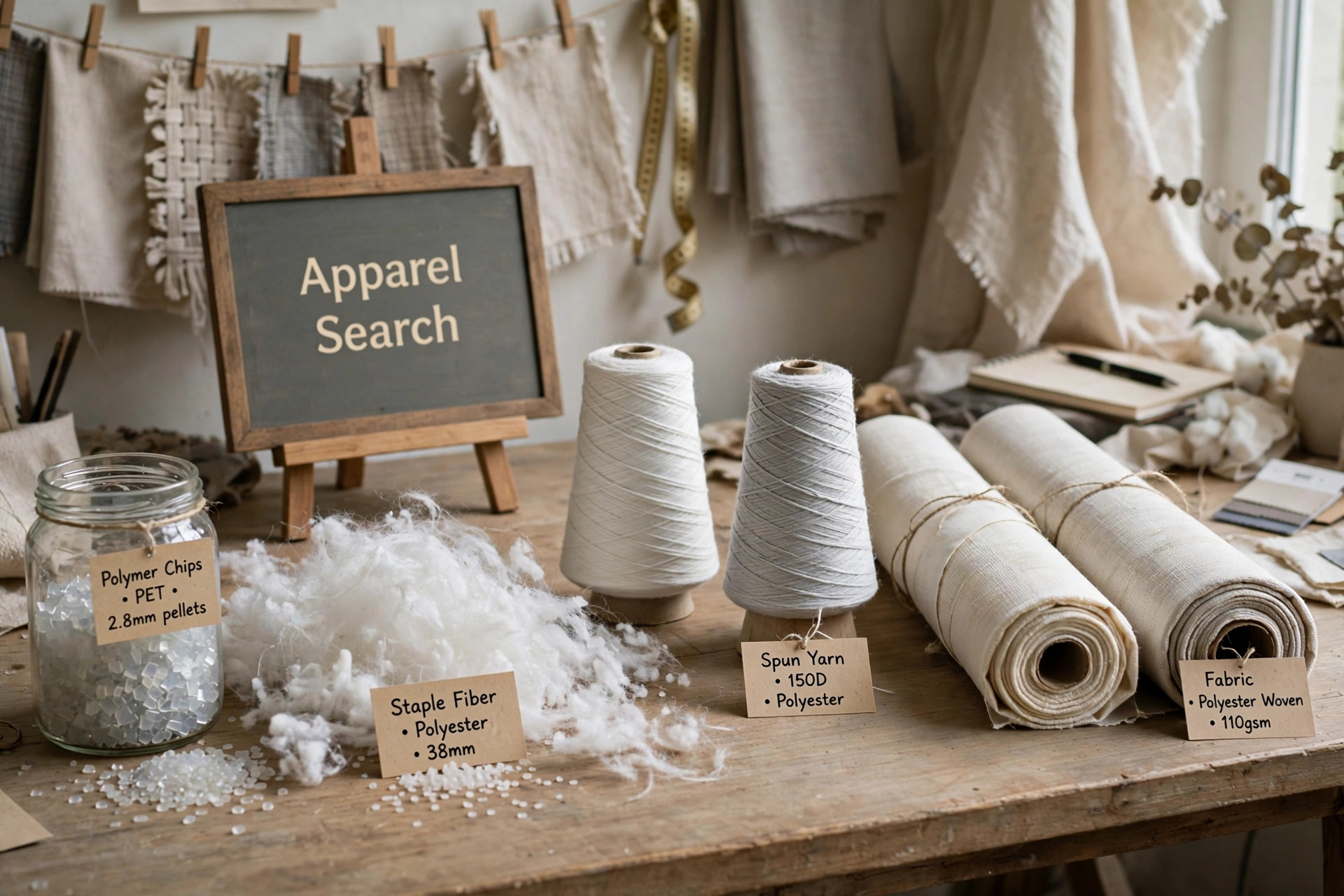
Polyester pricing only makes sense stage by stage. The polymer itself trades as resin and chips. Spinners buy staple fiber and filament feedstock. Weavers, knitters and garment makers buy yarn and finished fabric. This hub exists because those are different markets with different price sources, and the original Polyester Prices website was built on exactly that structure, with a dedicated guide for resin prices, fiber prices, yarn prices and fabric prices, plus background pages on chips and on polyester itself.
If you are new to the material, begin with the background before the numbers. The About Polyester Fibers guide explains the fiber forms, and the polyester defined page in this section explains what polyester is and how the main types differ. Pricing services assume that vocabulary throughout: a staple fiber assessment or a DTY yarn report is unreadable until staple, filament, denier and texturing are familiar terms rather than abbreviations.
The Pricing Guides in This Section
The general polyester prices page maps the whole chain and introduces the external pricing services, from chemical reporters to regional textile specialists, that the trade uses at each stage. The resin prices page separates PET polymer from unsaturated composite resin, two markets that share a name and confuse many first searches. The fiber prices page covers staple fiber and filament feedstock, the grades spinners cost from, and why those quotes move with petroleum feedstocks and regional capacity.
The yarn prices page follows filament and spun yarns into the forms mills buy, including the POY, FDY and DTY distinctions that decide a yarn quote. The fabric prices page explains why finished cloth has no benchmark price at all and how mill quotations are built and compared. The chips page covers the solid polymer form in which polyester travels between plants. Read together, the six pages give a buyer at any stage a price source, a vocabulary and a method, which is more durable help than any single quoted figure could be.
News, Background and the Wider Fiber World
Prices do not move in a vacuum, and the original hub paired its pricing pages with reading that explains the moves. Polyester news articles, gathered in the Apparel Search polyester news directory, report capacity changes, feedstock developments and trade issues that later show up in quotations. Checking the news behind a sudden price change separates a one-week disruption from a structural shift, and the two deserve very different buying responses.
Polyester also sits inside a family of fibers whose prices interact. Cotton, wool, nylon and viscose all compete with polyester in blends and fabric choices, and a move in one market redirects demand into the others. The textile fibers overview on Apparel Search places polyester among those alternatives. Buyers who understand the substitution game read a polyester price rise not just as a cost problem but as a signal to recheck blend ratios and alternative cloths while the season can still absorb the change.
How to Use This Hub
Enter at your stage, and stay disciplined about basis. Note the grade, region, delivery terms and date attached to every figure you collect, compare each service against its own past rather than mixing methodologies, and keep your invoice prices logged beside the published ones. That routine, repeated weekly, builds the only polyester price knowledge that is truly yours: how the published markets relate to what your business actually pays, and how long changes take to travel from resin to fabric.
If you know a pricing resource this section should carry, the invitation from the original site still stands: suggestions for additional polyester pricing resources are welcome, because a guide like this stays useful only while its sources are alive and its stages stay correctly explained. From here you can also step sideways into any other fiber family in Fabric Search and apply the same stage thinking, since cotton, wool and nylon pricing all reward exactly the same discipline.
Photos

Looking for Fabric Mills and Suppliers?
Browse every fiber family from the Fabric Search hub, or open the full Apparel Search fabric section for fabric guides, mills and definitions beyond pricing.