Polyester Fabric Prices
Polyester fabric has no single going price, because the cloth itself is a family running from featherweight linings to heavy outdoor canvas. This page explains what a fabric price actually covers and how to compare mill quotes on equal terms.
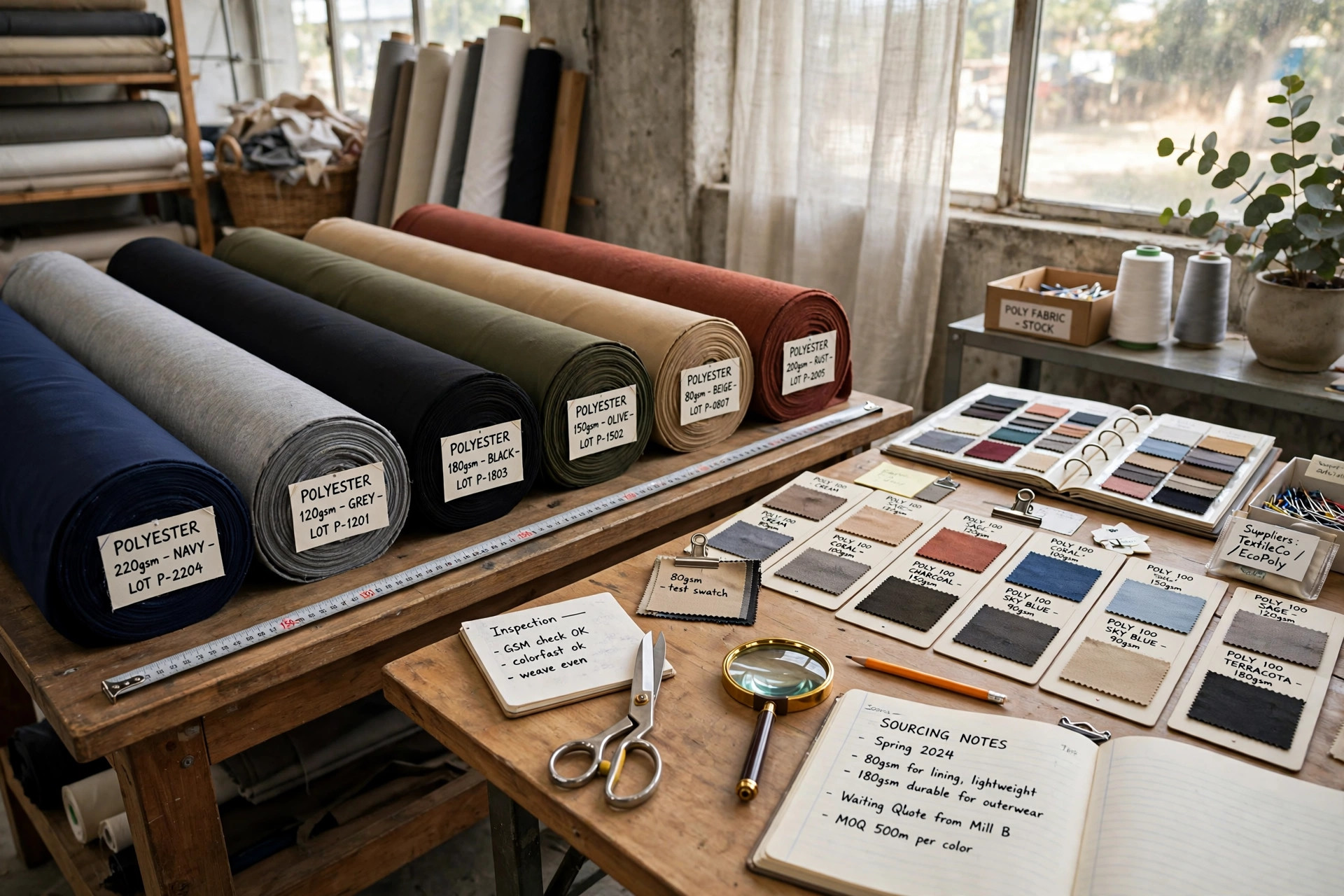
What a Polyester Fabric Price Covers
A polyester fabric price is the finished cloth price, not the price of the polymer or the yarn alone. It bundles the filament or spun yarn, the weaving or knitting that turned yarn into cloth, dyeing and printing, finishing treatments such as softening, water resistance or flame retardancy, inspection, and the mill margin. Apparel Search does not list polyester fabric prices directly, because mills set them individually and no published figure stays true for long.
The specification hidden inside the word polyester explains most price differences. A lightweight plain-weave lining, a textured filament shirting, a brushed fleece and a coated luggage cloth are all polyester fabrics, yet their yarn costs, machine time and finishing routes differ completely. Weight per square meter, width, construction density and whether the fabric is piece dyed, yarn dyed or printed each move the number. When two quotes look far apart, the first job is checking whether they describe the same cloth at all.
Why Mills Price the Same Cloth Differently
Each textile mill prices fabric from its own cost structure and its own acceptable profit margin. A mill running modern high-speed looms on long contracts buys yarn in volume and spreads overhead thinly. A smaller mill offering short runs, custom colors and development work carries higher costs per meter and charges for that flexibility. Neither quote is automatically wrong; they are prices for different services wrapped around similar cloth.
Geography and timing add further spread. Yarn is a petroleum-linked product, so fabric quotes carry validity windows, often only days or weeks, and mills reprice when filament costs move. Currency, energy costs, dye house capacity and freight terms all sit inside a delivered price. A quote stated ex works is not comparable with one stated delivered to your warehouse until freight, insurance and duties are added. Experienced buyers normalize every quote to the same delivery term before judging it.
How Buyers Actually Use Fabric Pricing
In practice, garment buyers work backwards from a target retail price. The fabric is usually the largest single cost in a garment, so a buyer asks mills for prices at the specification the design needs, then tests whether the garment still works at that fabric cost. If it does not, the negotiation is rarely just about shaving the mill price: changing weight slightly, widening the usable width, simplifying a finish or committing to a larger quantity per color often saves more than pressure on margin alone.
Direct enquiry is the reliable route, so contact polyester fabric mills for pricing. Send the mill a complete specification: fiber and yarn type, construction, finished weight and width, colors and quantity per color, finishes required, and the delivery point. Mills answer complete enquiries with firm, datable quotes and answer vague ones with vague ranges. Keep each quote with its date and validity, because a fabric price is a snapshot, not a permanent fact.
Comparing Quotes Without Fooling Yourself
Build a small comparison sheet with one column per mill and rows for the details that change value: weight tolerance, usable width after finishing, minimum order per color, lead time, quote validity, payment terms and who pays freight. A cheaper meter of narrower fabric can cost more per garment than a pricier wider one, because the marker fits fewer pieces across it. Yield per garment, not price per meter, is the number your cost sheet actually spends.
Finally, protect the approved price with an approved sample. Attach a cutting of the fabric you priced to the purchase order reference, record the standard for shade and shrinkage, and reprice honestly when yarn markets move rather than forcing an old quote the mill can only meet by quietly changing the cloth. Polyester fabric rewards buyers who treat price, specification and sample as one package, and it punishes, usually at the cutting table, anyone who shops on the number alone.
Common Questions
Why is there no single current price for polyester fabric?
Because mills set prices individually from their own costs and margins, and quotes expire as yarn costs move. A single published figure would mislead more than it helped. For a firm quote, send a mill your full specification.
What details does a mill need to quote a polyester fabric price?
Yarn and fiber type, weave or knit construction, finished weight and width, colors with quantity per color, any dyeing, printing or finishing treatments, and the delivery point and terms.
Why can a cheaper fabric cost more per garment?
Usable width and weight decide how many garment pieces fit in a meter. A narrow or heavy fabric with a low meter price can yield fewer garments than a wider, better specified cloth, raising the true cost per piece.
Looking for Fabric Mills and Suppliers?
Return to the Fabric Search hub for other fibers, or browse the wider Apparel Search fabric section for mills, fabric guides and definitions.