Polyester Fiber Prices
Polyester fiber is where the whole polyester price chain becomes visible, because fiber sits between polymer and yarn. This page explains which fibers carry prices, why those prices move, and how buyers track them without chasing rumors.
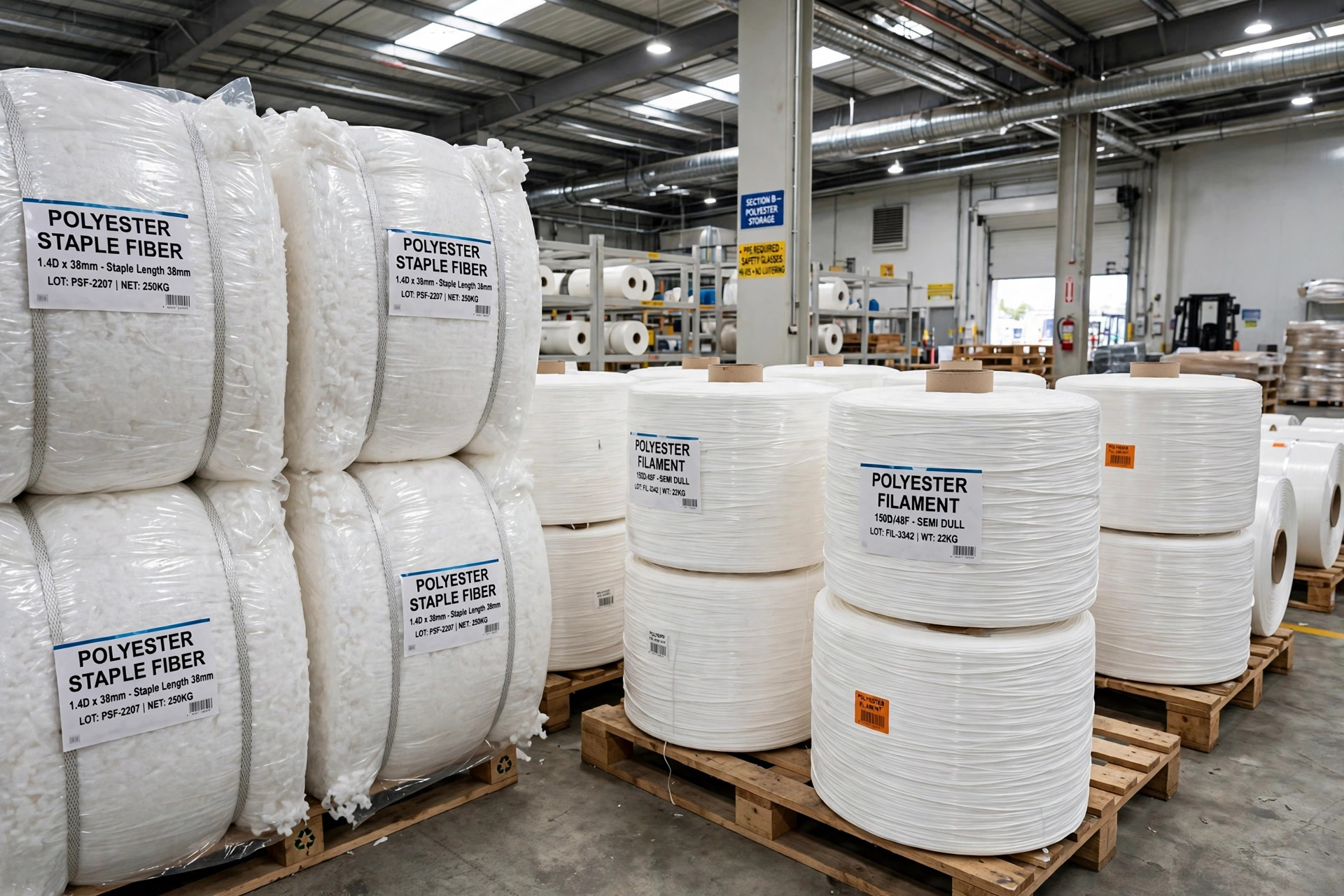
Which Polyester Fibers Carry a Price
Polyester fiber reaches the market in two main forms, and each has its own price conversation. Staple fiber is cut into short lengths resembling cotton or wool, baled, and sold to spinning mills that blend or spin it alone into yarns for apparel, home textiles and nonwovens. Filament is continuous yarn drawn directly from polymer, sold by denier and filament count for weaving and knitting. When a pricing service reports a polyester fiber price, it is usually quoting a standard staple grade or a benchmark filament, not every specialty fiber a producer makes.
Grades multiply quickly beyond the benchmark. Staple fiber varies by denier, cut length, luster from bright to dull, and whether it is solid or hollow, siliconized or not, virgin or recycled. Hollow siliconized fiber for pillows and insulation commands a different price from a fine spinning staple. The original version of this page linked readers to a single focused resource, the Yarns and Fibers polyester staple fiber price coverage, which reflects how the trade actually follows this market: through specialist services that track named grades in named regions.
Why Fiber Prices Move
Polyester begins with petroleum-derived raw materials, principally purified terephthalic acid and monoethylene glycol, combined into polymer. When crude oil and those feedstock prices move, fiber producers feel it within weeks, and staple fiber quotes are among the first textile prices to change. That linkage is why fiber prices are reported so frequently by market services: a spinner costing yarn for a delivery months away needs to know whether the fiber element of the cost is rising, falling or holding steady this week.
Regional supply matters just as much as the oil price. New fiber capacity in one country can soften prices across a region, while plant shutdowns, maintenance turnarounds or strong demand from nonwoven and home textile buyers can tighten a particular grade even in a flat market. Freight is a real part of a fiber price too, because bales are bulky: a low ex works price far away can land higher than a nearer producer quote. Serious buyers therefore track the grade, region and delivery basis together, never the headline number alone.
How Spinners and Yarn Buyers Use Fiber Prices
A spinning mill turns fiber price into yarn price by adding conversion cost, waste allowance and margin, so fiber tracking is the spinner daily costing tool. When fiber rises, the mill can show customers exactly which part of a yarn increase came from raw material rather than conversion. Yarn buyers use the same published fiber prices in reverse, checking that a yarn quote still bears a sensible relationship to the fiber it contains, and timing larger commitments when the fiber market dips rather than peaks.
Fiber prices also drive blend decisions. Because polyester staple is commonly blended with cotton, viscose or wool, a widening gap between polyester and cotton prices pushes mills toward higher polyester percentages where the garment allows it, while a narrowing gap makes natural-rich blends easier to afford. Product developers watch these ratios a season ahead. For background on the fiber itself, the About Polyester Fibers guide on Apparel Search explains the forms and properties behind the grades being priced.
Reading a Fiber Price Report Carefully
Treat every fiber price as a sentence with the grade, place and date as its grammar. Note whether the figure is an offer, a traded level or an assessment, whether it includes delivery, and which standard specification it assumes for denier, length and luster. Compare like with like across weeks to build a trend, because a single week figure tells you little; the direction over a quarter is what costing decisions need. Keep your own simple log of the grades you actually buy.
And keep expectations realistic about precision. Fiber markets are negotiated markets, and large contract buyers rarely pay exactly the published spot level. The published price is a compass: it tells you where the market stands, whether your supplier quote is broadly fair, and when to lock or float a commitment. Used that way, the pricing services linked from this guide are genuinely useful. Used as a promise of what your invoice must say, they will disappoint you every time.
Common Questions
What is the difference between polyester staple fiber and filament prices?
Staple fiber is cut fiber sold in bales for spinning into yarn, while filament is continuous yarn sold by denier. They are produced, specified and priced separately, and a pricing report names which form and grade it covers.
Why do polyester fiber prices change so often?
Polyester is made from petroleum-derived feedstocks, so fiber quotes respond quickly to oil and chemical prices, as well as to regional capacity, plant shutdowns and demand from apparel, home textile and nonwoven buyers.
How should a small buyer use published fiber prices?
As a market compass: to check whether supplier quotes are broadly fair, to see the trend before committing to a larger order, and to understand which part of a yarn price change came from raw material costs.
More to Explore
References & Further Reading
Looking for Fabric Mills and Suppliers?
Explore the rest of the polyester pricing family from the Fabric Search hub, or start at the Apparel Search fabric section for fiber and fabric guides.