Nonwovens Directory
Nonwovens skip the loom entirely: a web of fibres is laid down and then bonded — by heat, chemicals, water jets or needles — into a finished fabric. This hub explains the bonding families, carries the six producers this section lists under nonwoven factories, and links the full set of nonwoven category directories, from spunbond and meltblown to geotextiles and waddings.
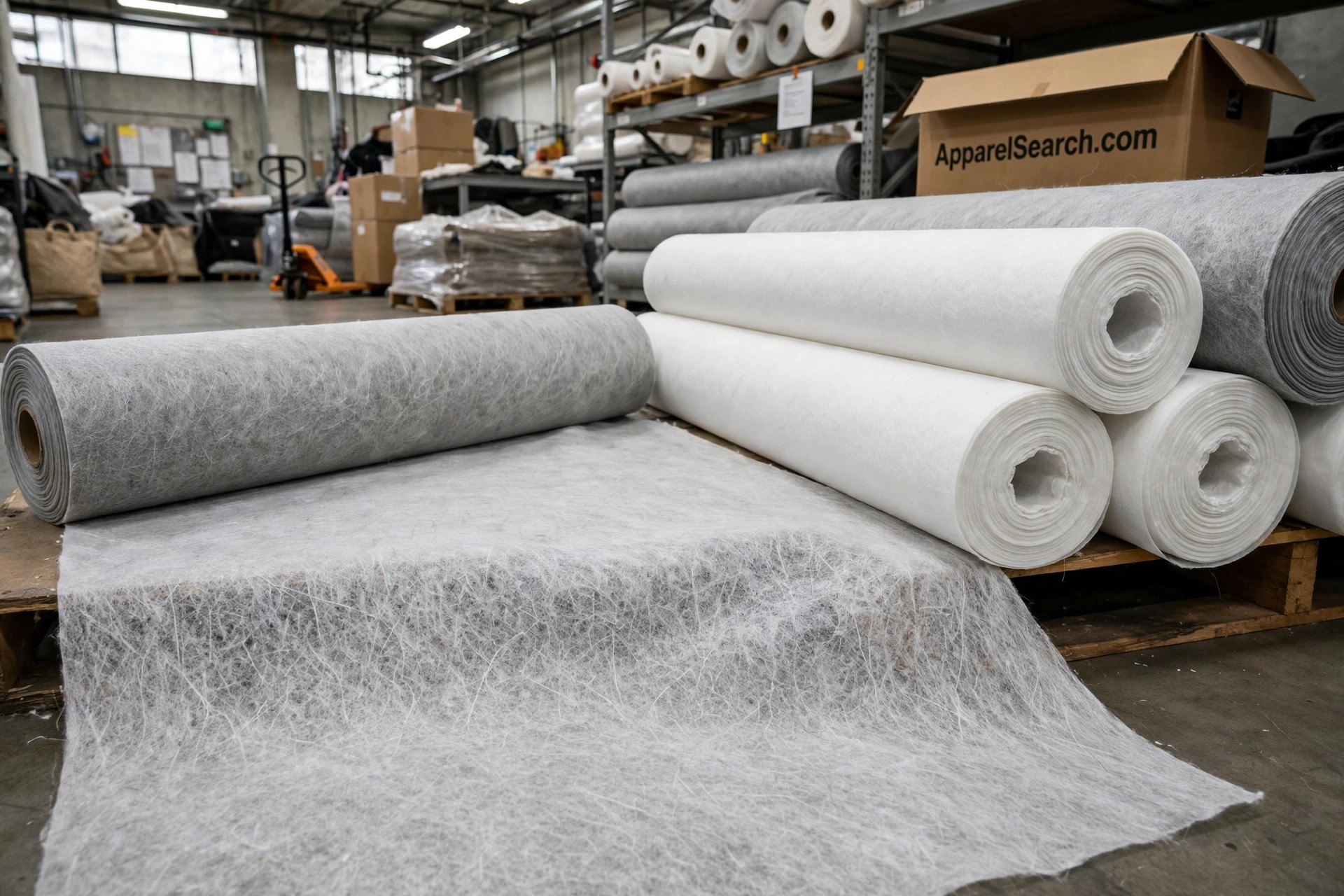
Fabric Without Weaving or Knitting
A nonwoven is a sheet built straight from fibre. Staple fibres or continuous filaments are formed into a web — carded, air-laid, wet-laid like paper, or spun directly from polymer in the spunbond and meltblown processes — and the web is then consolidated. Thermal bonding melts low-melt fibres or powders at the crossings; chemical bonding glues the web with resin; spunlace entangles fibres with high-pressure water jets; needle-punching drives barbed needles through the web until the fibres lock mechanically; stitchbonding sews the web with its own yarns. Each route gives a different balance of softness, strength, absorbency and price, which is why nonwovens are specified by process as much as by fibre.
The economics explain the ubiquity: a nonwoven line converts raw polymer or fibre to finished roll goods in one continuous pass, far faster and cheaper than spinning, weaving and finishing a comparable cloth. The trade-off is character — nonwovens generally drape less gracefully and wear differently than woven fabrics — so they dominate where disposability, filtration, absorbency or bulk-without-weight matter, and support apparel from inside as interlinings, waddings and shoe components rather than replacing garment cloth outright.
The Nonwoven Families and Their Uses
Spunbond and its meltblown partner (often laminated together as SMS) form the barrier fabrics of medical gowns, hygiene coverstock, crop protection and packaging. Spunlace is the soft, absorbent web behind wipes and medical dressings. Needle-punched felts become carpets, geotextiles, filtration media and automotive insulation, while thermobonded waddings fill quilts, pads and insulated clothing. Air-laid and wet-laid webs serve absorbent and speciality paper-like uses, and coated, laminated and composite nonwovens borrow strength or barrier properties from films and scrims. The category directories linked below divide this section by exactly those families and trades — associations, consultants, converters, education, machinery, testing, import and export, and wholesale distribution each have their own page.
Six producers are listed below under nonwoven factories, each linked to its Fabric Mills by Name profile: Freudenberg, Polymer Group, SEDRI Industrial Corporation, Supreme Textile Industries (Pvt) Limited, Thai Technical Nonwoven Company Ltd. and Unimin India Ltd. of India — a country is stated only for Unimin, and no country is given for the others. The names themselves map the industry: long-established European and American nonwoven groups alongside South and Southeast Asian producers. Garment readers meet nonwovens most often as fusible Interlinings, and the machinery side of the trade is covered by the Nonwoven Machinery directory. Thank you for using the Apparel Search Fabric Mill Directory.
Specifying Nonwovens
A nonwoven specification works differently from a woven one. Lead with the bonding process and the polymer or fibre, then weight per square metre, thickness, and the performance numbers the job actually turns on — tensile and tear strength, absorbency, air or liquid permeability, or barrier level. Roll width and length matter commercially, because nonwoven lines run wide and converting losses can erase a price advantage. Ask whether the sample is the production construction or a laboratory analogue, and for medical, hygiene and filtration uses ask which test standard the quoted figures were measured to: nonwoven performance claims are only comparable inside the same standard. Finally, handle the web — surface fibre shedding, softness and noise in wear separate otherwise identical specifications.
One honest complication belongs in any nonwovens overview: disposability is both the category's selling point and its environmental cost. Many nonwovens are polypropylene or polyester and persist like other plastics, while viscose and other cellulosic webs biodegrade more readily; producers increasingly publish the polymer content and any recycled share of a web, and buyers comparing two otherwise equal specifications can reasonably treat that disclosure as part of the specification itself.
Nonwoven Producers Listed Here
Freudenberg
Listed in this directory. Follow the company name to its Fabric Mills by Name profile, which carries its full directory record.
Polymer Group
Listed in this directory. Follow the company name to its Fabric Mills by Name profile, which carries its full directory record.
SEDRI Industrial Corporation
Listed in this directory. Follow the company name to its Fabric Mills by Name profile, which carries its full directory record.
Supreme Textile Industries (Pvt) Limited
Listed in this directory. Follow the company name to its Fabric Mills by Name profile, which carries its full directory record.
Thai Technical Nonwoven Company Ltd.
Listed in this directory. Follow the company name to its Fabric Mills by Name profile, which carries its full directory record.
Unimin India Ltd. (India)
Listed in this directory. Follow the company name to its Fabric Mills by Name profile, which carries its full directory record.
Common Questions
What is a nonwoven fabric?
A fabric made directly from a web of fibres, bonded by heat, resin, water jets (spunlace), barbed needles (needle-punch) or stitching instead of being woven or knitted from yarn. Spunbond webs are extruded straight from polymer; meltblown webs produce the fine fibres used in filtration and barrier layers.
Where are nonwovens used in clothing?
Mostly inside the garment: fusible interlinings that stiffen collars and fronts, thermobonded waddings that insulate jackets and quilts, shoe and bag components, and disposable protective clothing. Their biggest markets overall are hygiene, medical, wipes, filtration and geotextiles.
Which producers does this directory list for nonwovens?
Freudenberg, Polymer Group, SEDRI Industrial Corporation, Supreme Textile Industries (Pvt) Limited, Thai Technical Nonwoven Company Ltd. and Unimin India Ltd. of India, each linked to its Fabric Mills by Name profile; the category directories below cover the nonwoven families and trades in depth.
More to Explore - Nonwoven Categories & The Full Fabric Directory
- Narrow Fabric Mills
- Net Textiles
- Novelty Fabric
- Nylon Fabric Mills
- Mesh Fabric Mills
- Tulle Fabric
- Raschel Fabric
- Polyester Fabric Mills
- Fabric Mills - Fabric Section Hub
- Interlinings
- Nonwoven Machinery
- Nonwoven Search
- Fabric
- Lace
- Textile Machinery
- Nonwoven Definition
- Nonwoven Education & Research
- Freudenberg
- Polymer Group
- SEDRI Industrial Corporation
- Supreme Textile Industries (Pvt) Limited
- Thai Technical Nonwoven Company Ltd.
- Unimin India Ltd.
- Air and Wet Layed
- Artificial Leather
- Coating and Laminating
- Composite Fabrics and Structures
- Diversified Technologies
- Geotextiles
- Meltblown
- Needlepunch and Pressed Felts
- Spunbond
- Spunlace
- Stitchbond
- Thermobonded
- Waddings and Battings
- Nonwoven Associations
- Nonwoven Consultants
- Nonwoven Converters
- Nonwoven Import & Export
- Nonwoven Machinery & Equipment
- Nonwoven Test Facilities
- Nonwoven Wholesale - Distributors
- Clothing Industry Factories
- Yarn Factories
- Fabric Retail
- Fabric Wholesalers
- Fibers Directory
- Fabric Definitions
- Fashion Industry News
- Clothing Industry Employment
- Conversion Charts
- Textiles
Looking for Fabric Mills and Suppliers?
Return to the Fabric Directory hub for the full fabric section, or browse the Fabric Manufacturers Directory page for the wider mill trade.