Nonwoven Fabric
Nonwoven fabric is a fabric-like material made from fibers bonded together rather than woven or knitted. This hub helps textile and fashion industry readers understand how nonwovens are made and where to find the mills, wholesalers and stores that supply them.
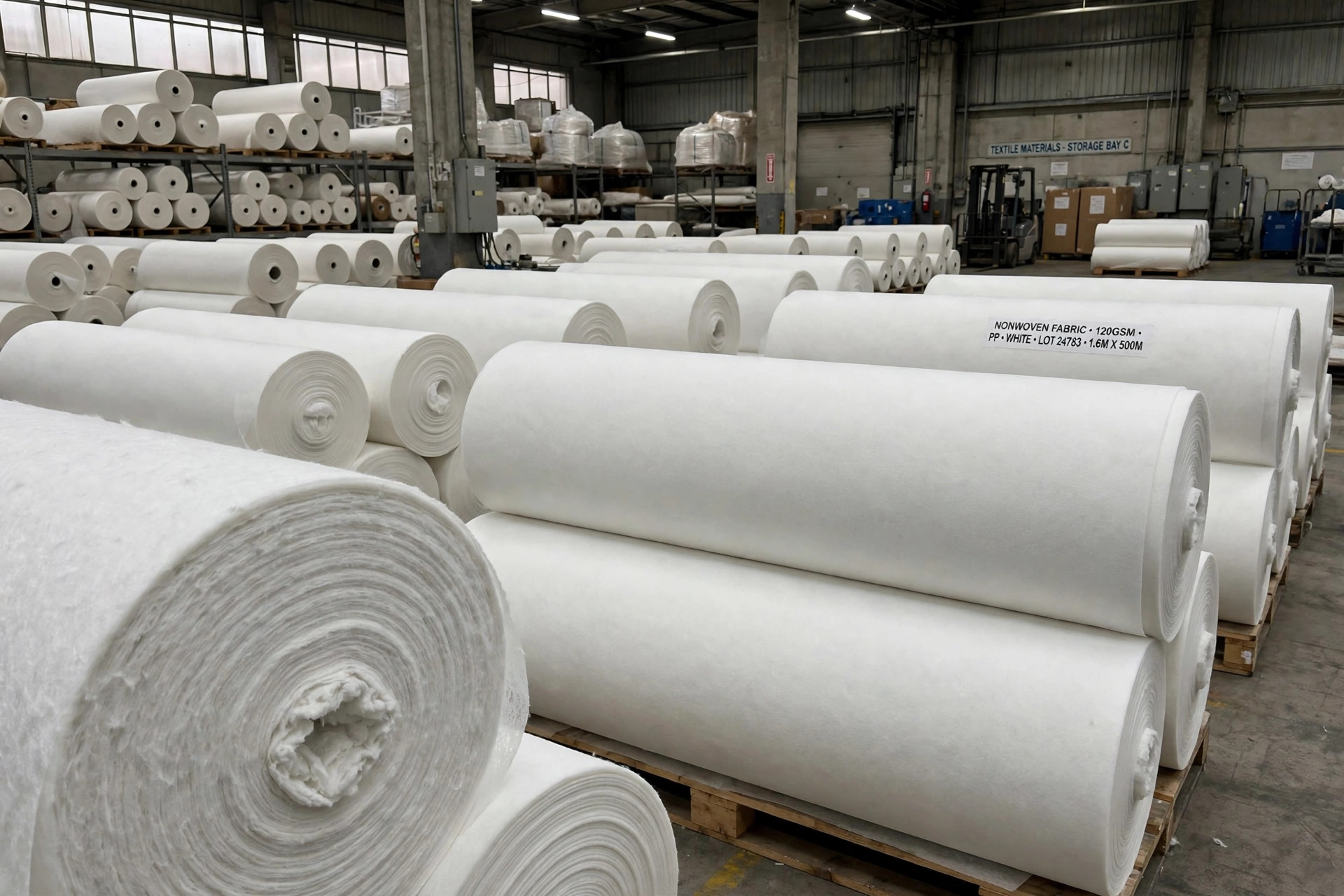
A Fabric That Is Bonded, Not Woven or Knitted
The original definition on this page was precise: nonwoven fabric is a fabric-like material made from long fibers, bonded together by chemical, mechanical, heat or solvent treatment. The term is used in the textile manufacturing industry to denote fabrics, such as felt, which are neither woven nor knitted. That single distinction explains almost everything about how nonwovens behave, what they cost and where they are used, because a bonded web does not have the interlaced warp and weft structure that gives woven cloth its familiar strength and drape.
Each bonding method creates a different material. Chemical bonding uses adhesives to lock fibers together and suits smooth, uniform webs. Mechanical bonding, including needle punching and hydroentangling, tangles the fibers physically and produces softer or tougher fabrics depending on intensity. Heat bonding melts thermoplastic fibers at contact points, which is efficient for synthetic webs. Solvent treatment softens fiber surfaces so they fuse. When you read a supplier description, the bonding method is therefore not a technical footnote; it is the first clue to the fabric's hand, strength and price.
Strength, Backing and Honest Limitations
The original guide was candid about the trade-off: nonwoven materials typically lack strength unless made more dense or reinforced by a backing. A light bonded web can tear or stretch in ways a woven fabric would not, which is why nonwovens are often engineered for a single defined job rather than asked to do everything. Density, fiber length, bonding intensity and a scrim or backing layer are the levers a maker adjusts to turn a fragile web into a serviceable product.
That engineering-for-purpose is also the category's strength. Because there is no loom time in the cost, nonwovens can be produced quickly and inexpensively, cut without fraying, and tailored to disposable, durable or semi-durable roles. Familiar examples reach well beyond apparel: interlinings and fusible supports inside garments, wipes and medical disposables, filtration media, geotextiles, insulation, and the backing layers that give other materials their stability. Apparel buyers meet nonwovens most often as the hidden structure inside collars, waistbands, facings and embroidered badges.
The Directory This Hub Organizes
This section of Fabric Search was built as a starting point rather than a catalogue, and its directory divides the supply chain the way buyers actually shop. Nonwoven Fabric Mills lists the producers that form and bond the webs. Nonwoven Fabric Wholesalers covers the distributors who stock and resell those materials in trade quantities. Nonwoven Fabric Stores points to retail sellers for smaller amounts.
The companion overview, Nonwoven Fabric, gathers the educational material in one place. Use the layers in order: learn what construction your application needs, decide whether your quantity belongs with a mill, a wholesaler or a store, and only then compare individual suppliers. A buyer who contacts a mill about a few yards, or a retail store about a truckload, wastes everyone's time, including their own, and the hub exists to prevent exactly that mismatch.
Choosing a Nonwoven for a Real Application
Start from the job, not the fiber. Ask what the material must survive: laundering, sterilization, outdoor exposure, repeated flexing, or a single use followed by disposal. Then match the construction: fiber type and length, web weight, bonding method and any backing or coating. Request samples and test them the way the finished product will be used, because nonwoven specifications that look similar on paper, two webs of the same weight in the same fiber, can perform very differently once bonded by different methods.
Finally, confirm continuity before building a product on a specific nonwoven. Ask whether the grade is a regular stock item or a one-time production, how shade and weight are controlled between lots, and what minimum quantity a reorder requires. Nonwovens reward buyers who specify carefully: the material is engineered, so the more exactly you describe the performance you need, the more exactly a good mill or distributor can match a web to it.
Looking for Fabric Mills and Suppliers?
Explore other fabric families in the Apparel Search fabric directory or return to the Fabric Search hub to start a new search by fiber or fabric type.