Nonwoven Fabric
Nonwovens skip the loom entirely: fibers or filaments are laid into a web and bonded directly into fabric. This technical guide explains how nonwoven fabrics are defined, formed and bonded, and where they are used.
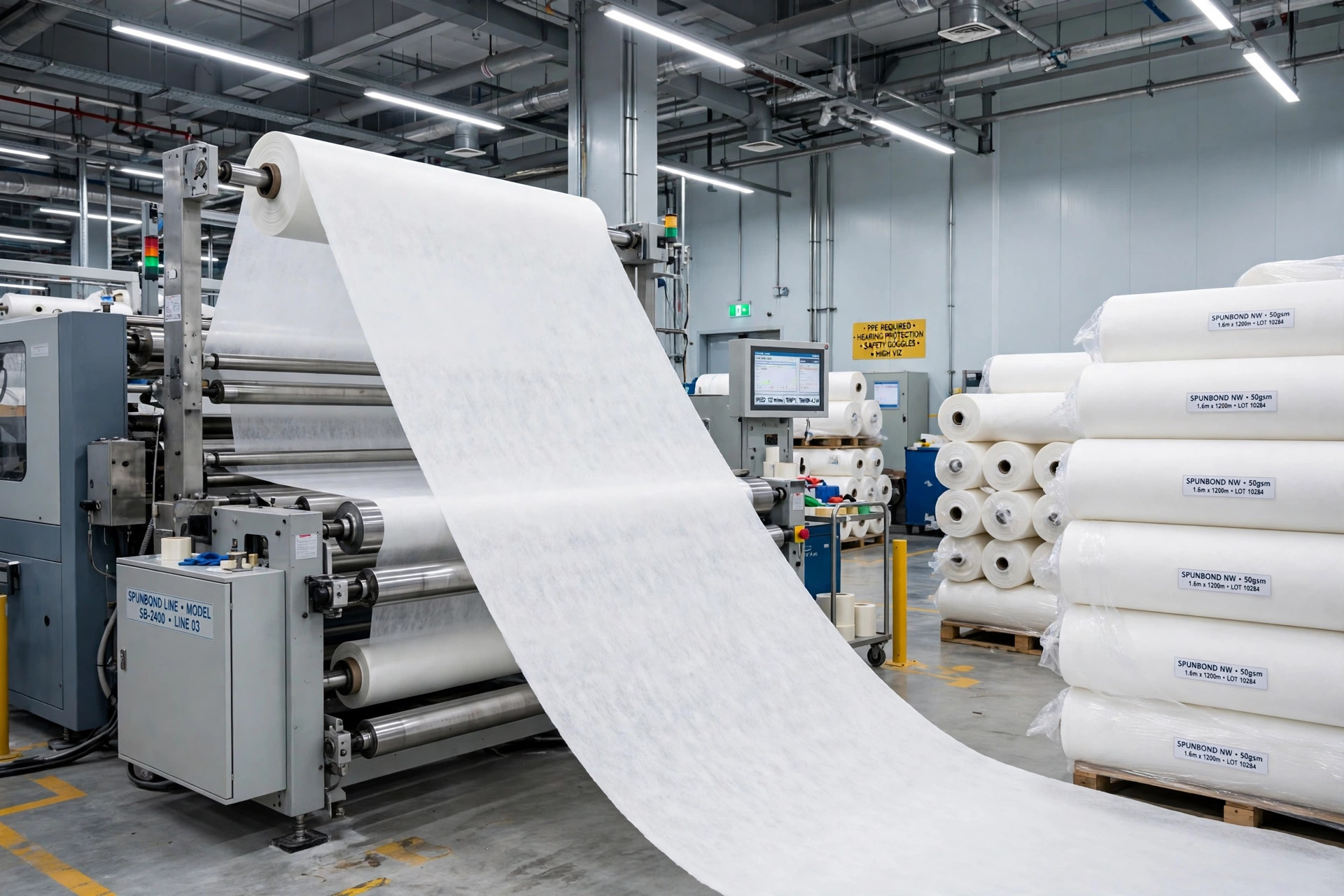
What a Nonwoven Fabric Is
Nonwoven fabrics are broadly defined as sheet or web structures bonded together by entangling fiber or filaments — and by perforating films — mechanically, thermally or chemically. They are flat, porous sheets made directly from separate fibers or from molten plastic or plastic film. They are not made by weaving or knitting and do not require converting the fibers to yarn. That definition, used by INDA, the Association of the Nonwoven Fabrics Industry, captures why nonwovens behave differently from conventional cloth: there is no yarn, no warp and no weft.
Because the structure is engineered rather than woven, a nonwoven's properties are designed in at manufacture. Basis weight, fiber type, web orientation and bonding method together set its strength, softness, absorbency, barrier performance and cost. A nonwoven can be a disposable wipe designed to last minutes, or a geotextile designed to last decades underground. The shared name describes the process family, not a single material, which is why specifications matter so much when buying.
How Nonwoven Webs Are Formed and Bonded
Production has two stages: forming the web, then bonding it. In spunbond production, molten polymer — most often polypropylene — is extruded into continuous filaments, drawn, and laid randomly onto a moving belt, a continuous process that converts thermoplastic raw material into a web of continuous filament. In meltblown production, extruded polymer is blown with hot air into extremely fine fibers, creating the dense, fine web used as filter and barrier layers. Drylaid systems card or air-lay staple fibers instead, and wetlaid systems form webs from fiber suspended in water, much like papermaking.
Bonding then gives the web its integrity. Thermal bonding melts binder fibers or the filaments themselves at crossover points; chemical bonding applies resin binders; and mechanical bonding entangles fibers by needlepunching — barbed needles punching the web thousands of times — or by hydroentangling with fine high-pressure water jets, the process behind soft spunlace wipes. Many commercial fabrics combine methods and even combine web types, as in SMS constructions that sandwich a meltblown barrier layer between two spunbond strength layers.
Where Nonwovens Are Used
The largest markets are absorbent hygiene products — diaper and adult incontinence components and feminine hygiene products — where soft, strong, fluid-handling webs are essential, and wipes for personal, household and industrial cleaning. Medical uses include surgical gowns and drapes, masks, caps and wound dressings, where a disposable barrier fabric protects patients and staff. In these single-use products, the nonwoven's low cost per unit and consistent, controllable properties outweigh the durability a woven cloth would offer.
Durable nonwovens work out of sight. Geotextiles separate, filter and stabilize soil in roads and drainage; automotive nonwovens line headliners, trunk compartments and insulation; filtration media clean air and liquids; and agriculture uses spunbond crop covers that pass light and water while protecting plants. In apparel itself, nonwovens appear mainly as interlining and stabilizers that support collars, waistbands and embroidery — a reminder that even garment makers who never sew a nonwoven garment still rely on the material.
Learning and Specifying Nonwovens
The industry is well organized for research. INDA has represented the nonwoven fabrics industry since 1968, coordinating work on government relations, technology, marketing and international commerce. EDANA, formed in 1971 and originally the European Disposables and Nonwovens Association, serves more than 220 member companies with a European focus and global reach, while the Asian Nonwovens Fabric Association supports the industry across Asia, and the Nonwovens Cooperative Research Center at North Carolina — established in 1991 with National Science Foundation support — advances nonwoven technology through research, training and education.
When specifying a nonwoven, work from the application backwards: state the function first — absorb, filter, repel, support, protect — then the fiber and process that deliver it, then measurable properties such as basis weight, tensile strength, elongation, air permeability and liquid strike-through. Apparel Search also covers nonwoven machinery and nonwoven fabric converters, and readers in the apparel market may also want to learn about interlining.
Common Questions
How is nonwoven fabric different from woven fabric?
A woven fabric interlaces warp and weft yarns on a loom. A nonwoven is made directly from fibers or filaments laid into a web and bonded mechanically, thermally or chemically — no yarn and no weaving are involved.
What are spunbond, meltblown and needlepunch?
They are web-forming and bonding routes. Spunbond lays extruded continuous filaments into a web; meltblown blows polymer into very fine fibers for barrier and filter layers; needlepunch mechanically entangles fibers with barbed needles to bond the web.
What are nonwoven fabrics mainly used for?
Hygiene products, wipes and medical disposables are the biggest uses, followed by filtration, geotextiles, automotive components, agricultural covers and apparel interlinings.
More to Explore
Looking for Fabric Mills and Suppliers?
Set nonwovens alongside conventional cloth in the Apparel Search fabric directory and browse all fabric types from the Fabric Search hub.