Nonwoven Fabric Stores
Retail nonwoven buying looks nothing like the industrial trade: at store level, nonwovens mean interlinings, stabilizers, craft spunbond and utility rolls. This guide explains what retailers stock, how the products differ, and how to buy the right one.
Why Nonwoven Retail Is Different
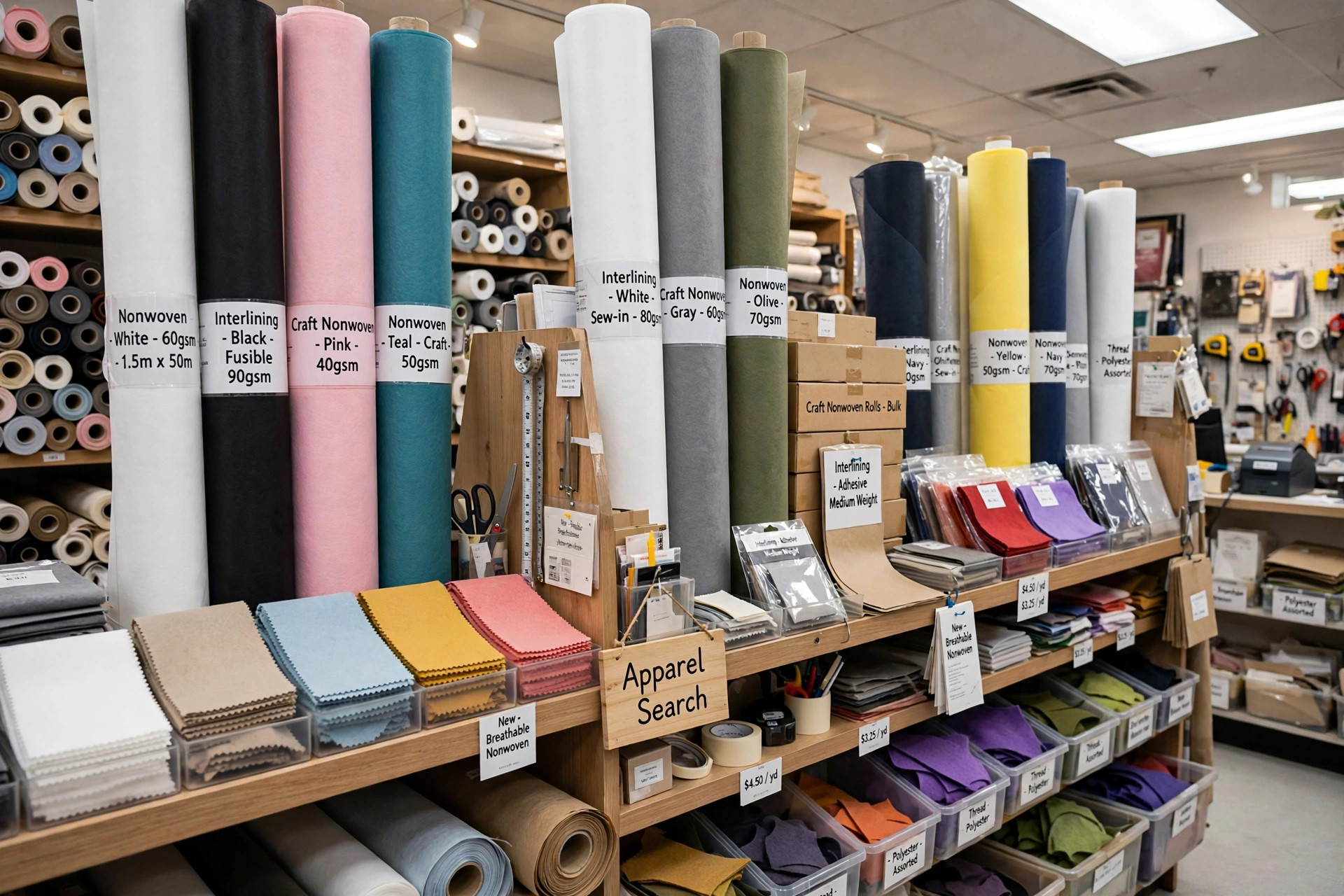
Most nonwoven fabric is never sold across a retail counter at all — it moves by the truckload from producers to converters and product manufacturers. The nonwovens a retail customer can buy are the cut, packaged end of that industry: fusible and sew-in interlinings for garment making, embroidery stabilizers that support stitching and then tear, wash or melt away, spunbond craft and utility fabric sold by the yard, pattern-tracing material, and small rolls of filter and dust-cover fabric for home projects.
That is why this stores page, like the original guide, carries no single flagship retailer: the category is served by general fabric stores, sewing and quilting shops, craft chains and online sewing suppliers, each stocking nonwovens as one department among many. When you shop, search those retailers by the product name — interlining, stabilizer, spunbond — rather than by the word nonwoven, because shelf labels almost always use the application name.
Interlinings and Stabilizers: The Core Retail Range
Fusible interlining is the nonwoven most sewers know. It is a lightweight web with heat-activated adhesive on one side, pressed onto collars, cuffs, waistbands and facings to add body without bulk. It comes in several weights, and matching weight to fabric is the whole skill: a heavy fusible will board-stiffen a light shirting, while too light a grade leaves a collar limp. Sew-in interlining, without adhesive, suits fabrics that cannot take heat or that need a softer, more traditional hand.
Embroidery stabilizers divide by how they leave the work. Tear-away grades support stitching on stable fabrics and are removed by tearing; cut-away grades stay behind knits to keep stitches from distorting; wash-away and heat-soluble films support lace and delicate work, then disappear. Retail staff can advise by project, but bring a scrap of your actual fabric — stabilizer choice depends on the fabric's stretch and weight more than on the embroidery design itself.
Buying Spunbond and Utility Nonwovens by the Yard
Beyond the sewing department, stores and online sellers offer spunbond polypropylene by the yard or small roll for dust covers, upholstery backing, tote and reusable bag making, garden frost protection and craft projects. Judge these by basis weight, usually expressed in grams per square meter: light grades around 30 to 50 grams drape and tear easily, mid grades near 70 to 100 grams suit bags and covers, and heavier grades approach a stiff utility sheet. Check width carefully, since utility rolls are often narrower than apparel fabrics.
Also check what the material cannot do. Spunbond is not washable like a woven cloth, its edges do not need finishing but its seams are only as strong as the web, and it softens or melts at iron temperatures, so press with care or not at all. For outdoor uses, ask about ultraviolet stability, because standard polypropylene degrades in prolonged sunlight unless it has been treated. Buying a small test piece first is cheap insurance for any new application.
Getting Retail Advice and Finding Stock
Because nonwoven products are specification-driven, a good retailer helps you translate a project into a product: bring the garment pattern's interfacing call-out, a fabric scrap, or the dimensions and duty your utility fabric must meet. Stores that serve quilters and dressmakers handle interlining questions daily, and many will sell short test lengths so you can fuse, stitch and wash a sample before committing. Online, prefer listings that state fiber, weight, width and adhesive type over those that say only nonwoven fabric.
If you know of additional resources that should be added to this section, please let us know — it would be our pleasure to add beneficial listings and make this retailer guide more informative. When researching fabric retailers generally, you may also want to visit the fabric store section on Apparel Search, which covers retailers across all fabric categories.
Common Questions
Where can I buy nonwoven fabric as a home sewer?
At general fabric stores, sewing and quilting shops, craft retailers and online sewing suppliers — usually shelved by application name such as interlining or stabilizer rather than under the word nonwoven.
What is the difference between fusible and sew-in interlining?
Fusible interlining has heat-activated adhesive on one side and is pressed onto the garment part. Sew-in interlining has no adhesive and is stitched in, suiting heat-sensitive fabrics or a softer finish.
How do I choose a spunbond weight?
By duty: roughly 30 to 50 grams per square meter for light covers and crafts, 70 to 100 grams for bags and stronger covers, and heavier grades for stiff utility uses. Always test a small piece in your application first.
Looking for Fabric Mills and Suppliers?
Browse retailers for every fabric type in the Apparel Search fabric directory and return to the Fabric Search hub for other clusters.