Pile Fabric Directory
Pile fabrics are the cloths with a raised surface: velvet, velour, corduroy, terry, plush and faux fur all stand extra yarns up from a ground weave or knit, so the fabric has a direction, a texture and a depth that flat cloth cannot match. This directory explains how pile is made and read, and carries the four mills this section lists under pile fabric factories, in Pakistan, Thailand, India and China.
Shop Pile Fabric Now
Shop Pile Fabric on Amazon Shop Pile Fabric on eBayThe Amazon and eBay links on this page are affiliate links. If you make a purchase through them, Apparel Search may earn a commission.
What Pile Fabric Is
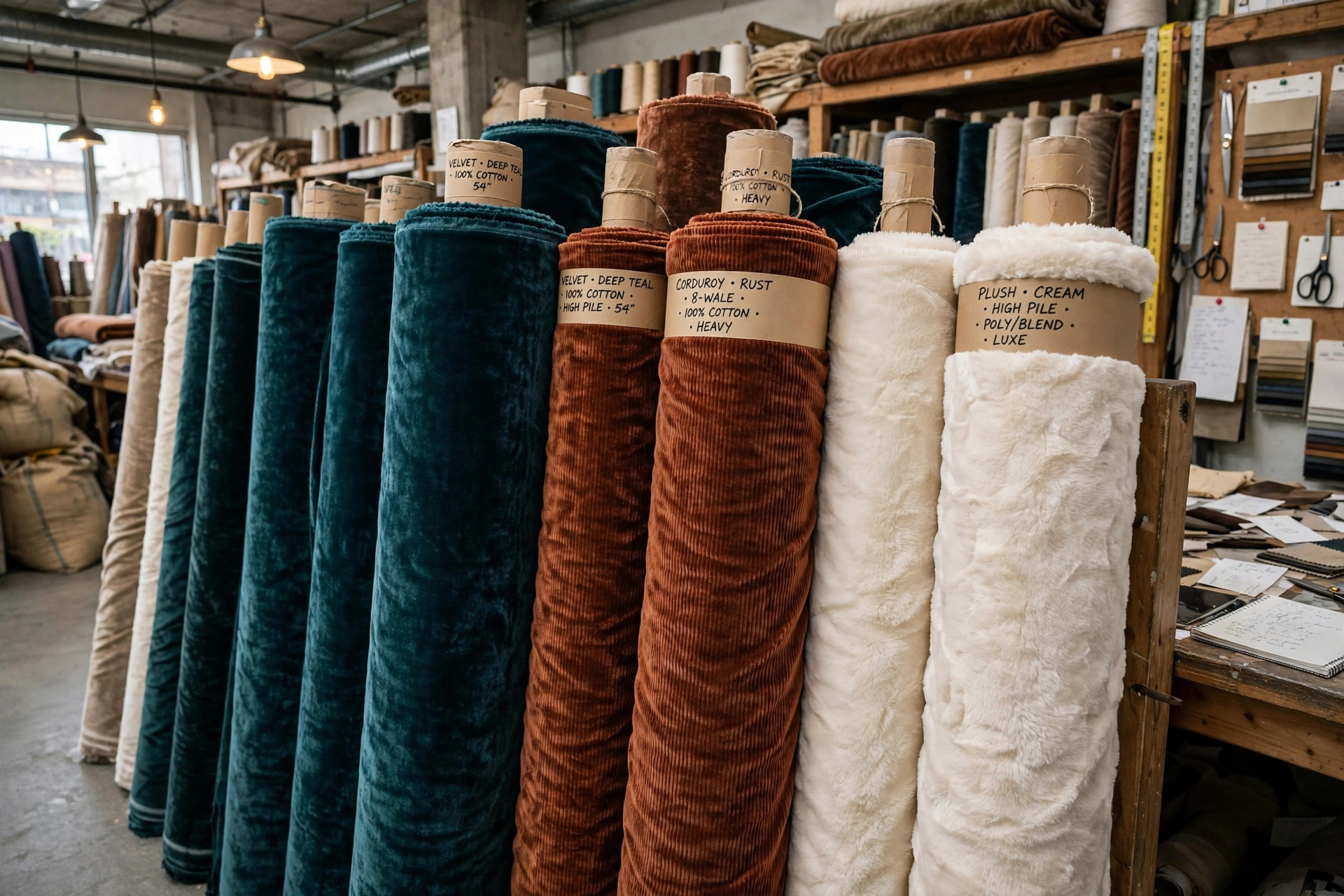
A pile fabric is built in two layers at once: a ground structure that gives the cloth its strength, and an extra set of yarns that form loops or cut ends standing above that ground. Woven pile is made with an additional warp or weft, as in velvet, where the pile warp is woven over wires and cut free, and corduroy, where extra weft floats are cut into ribs. Knitted pile includes velour and terry, where loops are raised on the machine and left looped, sheared or brushed. Faux fur pushes the idea furthest, using sliver knitting to anchor long fibres that imitate an animal pelt. In every case the surface, not the ground, is what the wearer sees and feels.
Pile has a direction, and that direction governs how the fabric is cut and sewn. Run a hand along a velvet and the colour lightens one way and deepens the other, because the fibres lean; pattern pieces for a garment or a chair must all be laid with the pile running the same way or the finished piece will shade in panels. Pile height and density set the price and the use: short, dense pile wears hard and reads formal, long loose pile is soft and insulating but crushes, and every pile fabric carries a crush risk that storage and pressing have to respect.
Where Pile Fabric Is Used
Clothing takes the dressier end: velvet and velour for evening wear, jackets and dresses, corduroy for trousers and shirts, terry for towels, robes and sportswear, and plush for children's garments and toys. Interiors take the harder-wearing end: upholstery velvets and moquettes on seating, pile carpets and rugs, curtains that block light because the pile absorbs it, and automotive and transport seating where a dense short pile hides wear. Faux fur serves coats, trims, toys and throws. Technical pile exists too, in paint rollers, polishing cloths and cleaning textiles, where the standing fibres are a working surface rather than a decoration.
The four listings below are this directory's pile mills, each linked to its Fabric Mills by Name profile: Ahmed Fine Textile Mills Limited of Pakistan, Jong Stit Knitting Co. Ltd. of Thailand, SGS Interknits (p) ltd of India, and Zibo Ermao Textile Co. Ltd. of China. The spread, weaving and knitting houses in South, Southeast and East Asia, reflects how broadly pile production is distributed, since almost every textile region makes at least one member of the pile family. None has been removed: no listing was verified dead, and this directory's standing rule is to keep a listing when in doubt. Thank you for using the Apparel Search Fabric Mill Directory.
Specifying and Caring for Pile Fabric
Specify pile by family first, velvet, velour, corduroy, terry, plush or faux fur, then by fibre, pile height, density and backing, because two fabrics both sold as velvet can differ in every one of those. Examine a sample by brushing it both ways: the shade change should be even, with no bare lanes where pile is missing, and the backing should not grin through when the cloth is bent. In the workroom, mark the pile direction on every piece, cut single-layer where shading matters, sew with a walking foot or reduced presser pressure so the layers do not creep, and never press pile flat with a hot iron on the face.
Care follows the family. Terry and most cotton pile wash freely and improve with washing; velour and plush wash gently and dry away from direct heat; velvet is the cautious case, usually dry-cleaned or steamed from the back over a needle board so the pile is not crushed, and stored hung with room around it rather than folded under weight. Brush pile regularly to lift dust and restore direction, and treat a crush mark with steam held above the surface, never with pressure, letting the fibres recover on their own as they cool.
Pile Fabric Mills Listed Here
Ahmed Fine Textile Mills Limited (Pakistan)
Listed in this directory. Follow the company name to its Fabric Mills by Name profile, which carries its full directory record.
Jong Stit Knitting Co. Ltd. (Thailand)
Listed in this directory. Follow the company name to its Fabric Mills by Name profile, which carries its full directory record.
SGS Interknits (p) ltd (India)
Listed in this directory. Follow the company name to its Fabric Mills by Name profile, which carries its full directory record.
Zibo Ermao Textile Co. Ltd. (China)
Listed in this directory. Follow the company name to its Fabric Mills by Name profile, which carries its full directory record.
Common Questions
What is pile fabric?
Any fabric with an extra set of yarns standing above a ground weave or knit, forming loops or cut ends on the surface. Velvet, velour, corduroy, terry cloth, plush and faux fur are all pile fabrics. The raised surface gives pile its texture, shading and warmth, and it always has a direction that cutting must respect.
What is the difference between velvet and velour?
Velvet is a woven pile, traditionally silk or cotton, with a short, dense cut pile and a formal hand. Velour is usually a knitted pile, most often cotton or polyester, sheared to a similar surface but with stretch and a softer, more casual character, which is why velour serves tracksuits and loungewear where velvet serves evening wear.
Which mills does this directory list for pile fabric?
Four mills, each linked to its Fabric Mills by Name profile: Ahmed Fine Textile Mills Limited (Pakistan), Jong Stit Knitting Co. Ltd. (Thailand), SGS Interknits (p) ltd (India) and Zibo Ermao Textile Co. Ltd. (China).
More to Explore - The Full Fabric Directory A-Z
- Percale Fabric
- Pique Fabric
- Pointelle Fabric
- Polar Fleece Fabric
- Polyester Fabric Mills
- Poplin Fabric
- Printed Fabric
- Ottoman Fabric Mills
- Oxford Fabric Mills
- Nylon Fabric Mills
- Quilted Fabric
- Fabric Mills - Fabric Section Hub
- Textile Machinery
- Embroidery Directory
- Printing Directory
- Ahmed Fine Textile Mills Limited
- Jong Stit Knitting Co. Ltd.
- SGS Interknits (p) ltd
- Zibo Ermao Textile Co. Ltd.
- Clothing Industry Factories
- Yarn Factories
- Fabric Retail
- Fabric Wholesalers
- Fibers Directory
- Fabric Definitions
- Fashion Industry News
- Clothing Industry Employment
- Conversion Charts
- Metallic
- Mesh
- Muslin
- Narrow
- Net
- Non Woven Fabric
- Novelty
- Raschel
- Reflective
- Rib
- Sateen
- Satin
- Seersucker
- Silk Fabric
- Single Jersey
- Smart Fabrics
- Stretch
- Suede
- Taffeta
- Tassars
- Terry
- Thermal
- Tricot
- Tulle
- Tweed
- Twill
- Velcro
- Velour
- Velvet
- Viole
- Vynil
- Waffle
- Waterproof
- Wool
- Yarn Dyed
- Textiles
- Fabric
Looking for Fabric Mills and Suppliers?
Return to the Fabric Directory hub for the full fabric section, or browse the Fabric Manufacturers Directory page for the wider mill trade.