Tweed Fabric Factories
Tweed is wool with a landscape in it: flecked, heathered yarns woven - usually in twill - into cloth for jackets and country wear. This page explains the tweeds and presents the directory listing.
Shop Tweed Fabric Now
Shop Tweed Fabric on Amazon Shop Tweed Fabric on eBayThese links open the Apparel Search shopping guides for Amazon and eBay, where the product links are kept in one place.
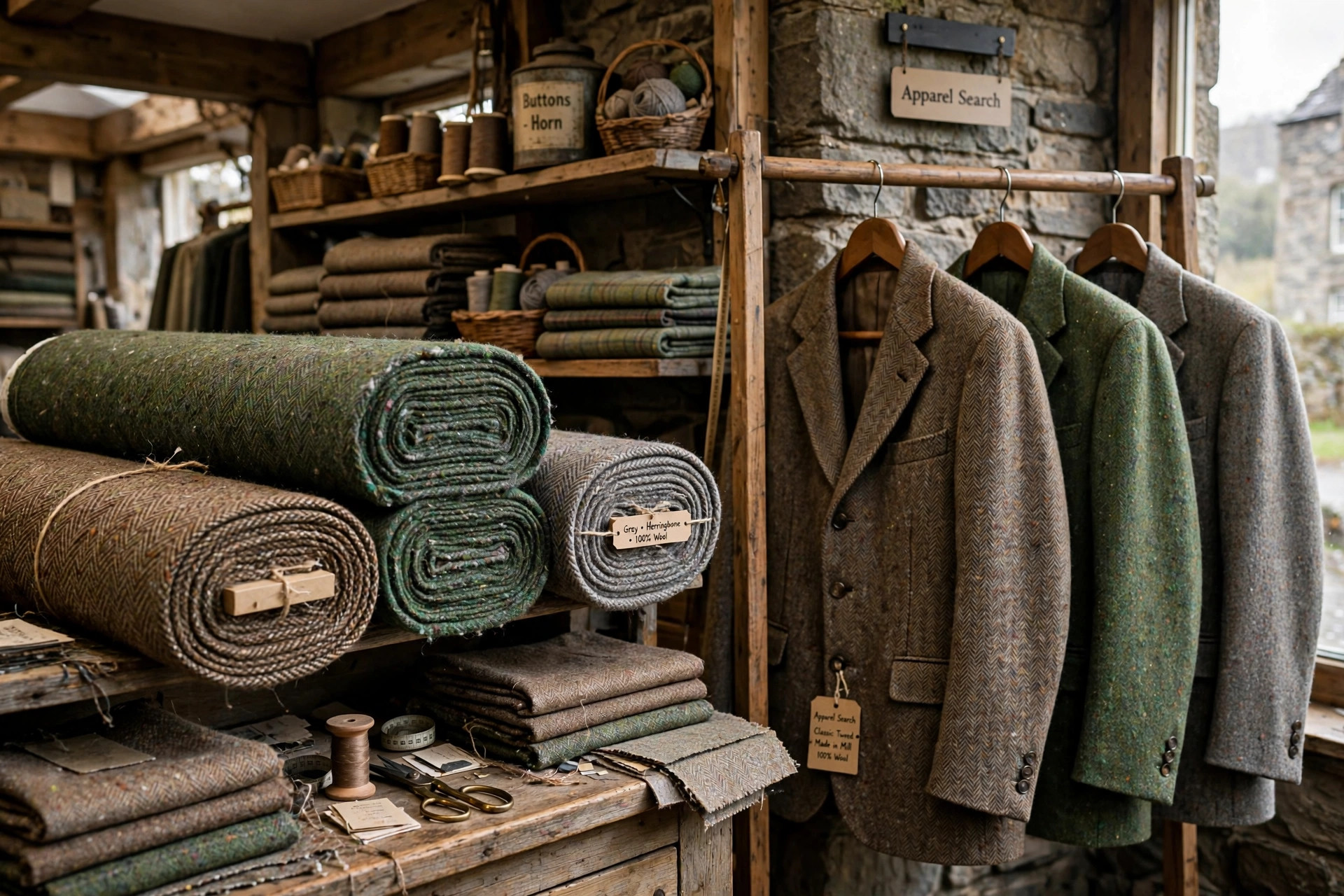
Cloth With a Landscape In It
Tweed is a rough-surfaced woolen cloth, traditionally woven from yarns spun with flecks of contrasting color and heathered mixtures, so the finished fabric carries the broken, earth-toned patterning of moor and hillside rather than a flat single color. It is usually a twill weave - herringbone and houndstooth are its classic patterns - sometimes plain weave, and always wool or a wool-rich blend in its honest form. The name is said to come from a nineteenth-century misreading of the Scots word for twill, helped along by the River Tweed; whatever its origin, by the Victorian era tweed was the uniform of country sport, and it has cycled through fashion ever since without ever quite leaving.
This directory lists a single tweed factory, Vrijesh Corporation of India, with its profile below - a sign of how much modern tweed weaving has concentrated in specialist woolen mills, in Britain and Ireland above all, alongside newer producers.
The Named Tweeds
Harris Tweed is the protected name: handwoven by islanders in Scotland's Outer Hebrides - Harris, Lewis, Uist and Barra - from pure virgin wool dyed and spun in the islands, and certified by the Harris Tweed Authority's Orb mark. No other cloth may legally use the name. Donegal tweed, from the Irish county, is recognized by its colorful neps - small flecks of bright yarn scattered through a plainer ground. Beyond those two, the trade names describe pattern and weight: herringbone, houndstooth (and its smaller pupp tooth), estate tweeds woven in a district's own check for its keepers and staff, and the lightweight fashion tweeds - many of them wool-blend or even wool-free - woven for the women's jacket trade, where boucle and novelty yarns join the mix.
A buyer should therefore treat 'tweed' as a family, not a fabric: fiber content, yarn character (cheviot-twist for hard country cloth, soft lambswool for jackets), weight and pattern all need stating before a mill can quote like for like.
Where Tweed Is Used
Jackets are tweed's throne - the tailored sports jacket in herringbone or flecked Donegal is one of menswear's permanent garments - followed by suits, overcoats, caps, waistcoats and country clothing built for thorn, weather and wear. Women's tailoring takes the lighter and novelty tweeds for jackets, skirts and coats, and the furnishing trade uses heavy tweeds for upholstery and cushions where the textured surface hides a decade of use.
Tweed's virtues in wear are the flip side of its rustic yarns: the mottled surface hides soil and small damage, the woolen structure is warm and naturally shower-resistant, and the cloth tailors beautifully, molding to a shoulder over time. Its demands are equally traditional - it is dry cleaned, rested between wearings, and stored against moth, because it is, after all, wool all the way down.
Fashion keeps rediscovering tweed on a roughly decade cycle: the boucle-rich tweed suit of the Paris houses, the heritage revival of British country cloth, and the streetwear borrowing of herringbone and houndstooth all return to the same qualities - texture that reads at a distance, pattern that forgives hard wear, and a fabric with a place and a story attached. Mills that keep their pattern books deep are ready each time the cycle turns.
Sourcing Notes
Specify a tweed by fiber and blend, yarn type, weave and pattern (with a pattern repeat size for checks and herringbones, since matching repeats drives garment cutting cost), finished weight - jacketings run roughly 280-400 gsm, overcoatings heavier - and whether the cloth carries the Harris Tweed certification or is a tweed-style cloth, a distinction with legal as well as commercial weight. Ask for the pattern card rather than a single swatch: tweed is bought as a range of colorways on one pattern, and the range is the offer.
Fabric Mills and Factories in This Directory
The mills below are listed in this directory. Each name opens the company's profile in the Fabric Mills by Name directory.
Vrijesh Corporation
A fabric mill based in India, profiled in the Apparel Search Fabric Mills by Name directory and listed among the mills supplying this fabric type.
Common Questions
What makes a fabric a tweed?
Woolen yarns with flecked, heathered color woven - usually in a twill such as herringbone - into a rough-textured, earth-toned cloth. True tweed is wool or wool-rich; fashion tweeds may blend or imitate it.
What is Harris Tweed?
Tweed handwoven in Scotland's Outer Hebrides from pure virgin wool produced in the islands, protected by law and certified with the Orb mark. Only cloth meeting those conditions may be sold as Harris Tweed.
What is tweed used for?
Tailored jackets and suits, overcoats, caps and country sportswear, women's jackets and skirts in lighter qualities, and hard-wearing upholstery.
More to Explore
- Antibacterial Fabric
- Bamboo
- Basalt
- Boucle
- Breathable
- Broadcloth
- Brocade
- Burlettes
- Canvas
- Carbon
- Chambray
- Chenille
- Chiffon
- Circular
- Clothing Industry Employment
- Clothing Industry Factories
- Conversion Charts
- Corduroy
- Cotton
- Crepe
- Crochet
- Damask
- Denim
- Dobby
- Double Knit
- Drill
- Duck
- Dyed Fabric
- Embroidered
- Embroidery Directory
- Fabric
- Fabric Definitions
- Fabric Directory
- Fabric Retail
- Fabric Wholesalers
- Fashion Industry News
- Fiberglass
- Fibers Directory
- Fil-a-Fils
- Filter Cloth
- Flame Retardant
- Fleece
- French Terry
- Gabardine
- Gauze
- Georgettes
- Ginghams
- Greige Fabric
- Herringbone
- Horse Hair
- Interlining
- Interlock
- Jacquard
- Jersey Fabric
- Lace
- Lacoste
- Linen
- Lining
- Long Fiber Reinforced Thermalplastics
- Mesh
- Metallic
- Muslin
- Narrow
- Net
- Non Woven Fabric
- Novelty
- Nylon
- Ottoman
- Oxford
- Percale
- Pile
- Pique
- Pointelle
- Polar Fleece
- Polyester
- Poplin
- Printed
- Printing Directory
- Quilted
- Raschel
- Reflective
- Rib
- Sateen
- Satin
- Seersucker
- Silk Fabric
- Single Jersey
- Smart Fabrics
- Stretch
- Suede
- Taffeta
- Tassars
- Terry
- Textile Machinery
- Textiles
- Thermal
- Tricot
- Tulle
- Twill
- Velcro
- Velour
- Velvet
- Viole
- Vrijesh Corporation
- Vynil
- Waffle
- Waterproof
- Wool
- Yarn Dyed
- Yarn Factories
Looking for Fabric Mills and Suppliers?
The wider directory behind these pages is the Fabric section hub, which opens the whole Apparel Search fabric mill directory: fabric types from A to Z, the Fabric Mills by Name profiles, and the dyeing, printing and finishing directories that support them.