Carbon Fabric
Carbon fabric is woven from carbon fiber - a cloth with high tensile strength at a fraction of the weight of metal, and the visible face of modern composites. This guide explains how carbon fabric is woven and used, and lists the mill Apparel Search carries for it.
Shop Carbon Fiber Fabric Now
Shop Carbon Fiber Fabric on Amazon Shop Carbon Fiber Fabric on eBayThe Amazon and eBay links on this page are affiliate links. If you make a purchase through them, Apparel Search may earn a commission.
What Carbon Fabric Is
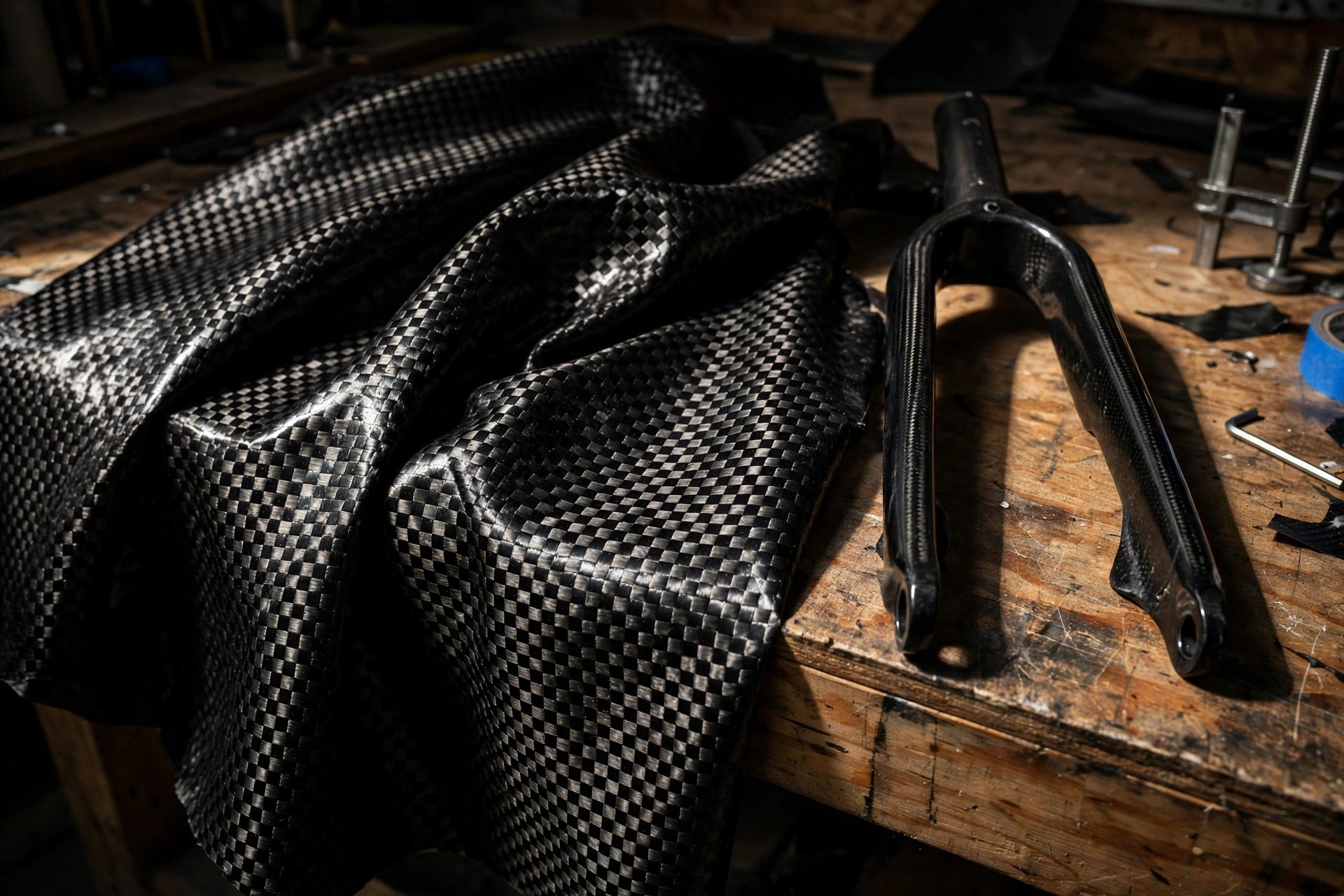
Carbon fabric begins as carbon fiber: filaments of nearly pure carbon, a few micrometres thick, bundled into tows of thousands of filaments and woven on looms adapted to handle a fiber that is strong in tension but intolerant of sharp bends and abrasion. As the original directory put it, carbon fabrics have high elasticity of performance in the trade's shorthand - properly, a very high tensile strength and stiffness - combined with light weight, a pairing no metal and no natural fiber matches. The woven cloth itself is only half a product: carbon fabric does its famous work as the reinforcement inside a composite, saturated with resin - usually epoxy - and cured into a rigid part whose strength runs along the fiber directions the weaver and the laminator chose.
The weave pattern is a working decision, not decoration. Plain weave, with every tow interlaced, is the most stable and easiest to handle but the stiffest to drape. The familiar two-by-two twill - the diagonal checkerboard most people picture when they picture carbon - drapes better over curves and gives the classic composite look. Satin weaves drape further still for deep moulds, and unidirectional fabric puts nearly all its fiber in one direction for parts loaded along a single axis. Tow size matters with it: fine 1K and 3K cloths for light, detailed work, heavier 12K and beyond for thick structural laminates.
Where Carbon Fabric Earns Its Price
It is widely used in aerospace materials, automobiles, and sporting goods - golf shafts, surfboards and tennis rackets are the original directory's own examples, and they remain the everyday face of the material. Aerospace buys carbon for strength per kilogram in structures where every gram of airframe costs fuel for thirty years. Motorsport and performance cars buy it for panels, tubs and shafts that must be light and stiff at once. Sporting goods buy it because a racket, shaft, frame or board can be tuned - stiff here, forgiving there - by choosing where the fabric's directional strength points, something an isotropic metal cannot offer.
Working with carbon fabric has its own rules, and buyers at every scale meet them quickly. Dry fabric is handled gently to keep tows aligned, cut with shears or rotary cutters reserved for it, and laminated either as prepreg - cloth supplied already impregnated with resin and kept cold until use - or by wet layup and infusion. The dust from cutting and sanding cured laminate is an irritant to control, and the finished composite's properties depend as much on the resin system and cure as on the cloth, which is why serious specifications name the fabric, the resin and the process together. The fiber context sits in the Fibers Directory, with the Fabric Directory hub covering the technical end of the fabric shelf.
Using This Directory
The listing below is the complete set Apparel Search carries for carbon fabric: You Chang Company of China, linked to its profile in the Fabric Mills by Name section. No listing has been added or removed. A single-mill category fits a material that is specified rather than browsed: most carbon fabric is bought against a tow size, weave, areal weight and resin compatibility, so the directory's job is to start the conversation with a producer, after which data sheets do the talking. Around it, the trade runs through the Textile Machinery directory, the Embroidery Directory and Printing Directory, Clothing Industry Factories, Yarn Factories, Fabric Retail and Fabric Wholesalers, plus Fashion Industry News, Clothing Industry Employment and Conversion Charts. Thank you for using the Apparel Search Fabric Mill Directory.
Carbon Fabric Mills Listed in This Directory
You Chang Company (China)
Company listed in the Apparel Search fabric mill directory under its own profile in the Fabric Mills by Name section. Open the linked profile for the company's directory record and contact details.
Common Questions
Why is carbon fabric so strong for its weight?
Carbon fiber filaments have very high tensile strength and stiffness at very low density. Woven into fabric and cured inside a resin matrix, they form composite parts whose strength runs along the fiber directions - which is how carbon components outperform metals on strength per kilogram in aerospace, automotive and sporting goods uses.
What is the difference between plain weave and twill carbon fabric?
Plain weave interlaces every tow, making the most stable, easiest-handling cloth but the least willing to drape over curves. Two-by-two twill - the classic diagonal carbon pattern - drapes noticeably better and is the common choice for visible composite parts. Satin weaves drape further; unidirectional fabric concentrates strength along one axis.
Which mill is listed for carbon fabric?
One company: You Chang Company (China), linked to its own profile in the Fabric Mills by Name section of the directory.
More to Explore - The Full Fabric Directory A-Z
- Canvas Fabric Directory
- Carbon Fabric
- Chambray Fabric Directory
- Chenille Fabric Mills
- Chiffon Fabric Directory
- Circular Knit Fabric Mills
- Corduroy Fabric Mills
- Cotton Fabric Mills
- Crepe Fabric Directory
- Crochet Fabric Mills
- Bamboo Fabric Mill Directory
- Basalt Fabric
- Boucle Fabric Mills
- Breathable Knit Fabric
- Broadcloth Fabric Directory
- Brocade Fabric Mills
- Burlettes Fabric Mills
- About Fabrics
- About Knitted Fabrics
- About Woven Fabrics
- Antibacterial Fabric Mills
- Fabric Mills - Fabric Section Hub
- Wool Fiber Directory
- Textile Machinery
- Embroidery Directory
- Printing Directory
- You Chang Company
- Clothing Industry Factories
- Yarn Factories
- Fabric Retail
- Fabric Wholesalers
- Fibers Directory
- Fabric Definitions
- Fashion Industry News
- Clothing Industry Employment
- Conversion Charts
- Damask
- Denim
- Dobby
- Double Knit
- Drill
- Duck
- Dyed Fabric
- Embroidered
- Fiberglass
- Fil-a-Fils
- Filter Cloth
- Flame Retardant
- Fleece
- French Terry
- Gabardine
- Gauze
- Georgettes
- Ginghams
- Greige Fabric
- Herringbone
- Horse Hair
- Interlining
- Interlock
- Jacquard
- Jersey Fabric
- Lace
- Lacoste
- Linen
- Lining
- Long Fiber Reinforced Thermalplastics
- Metallic
- Mesh
- Muslin
- Narrow
- Net
- Non Woven Fabric
- Novelty
- Nylon
- Ottoman
- Oxford
- Percale
- Pile
- Pique
- Pointelle
- Polar Fleece
- Polyester
- Poplin
- Printed
- Quilted
- Raschel
- Reflective
- Rib
- Sateen
- Satin
- Seersucker
- Silk Fabric
- Single Jersey
- Smart Fabrics
- Stretch
- Suede
- Taffeta
- Tassars
- Terry
- Thermal
- Tricot
- Tulle
- Tweed
- Twill
- Velcro
- Velour
- Velvet
- Viole
- Vynil
- Waffle
- Waterproof
- Wool
- Yarn Dyed
- Textiles
- Fabric
Looking for Fabric Mills and Suppliers?
Compare carbon with the other technical fibers in the Fibers Directory, or return to the Fabric Directory hub for the full fabric section.