Metallic Fabric Directory
Metallic fabric gets its shine from metallic yarn - most famously Lurex, a metallised film yarn sliced into glittering strips and woven or knitted in with ordinary fibres. This page explains how the cloth is made and used, and carries the company this directory lists under metallic fabric factories, Kuanging Industrial Co. Ltd.
Shop Metallic Fabric Now
Shop Metallic Fabric on Amazon Shop Metallic Fabric on eBayThe Amazon and eBay links on this page are affiliate links. If you make a purchase through them, Apparel Search may earn a commission.
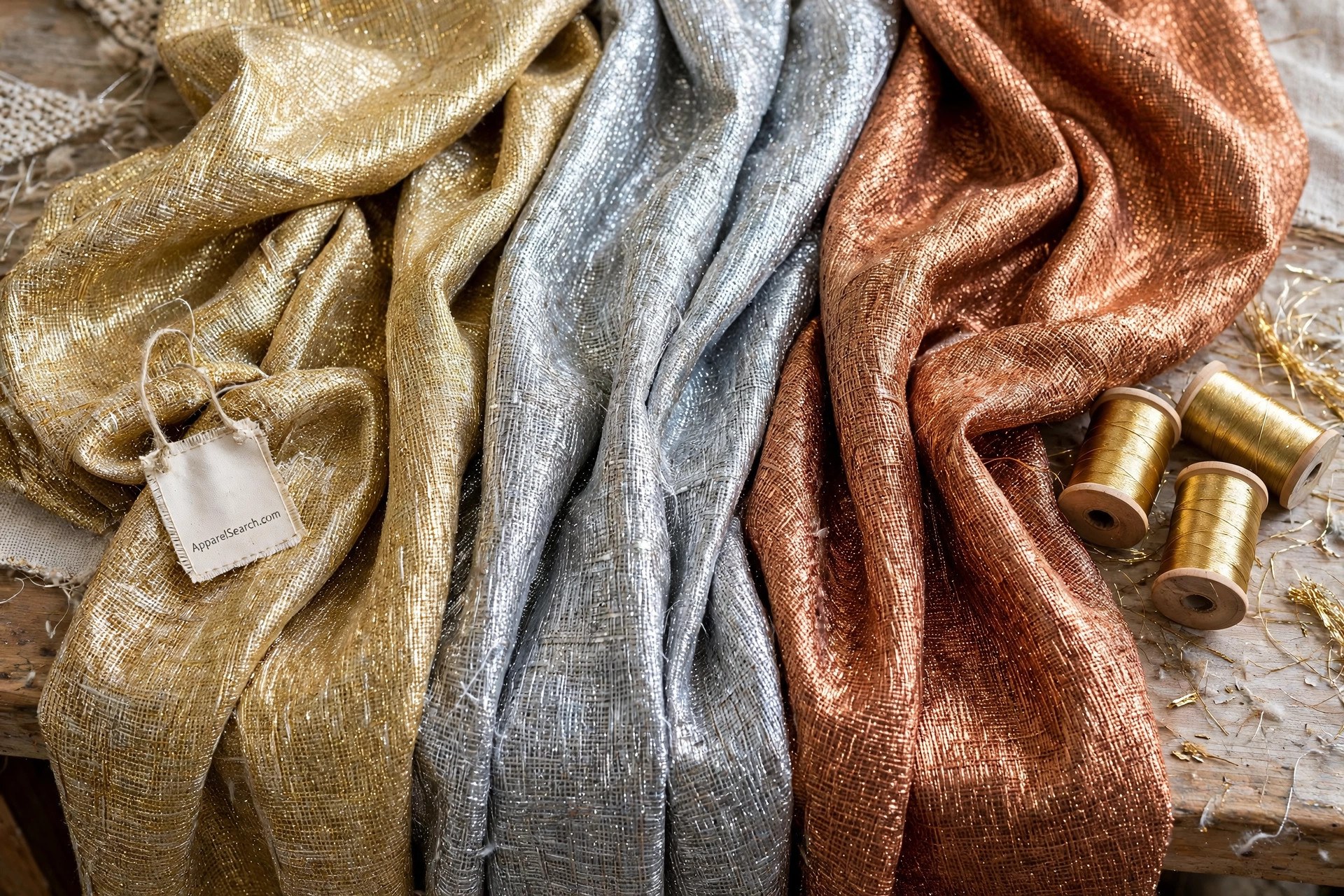
How Metallic Fabric Is Made
Modern metallic yarn is not metal wire. The standard product - sold for decades under the Lurex name, which this directory's original heading carries - starts as a clear polyester film that is vacuum-coated with a microscopically thin layer of aluminium, dyed or laminated for colour, and slit into flat strips a fraction of a millimetre wide. Those strips can be used flat for maximum sparkle, twisted around a nylon or polyester core yarn for strength and softness, or combined with other fibres at the spinning stage. Woven or knitted into a ground of silk, cotton, viscose or synthetics, the strips sit on the surface and catch light with every movement, which is why a small percentage of metallic yarn transforms an otherwise plain cloth.
The colour range runs well beyond gold and silver. Because the colour lives in the film's coating and lamination, metallic yarns come in copper, bronze, jewel tones, iridescent and holographic effects, and matte versions that glow rather than glitter. The ground fabric decides the garment: a silk-metallic brocade is evening wear, a cotton-metallic stripe is a summer shirt, a metallic-coated knit is a costume or dance fabric, and metallic threads worked into denim, tweed and jersey give everyday cloth a low, wearable shimmer. Quality shows in the hand - better yarns are laminated or core-wrapped so the cloth stays supple and the metal layer does not crack, flake or tarnish against the skin.
Where Metallic Fabric Is Used
Evening and occasion wear is the classic territory: gowns, cocktail dresses, jackets and accessories where light-play is the point of the garment. Metallic cloth also works hard in dance, theatre and costume, in festive and religious textiles, in party and holiday ranges that return every season, and in interiors - cushions, throws, table linen and drapery that borrow the same sparkle. At the subtle end, pinstripes and flecks of metallic yarn lift suiting, shirting and knitwear without turning them into costume, and trimmings - braids, ribbons and fringes - are woven heavily with metallic yarns. The trade page for the yarn itself is this site's Metallic Yarn Factory directory, which covers the yarn makers behind fabrics like these.
This directory lists one company under metallic fabric factories: Kuanging Industrial Co. Ltd., carried below with a link to its Fabric Mills by Name profile, where its directory record lives. A single listing is normal for a speciality this narrow - metallic weaving is a sideline for most mills rather than a whole business - and buyers usually approach it through the yarn specification first and the weaver second. Thank you for using the Apparel Search Fabric Mill Directory.
Working With and Caring for Metallic Fabric
Metallic cloth asks for a little respect in the workroom and the wash. The film strips can melt or dull under a hot iron, so press from the wrong side through a cloth on a low setting, and test a cutting first. Flat strips can be scratchy, which is why garments in metallic fabric are usually lined and why core-wrapped yarns are worth their premium for anything worn against skin. Sew with a fresh, fine needle and expect some fraying of the metallic yarn at raw edges. Care labels on metallic fabrics normally say gentle or dry clean: detergents and heat cloud the aluminium layer over time, and silver-tone cloth can tarnish like the metal it imitates. Stored rolled or folded in tissue, away from light, a metallic fabric keeps its brightness for years; crushed in a drawer, the film creases and the sparkle breaks along the folds.
Metallic Fabric Companies Listed Here
Kuanging Industrial Co. Ltd.
The company this directory lists under metallic fabric factories. Follow the company name to its Fabric Mills by Name profile, which carries its full directory record.
Common Questions
What is Lurex fabric?
Fabric woven or knitted with Lurex-type metallic yarn - a polyester film coated with a thin layer of aluminium, coloured and slit into fine strips. The strips sit on the cloth's surface and glitter as it moves; the name on this directory's original heading reflects how closely the yarn and the fabric are identified.
Is metallic fabric made of real metal?
Only a microscopic amount: the shine comes from a vacuum-deposited aluminium layer on a plastic film yarn, not from metal wire. That keeps the cloth light and flexible, but it also means heat, harsh detergents and crushing can dull or crack the finish.
Which company does this directory list for metallic fabric?
Kuanging Industrial Co. Ltd., linked to its Fabric Mills by Name profile on this site, where its directory record is carried.
More to Explore - The Full Fabric Directory A-Z
- Mesh Fabric Mills
- Muslin Fabric Mills
- Net Textiles
- Tulle Fabric
- Tricot Fabric
- Raschel Fabric
- Fabric Mills - Fabric Section Hub
- Metallic Yarn Factory
- Textile Machinery
- Embroidery Directory
- Printing Directory
- Kuanging Industrial Co. Ltd.
- Clothing Industry Factories
- Yarn Factories
- Fabric Retail
- Fabric Wholesalers
- Fibers Directory
- Fabric Definitions
- Fashion Industry News
- Clothing Industry Employment
- Conversion Charts
- Antibacterial Fabric
- Bamboo
- Basalt
- Boucle
- Breathable
- Broadcloth
- Brocade
- Burlettes
- Canvas
- Carbon
- Chambray
- Chenille
- Chiffon
- Circular
- Corduroy
- Cotton
- Crepe
- Crochet
- Damask
- Denim
- Dobby
- Double Knit
- Drill
- Duck
- Dyed Fabric
- Embroidered
- Fiberglass
- Fil-a-Fils
- Filter Cloth
- Flame Retardant
- Fleece
- French Terry
- Gabardine
- Gauze
- Georgettes
- Ginghams
- Greige Fabric
- Herringbone
- Horse Hair
- Interlining
- Interlock
- Jacquard
- Jersey Fabric
- Lace
- Lacoste
- Linen
- Lining
- Long Fiber Reinforced Thermalplastics
- Narrow
- Non Woven Fabric
- Novelty
- Nylon
- Ottoman
- Oxford
- Percale
- Pile
- Pique
- Pointelle
- Polar Fleece
- Polyester
- Poplin
- Printed
- Quilted
- Reflective
- Rib
- Sateen
- Satin
- Seersucker
- Silk Fabric
- Single Jersey
- Smart Fabrics
- Stretch
- Suede
- Taffeta
- Tassars
- Terry
- Thermal
- Tweed
- Twill
- Velcro
- Velour
- Velvet
- Viole
- Vynil
- Waffle
- Waterproof
- Wool
- Yarn Dyed
Looking for Fabric Mills and Suppliers?
Return to the Fabric Directory hub for the full fabric section, or browse the Fabric Manufacturers Directory page for the wider mill trade.