Denim Fabric Directory
Denim is the most successful fabric on earth: an indigo-dyed, warp-faced cotton twill that began as workwear and became the world's uniform. This directory lists the fifteen denim mills Apparel Search carries and points to the denim definition, guide and glossary.
Shop Denim Fabric Now
Shop Denim Fabric on Amazon Shop Denim Fabric on eBayThe Amazon and eBay links on this page are affiliate links. If you make a purchase through them, Apparel Search may earn a commission.
What Denim Is
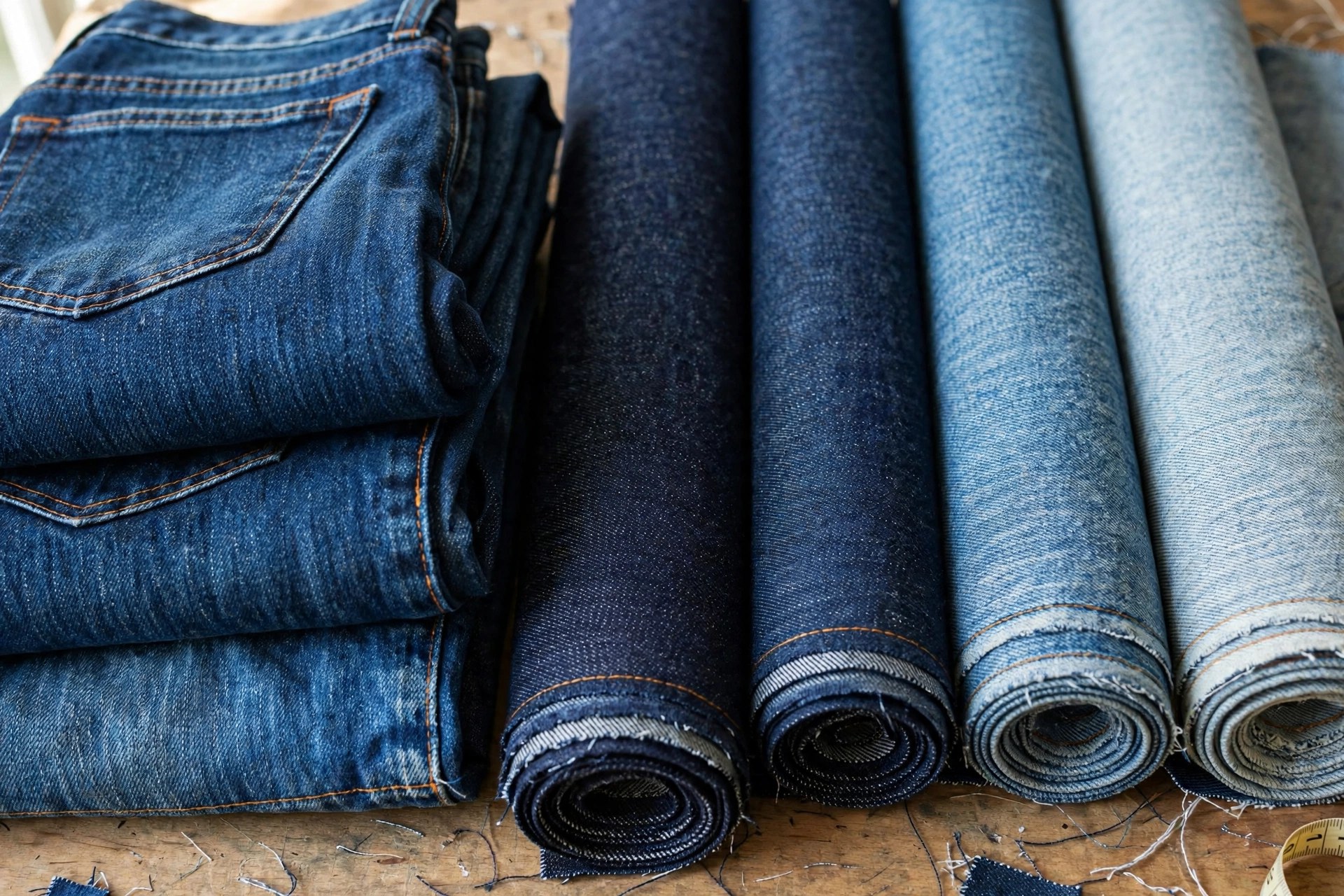
Denim is a warp-faced twill: the warp yarns are dyed indigo and packed so closely that they form nearly the whole face of the cloth, while the undyed white weft shows mainly on the back - which is why jeans are deep blue outside and pale inside. The formal Denim Fabric Definition states the construction, and the companion resources on this page - the Denim Fabric Guide and the Denim Glossary - cover the fabric's types and terminology in depth. Indigo sits on the surface of the warp yarn rather than penetrating it, and that shallow dyeing is denim's defining behaviour: abrasion wears the blue away thread by thread, producing the fades that turned a work cloth into a fashion material.
The cloth descends from serge de Nimes - the twill of Nimes, France, that gives denim its name - and from the dungaree cloth of India, and its modern form was fixed in the 1870s when riveted denim work trousers were patented in America. For a century denim meant one thing: a heavy, stiff, all-cotton twill in a narrow range of indigo shades. The modern fabric is a family instead - weights from shirting-light to twenty-ounce heavyweight, stretch denims with elastane, colored and black denims, slub and crosshatch textures, and selvedge denims woven on vintage shuttle looms for the premium trade - all of it recognisably the same warp-faced twill underneath.
Buying and Specifying Denim
Weight is the first specification, quoted in ounces per square yard: light denims under ten ounces serve shirts and summer dresses, the classic jean weights run from about twelve to fourteen and a half ounces, and heavyweight denims above sixteen ounces serve the workwear and enthusiast markets. After weight comes composition - rigid all-cotton denim breaks in and fades personally, while a percent or two of elastane trades some of that character for comfort and shape retention. Shade, cast (the reddish or greenish undertone of the indigo), and finishing route follow: raw denim is sold unwashed for the wearer to fade, while most production denim is pre-washed, stone-washed, lasered or resin-treated at the garment stage by the Denim Jean Factories, with Pumice Stone the classic abrasive of the wash house.
Shrinkage is the specification buyers most often regret: unsanforized denim can shrink several percent in length on its first wash, sanforized fabric is pre-shrunk to a small residual allowance, and the difference must be settled before patterns are graded, not after garments come back short. Around this directory, the Fabric Directory hub covers the wider woven family, and the trade runs through the Textile Machinery directory, Clothing Industry Factories, Yarn Factories, Fabric Retail and Fabric Wholesalers, with the Fibers Directory and Fabric Definitions alongside.
Using This Directory
The listings below are the complete set for this category as Apparel Search carries it: fifteen mills across Pakistan, China, Bangladesh, Taiwan, Turkey, Japan and the USA, each linked to its own profile in the Fabric Mills by Name section. No listing has been added or removed. Denim is one of the directory's most international categories, which matches the fabric's economics: indigo dyeing ranges and heavy twill looms are capital-intensive, and the great denim mills supply jean brands on every continent. Industry readers also use Fashion Industry News, Clothing Industry Employment and Conversion Charts. When comparing offers, put weight, composition, shade and shrinkage results side by side before price - two fabrics both honestly called denim can differ in every one of those numbers. Thank you for using the Apparel Search Fabric Mill Directory.
Denim Fabric Mills Listed in This Directory
Artistic Denim Mills Limited (Pakistan)
Company listed in the Apparel Search fabric mill directory under its own profile in the Fabric Mills by Name section. Open the linked profile for the company's directory record and contact details.
Best Textiles International Co.,Ltd (China)
Company listed in the Apparel Search fabric mill directory under its own profile in the Fabric Mills by Name section. Open the linked profile for the company's directory record and contact details.
Beximco Group (Bangladesh)
Company listed in the Apparel Search fabric mill directory under its own profile in the Fabric Mills by Name section. Open the linked profile for the company's directory record and contact details.
Changshu Huarui Knitting Textile Co., Ltd (China)
Company listed in the Apparel Search fabric mill directory under its own profile in the Fabric Mills by Name section. Open the linked profile for the company's directory record and contact details.
Flytex Fabric Company Limited (China)
Company listed in the Apparel Search fabric mill directory under its own profile in the Fabric Mills by Name section. Open the linked profile for the company's directory record and contact details.
Lu Her Knitting Factory (Taiwan)
Company listed in the Apparel Search fabric mill directory under its own profile in the Fabric Mills by Name section. Open the linked profile for the company's directory record and contact details.
Orta Blu (Turkey)
Company listed in the Apparel Search fabric mill directory under its own profile in the Fabric Mills by Name section. Open the linked profile for the company's directory record and contact details.
R ashid Textile Printing Ind. (Pvt.) Ltd.
Company listed in the Apparel Search fabric mill directory under its own profile in the Fabric Mills by Name section. Open the linked profile for the company's directory record and contact details.
Royal Navy Tailor Co. Ltd (Japan)
Company listed in the Apparel Search fabric mill directory under its own profile in the Fabric Mills by Name section. Open the linked profile for the company's directory record and contact details.
Safe Denim (USA)
Company listed in the Apparel Search fabric mill directory under its own profile in the Fabric Mills by Name section. Open the linked profile for the company's directory record and contact details.
Shanghai Best Linen Cotton Textile Factory (China)
Company listed in the Apparel Search fabric mill directory under its own profile in the Fabric Mills by Name section. Open the linked profile for the company's directory record and contact details.
Shanghai Sanmao Textile Co., Ltd. (China)
Company listed in the Apparel Search fabric mill directory under its own profile in the Fabric Mills by Name section. Open the linked profile for the company's directory record and contact details.
Supreme Textile Industries (Pvt) Limited
Company listed in the Apparel Search fabric mill directory under its own profile in the Fabric Mills by Name section. Open the linked profile for the company's directory record and contact details.
Xiamen C and D Inc. (China)
Company listed in the Apparel Search fabric mill directory under its own profile in the Fabric Mills by Name section. Open the linked profile for the company's directory record and contact details.
ZhongQi textile group company (China)
Company listed in the Apparel Search fabric mill directory under its own profile in the Fabric Mills by Name section. Open the linked profile for the company's directory record and contact details.
Photos

Common Questions
Why does denim fade the way it does?
Because indigo dye sits mostly on the surface of the warp yarn instead of penetrating it. Abrasion and washing remove that surface color thread by thread, so high-wear points - knees, thighs, pockets, hems - lighten first, producing denim's characteristic personal fades.
How is denim weight specified?
In ounces per square yard. Light denims under 10 ounces serve shirts and dresses, classic jean weights run about 12 to 14.5 ounces, and heavyweight denims above 16 ounces serve workwear and the enthusiast market. Weight must be read together with composition and shrinkage before comparing mills.
How many mills are listed in this denim directory?
Fifteen: Artistic Denim Mills (Pakistan), Best Textiles International (China), Beximco Group (Bangladesh), Changshu Huarui Knitting Textile (China), Flytex Fabric (China), Lu Her Knitting Factory (Taiwan), Orta Blu (Turkey), Rashid Textile Printing, Royal Navy Tailor (Japan), Safe Denim (USA), Shanghai Best Linen Cotton Textile Factory (China), Shanghai Sanmao Textile (China), Supreme Textile Industries, Xiamen C and D (China) and ZhongQi textile group (China).
More to Explore - The Full Fabric Directory A-Z
- Damask Fabric Factory
- Denim Fabric Directory
- Dobby Textile Factory
- Double Knit Fabric Factories
- Drill Fabric Mills
- Duck Fabric Directory
- Dyed Fabric Manufacturers
- Canvas Fabric Directory
- Carbon Fabric
- Chambray Fabric Directory
- Chenille Fabric Mills
- Chiffon Fabric Directory
- Circular Knit Fabric Mills
- Corduroy Fabric Mills
- Cotton Fabric Mills
- Crepe Fabric Directory
- Crochet Fabric Mills
- Bamboo Fabric Mill Directory
- Basalt Fabric
- Boucle Fabric Mills
- Breathable Knit Fabric
- Broadcloth Fabric Directory
- Brocade Fabric Mills
- Burlettes Fabric Mills
- About Fabrics
- About Knitted Fabrics
- About Woven Fabrics
- Antibacterial Fabric Mills
- Fabric Mills - Fabric Section Hub
- Denim Fabric Definition
- Denim Fabric Guide
- Denim Glossary
- Textile Machinery
- Denim Jean Factories
- Pumice Stone
- Artistic Denim Mills Limited
- Best Textiles International Co.,Ltd
- Beximco Group
- Changshu Huarui Knitting Textile Co., Ltd
- Flytex Fabric Company Limited
- Lu Her Knitting Factory
- Orta Blu
- R ashid Textile Printing Ind. (Pvt.) Ltd.
- Royal Navy Tailor Co. Ltd
- Safe Denim
- Shanghai Best Linen Cotton Textile Factory
- Shanghai Sanmao Textile Co., Ltd.
- Supreme Textile Industries (Pvt) Limited
- Xiamen C and D Inc.
- ZhongQi textile group company
- Clothing Industry Factories
- Yarn Factories
- Fabric Retail
- Fabric Wholesalers
- Fibers Directory
- Fabric Definitions
- Embroidered
- Fiberglass
- Fil-a-Fils
- Filter Cloth
- Flame Retardant
- Fleece
- French Terry
- Gabardine
- Gauze
- Georgettes
- Ginghams
- Greige Fabric
- Herringbone
- Horse Hair
- Interlining
- Interlock
- Jacquard
- Jersey Fabric
- Lace
- Lacoste
- Linen
- Lining
- Long Fiber Reinforced Thermalplastics
- Metallic
- Mesh
- Muslin
- Narrow
- Net
- Non Woven Fabric
- Novelty
- Nylon
- Ottoman
- Oxford
- Percale
- Pile
- Pique
- Pointelle
- Polar Fleece
- Polyester
- Poplin
- Printed
- Quilted
- Raschel
- Reflective
- Rib
- Sateen
- Satin
- Seersucker
- Silk Fabric
- Single Jersey
- Smart Fabrics
- Stretch
- Suede
- Taffeta
- Tassars
- Terry
- Thermal
- Tricot
- Tulle
- Tweed
- Twill
- Velcro
- Velour
- Velvet
- Viole
- Vynil
- Waffle
- Waterproof
- Wool
- Yarn Dyed
- Textiles
- Fabric
Looking for Fabric Mills and Suppliers?
Start with the Denim Fabric Guide and the Denim Glossary, or return to the Fabric Directory hub for the full fabric section.