Taffeta Fabric Mills
Taffeta is the crisp, rustling plain-weave fabric of ballgowns and linings: fine filament yarns woven tight and smooth. This page explains its qualities and keeps the original mill listings.
Shop Taffeta Fabric Now
Shop Taffeta Fabric on Amazon Shop Taffeta Fabric on eBayThese links open the Apparel Search shopping guides for Amazon and eBay, where the product links are kept in one place.
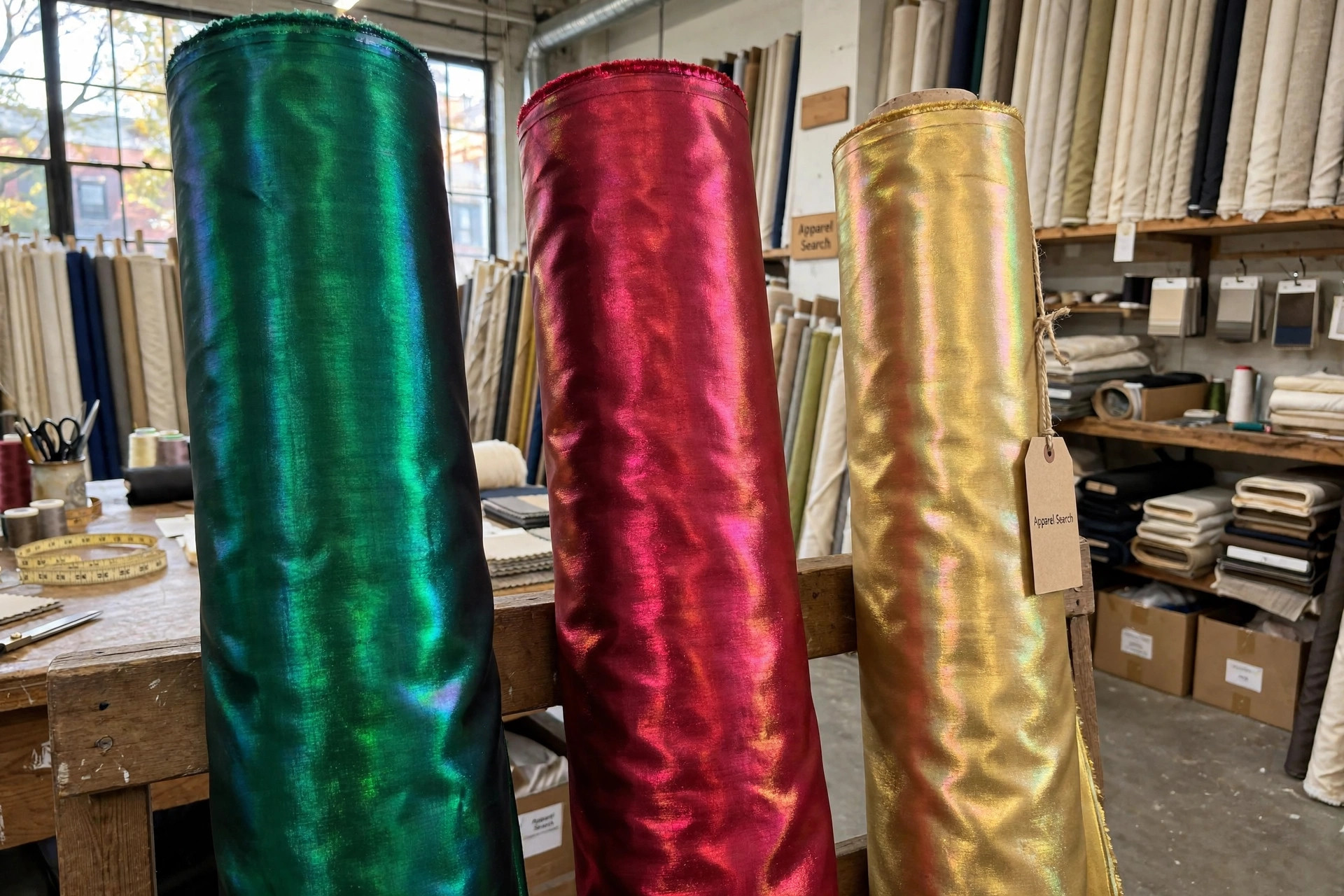
What Taffeta Is
Taffeta is a smooth, crisp plain-weave fabric woven from filament yarns. Warp and weft alternate one over, one under, exactly as in any plain weave, but the yarns are fine, the sett is dense, and the finished cloth is calendered flat, which gives taffeta its paper-like body, its slight sheen and the famous rustle - called scroop when it is deliberately enhanced on silk - that announces a formal dress before it is seen. The name is usually traced through French and Italian to a Persian word for twisted woven cloth, a reminder that taffeta began as a silk fabric of the luxury trade.
The original Apparel Search taffeta page listed five mills, kept below with their Fabric Mills by Name profiles: PT. Frans Putratex of Indonesia, Shenghong Group and Wujiang Hengyu of China, Vrijesh Corporation of India, and The West Coast Weaving Establishment. That spread is typical of modern taffeta production, which follows the polyester filament weaving industry of Asia, alongside the older silk tradition.
Silk, Polyester and the Other Taffetas
Silk taffeta remains the benchmark: firm, light, lustrous and expensive, woven for couture gowns, wedding dresses and fine linings. Most taffeta woven today, however, is polyester filament, which reproduces the crispness and sheen at a fraction of the cost and adds crease resistance and easy care; nylon taffeta serves linings, flags, kites and technical uses where tear strength matters, and acetate and rayon taffetas occupy smaller apparel niches. A buyer should always confirm the fiber on the label or spec sheet, because the fabrics look alike on the bolt and behave very differently in dyeing, pressing and wear.
Within any fiber, the trade names describe the finish or effect. Shot (or changeable) taffeta weaves warp and weft in different colors, so the cloth shifts hue as it moves - the classic ballgown effect. Moire taffeta is calendered under engraved rollers that press a watered, wavy pattern into the surface. Paper taffeta is extra stiff and thin, yarn-dyed taffeta carries stripes, checks and plaids woven in, and embossed, flocked and metallized versions serve decoration and display.
Where Taffeta Is Used
Evening and bridal wear is taffeta's home ground: full skirts need a fabric that holds a sculpted shape without interlining, and taffeta's body does exactly that. It is also a standard lining for coats, jackets and dresses, because its smooth face lets garments slide on and its crispness keeps lining from clinging. Beyond apparel, taffeta appears in ribbons and bows, lampshades and draperies, gift and display work, and as the base cloth for some coated and technical fabrics.
Sewing taffeta takes a little respect: the dense weave shows every needle hole, pins should be kept inside seam allowances, and cut edges fray quickly, so seams are usually finished or enclosed. It presses on a cool setting - polyester taffeta glazes and can melt under a hot iron - and water spots show on some silk qualities, which is why formal taffeta garments are dry cleaned.
Taffeta also rewards the pattern cutter who plans for its body: it holds pleats, gathers and bows in sculpted shapes that softer fabrics collapse out of, but it will not ease or stretch around a curve, so bodices are fitted precisely and skirts are given the seam allowance their volume needs.
Sourcing Notes
When requesting taffeta samples, state the fiber, the weight, the finished width and the end use, and ask whether the cloth is piece-dyed or yarn-dyed, because shot and plaid effects are only possible yarn-dyed. Check color under both daylight and evening light - shot taffeta is specified by the color it shows in motion, not by a flat swatch - and for lining programs, confirm the anti-static finish and the shade range the mill holds in stock, since lining buyers reorder by shade number for years.
Fabric Mills and Factories in This Directory
The mills below are the listings the original Apparel Search directory carried on this page. Each name opens that company's profile in the Fabric Mills by Name directory.
PT. Frans Putratex
A fabric mill based in Indonesia, profiled in the Apparel Search Fabric Mills by Name directory and listed among the mills supplying this fabric type.
Shenghong Group Co Ltd
A fabric mill based in China, profiled in the Apparel Search Fabric Mills by Name directory and listed among the mills supplying this fabric type.
Vrijesh Corporation
A fabric mill based in India, profiled in the Apparel Search Fabric Mills by Name directory and listed among the mills supplying this fabric type.
The West Coast Weaving Establishment
Profiled in the Apparel Search Fabric Mills by Name directory and listed among the mills supplying this fabric type.
Wujiang Hengyu Textile Dyeing Finishing Co.,Ltd.
A fabric mill based in China, profiled in the Apparel Search Fabric Mills by Name directory and listed among the mills supplying this fabric type.
Common Questions
What is taffeta fabric made from?
Traditionally silk, and today most often polyester filament, with nylon, acetate and rayon versions also woven. All are fine filament yarns in a dense plain weave, finished crisp and smooth.
Why does taffeta rustle?
The rustle, called scroop, comes from the fabric's crisp finish and tight filament weave; on silk it was historically enhanced with a mild acid treatment. Stiffer, finer taffetas rustle most.
What is shot taffeta?
Shot or changeable taffeta weaves the warp and weft in different colors, so the surface shifts between the two hues as the cloth moves and the light changes - a classic effect for evening gowns.
More to Explore
- Antibacterial Fabric
- Bamboo
- Basalt
- Boucle
- Breathable
- Broadcloth
- Brocade
- Burlettes
- Canvas
- Carbon
- Care Labels
- Chambray
- Chenille
- Chiffon
- Circular
- Clothing Industry Employment
- Clothing Industry Factories
- Conversion Charts
- Corduroy
- Cotton
- Crepe
- Crochet
- Damask
- Denim
- Dobby
- Double Knit
- Drill
- Duck
- Dyed Fabric
- Embroidered
- Embroidery Directory
- Fabric
- Fabric Definitions
- Fabric Directory
- Fabric Retail
- Fabric Wholesalers
- Fashion Industry News
- Fiberglass
- Fibers Directory
- Fil-a-Fils
- Filter Cloth
- Flame Retardant
- Fleece
- French Terry
- Gabardine
- Gauze
- Georgettes
- Ginghams
- Greige Fabric
- Herringbone
- Horse Hair
- Interlining
- Interlock
- Jacquard
- Jersey Fabric
- Labels
- Lace
- Lacoste
- Linen
- Lining
- Long Fiber Reinforced Thermalplastics
- Mesh
- Metallic
- Muslin
- Narrow
- Net
- Non Woven Fabric
- Novelty
- Nylon
- Ottoman
- Oxford
- Percale
- Pile
- Pique
- Pointelle
- Polar Fleece
- Polyester
- Poplin
- Printed
- Printing Directory
- PT. Frans Putratex
- Quilted
- Raschel
- Reflective
- Rib
- Sateen
- Satin
- Seersucker
- Shenghong Group Co Ltd
- Silk Fabric
- Single Jersey
- Smart Fabrics
- Stretch
- Suede
- Tassars
- Terry
- Textile Machinery
- Textiles
- The West Coast Weaving Establishment
- Thermal
- Tricot
- Tulle
- Tweed
- Twill
- Velcro
- Velour
- Velvet
- Viole
- Vrijesh Corporation
- Vynil
- Waffle
- Waterproof
- Wool
- Wujiang Hengyu Textile Dyeing Finishing Co.,Ltd.
- Yarn Dyed
- Yarn Factories
Looking for Fabric Mills and Suppliers?
The wider directory behind these pages is the Fabric section hub, which opens the whole Apparel Search fabric mill directory: fabric types from A to Z, the Fabric Mills by Name profiles, and the dyeing, printing and finishing directories that support them.