Sateen Fabric Manufacturers
Sateen is the cotton cousin of satin: a warp-faced weave that gives cotton a smooth, quietly lustrous surface. This page explains how sateen is made and points buyers to the dyeing and finishing side of the directory, where sateen is usually bought.
Shop Sateen Fabric Now
Shop Sateen Fabric on Amazon Shop Sateen Fabric on eBayThese links open the Apparel Search shopping guides for Amazon and eBay, where the product links are kept in one place.
What Sateen Is
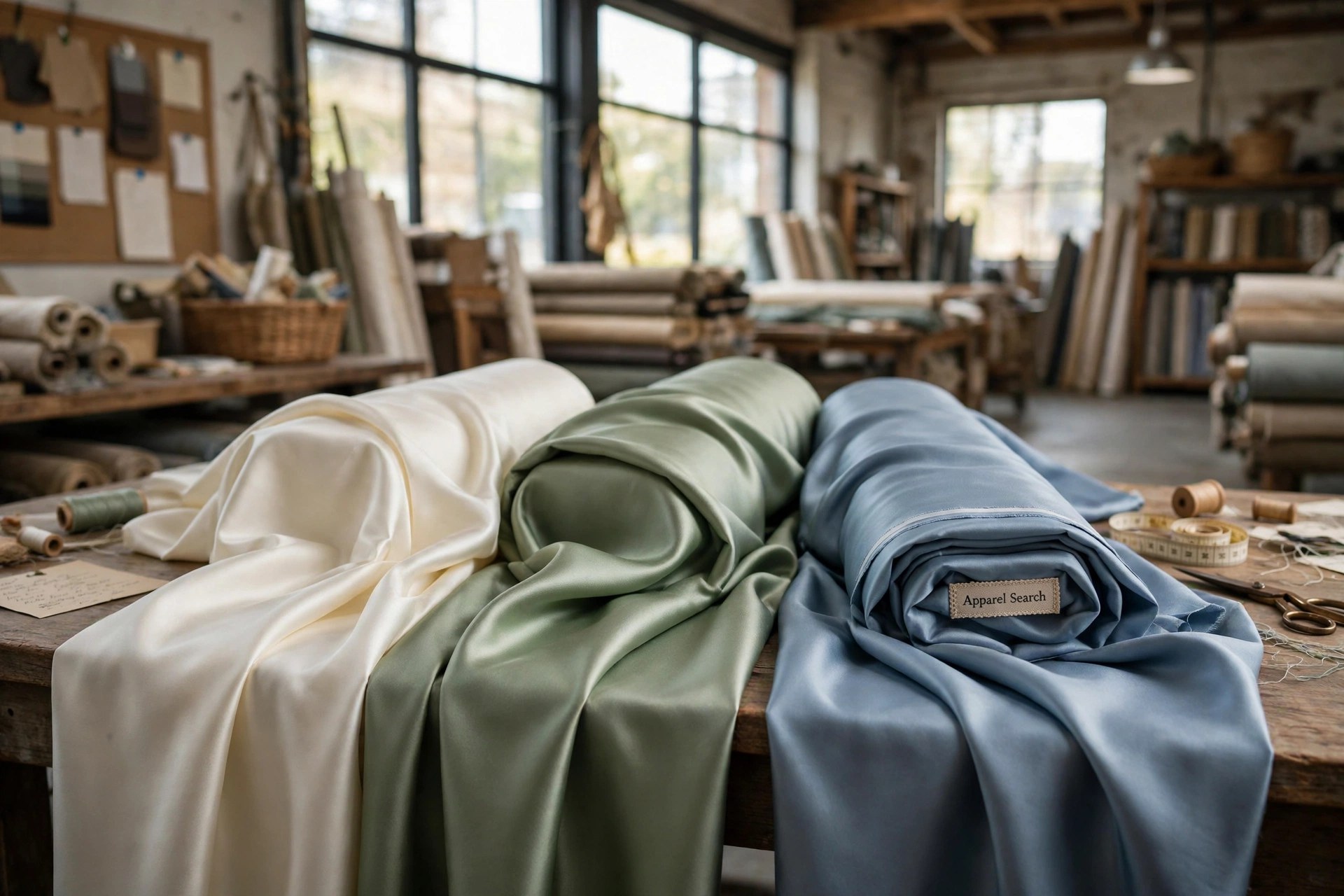
Sateen is a fabric, not a fiber. It is woven with a satin weave - traditionally a four-over, one-under warp-faced construction - but spun from cotton yarns (or, in some modern versions, cotton-rich blends) instead of the continuous filaments used for true satin. Because the long warp floats sit on the surface, sateen shows a soft sheen and a smooth hand that plain-weave cotton cannot match, while keeping cotton's absorbency, breathability and easy care. The name is simply satin plus the -een ending that English gave cotton imitations of silk cloth.
This page has no mill listings of its own, because sateen is most often traded as a finished fabric, bought piece-dyed, printed or mercerized. Start instead with the dyed-fabric profiles and the Dyeing and Finishing Directory linked on this page: the finishing houses matter as much to a sateen buyer as the weaving mill that produced the greige cloth.
How Sateen Differs From Satin and Percale
Satin and sateen share a weave structure and differ in yarn: satin is woven from filament yarns such as silk or polyester, which makes its surface brighter and more slippery, while sateen's spun cotton yarns give a warmer, more matte-lustrous face that drapes softly and feels less slick against skin. Percale, the other familiar bedding cotton, is a plain weave - one over, one under - so it feels crisper and lighter, with no sheen at all. A buyer comparing swatches should check which side is the face: on sateen the smooth, lustrous side is the warp face, and prints are normally applied to that side.
Mercerization is the finish most associated with quality sateen. Treating the cotton under tension with caustic soda swells the fibers, which deepens dye uptake, raises the luster and adds strength - a mercerized sateen takes rich, even color and keeps its sheen through repeated laundering. Unmercerized sateen is cheaper and softer-looking but duller, and its sheen fades faster in the wash.
Where Sateen Is Used
Bed linen is sateen's best-known market: sheets and duvet covers woven at thread counts from about 300 upward feel smooth and slightly warm, a combination hotels and home brands both sell on. In apparel, sateen appears in dresses, blouses, skirts and tailored trousers where a cotton fabric needs a polished surface, and stretch sateen - woven with a small percentage of elastane in the weft - is a staple for fitted pants, jackets and uniforms. Heavier sateens serve as lining and pocketing cloth, and the fabric's smooth face makes it a good base for prints and for embroidery.
When sourcing, ask a mill which yarn count and construction it weaves, whether the cloth is mercerized, and what width and shrinkage it guarantees after finishing. Sateen's floats make it a little more prone to snagging and surface abrasion than a plain weave, so end use should guide the construction: fine, dense sateens for bedding and shirting, sturdier ones for trousers and workwear.
Buying Sateen Through This Directory
Because sateen is usually specified together with its finish, start from these two routes: the Dyed Fabrics profile from Pakistan, a major piece-dyeing center, and the Dyeing and Finishing Directory, which lists the houses that dye, print and finish woven cloth. From there, the A-to-Z fabric links below reach the weaving side - cotton mills, and the satin and percale pages for the closest comparisons - while the Fabric Mills by Name profiles give the company-level record for individual suppliers.
Common Questions
Is sateen the same as satin?
No. They share a weave structure, but satin is woven from filament yarns such as silk or polyester, while sateen is woven from spun cotton yarns. Sateen feels warmer and less slippery, with a softer sheen.
What is sateen fabric used for?
Mostly bed sheets and duvet covers, plus dresses, blouses, tailored trousers and stretch pants, linings and printed apparel fabrics - anywhere cotton needs a smooth, polished surface.
Does sateen need special care?
Cotton sateen washes like other cotton: warm machine wash, and iron on the reverse if you want to protect the sheen. Mercerized sateen keeps its luster longest.
More to Explore
- Antibacterial Fabric
- Bamboo
- Basalt
- Boucle
- Breathable
- Broadcloth
- Brocade
- Burlettes
- Canvas
- Carbon
- Chambray
- Chenille
- Chiffon
- Circular
- Clothing Industry Employment
- Clothing Industry Factories
- Conversion Charts
- Corduroy
- Cotton
- Crepe
- Crochet
- Damask
- Denim
- Dobby
- Double Knit
- Drill
- Duck
- Dyed Fabric
- Dyed Fabrics
- Dyeing and Finishing Directory
- Embroidered
- Embroidery Directory
- Fabric Definitions
- Fabric Directory
- Fabric Retail
- Fabric Wholesalers
- Fashion Industry News
- Fiberglass
- Fibers Directory
- Fil-a-Fils
- Filter Cloth
- Flame Retardant
- Fleece
- French Terry
- Gabardine
- Gauze
- Georgettes
- Ginghams
- Greige Fabric
- Herringbone
- Horse Hair
- Interlining
- Interlock
- Jacquard
- Jersey Fabric
- Lace
- Lacoste
- Linen
- Lining
- Long Fiber Reinforced Thermalplastics
- Mesh
- Metallic
- Muslin
- Narrow
- Net
- Non Woven Fabric
- Novelty
- Nylon
- Ottoman
- Oxford
- Percale
- Pile
- Pique
- Pointelle
- Polar Fleece
- Polyester
- Poplin
- Printed
- Printing Directory
- Quilted
- Raschel
- Reflective
- Rib
- Satin
- Seersucker
- Silk Fabric
- Single Jersey
- Smart Fabrics
- Stretch
- Suede
- Taffeta
- Tassars
- Terry
- Textile Machinery
- Thermal
- Tricot
- Tulle
- Tweed
- Twill
- Velcro
- Velour
- Velvet
- Viole
- Vynil
- Waffle
- Waterproof
- Wool
- Yarn Dyed
- Yarn Factories
Looking for Fabric Mills and Suppliers?
The wider directory behind these pages is the Fabric section hub, which opens the whole Apparel Search fabric mill directory: fabric types from A to Z, the Fabric Mills by Name profiles, and the dyeing, printing and finishing directories that support them.