Muslin Fabric Mills Directory
Muslin is the plain, honest cotton cloth: a simple plain weave, usually unbleached or bleached white, that serves everyone from dressmakers fitting a first toile to bakers straining a cheese. This directory explains the grades and uses, and carries the mill this section lists under muslin fabric factories, Usman Enterprises of Pakistan.
Shop Muslin Fabric Now
Shop Muslin Fabric on Amazon Shop Muslin Fabric on eBayThe Amazon and eBay links on this page are affiliate links. If you make a purchase through them, Apparel Search may earn a commission.
What Muslin Is
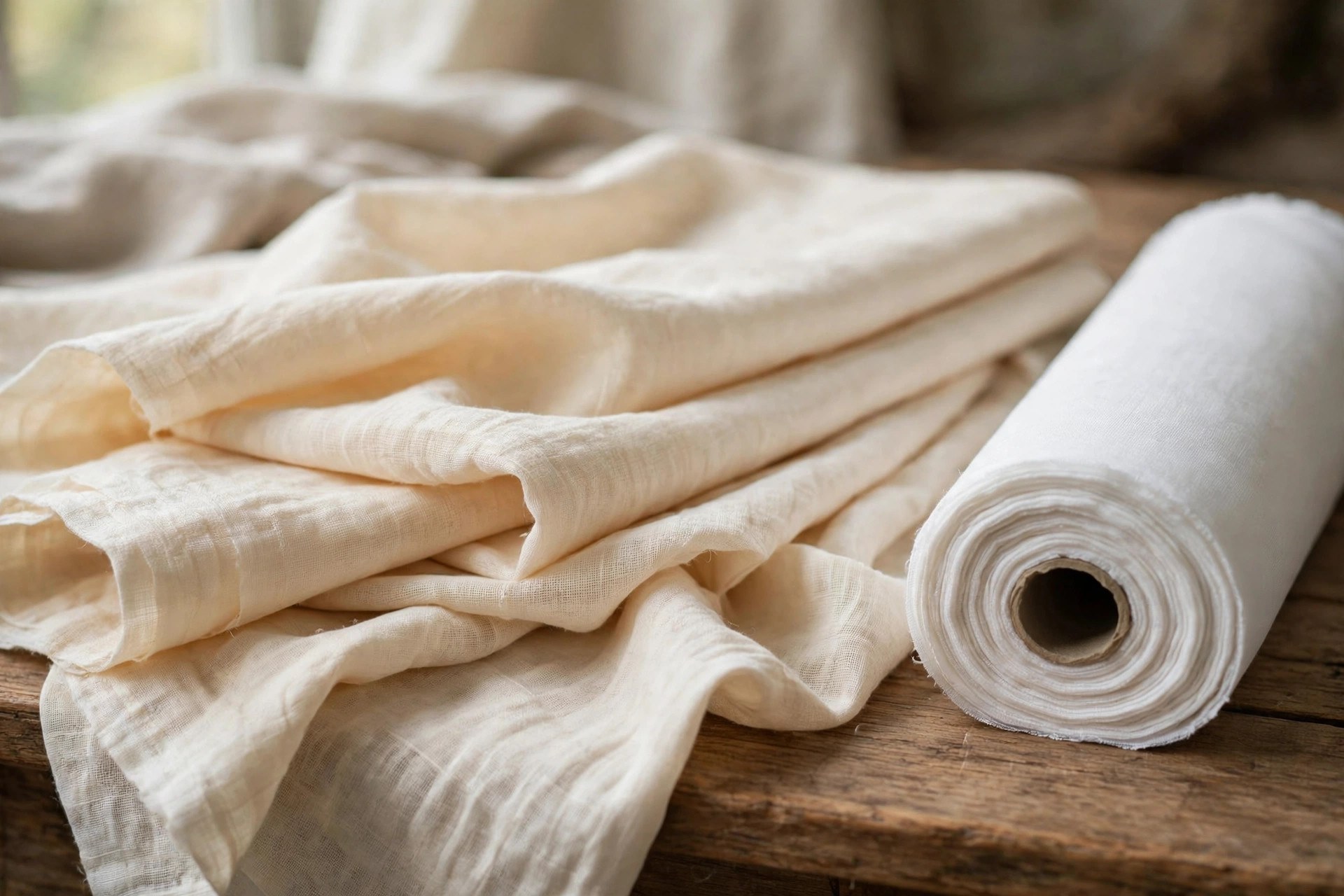
Muslin is a plain-weave cotton fabric - over one yarn, under the next - made in a wide range of weights from a sheer, open cloth to a sturdy medium-weight sheeting. It is usually sold undyed: natural (the warm, speckled cream of unbleached cotton), bleached white, or occasionally dyed for craft and display use. The name is old and travelled: muslins were among the famous fine cottons of Bengal traded through Mosul, from which the word is traditionally derived, and the cloth has been a staple ever since because it is cheap, breathable, easy to sew and easy to wash. This site's Muslin Fabric Definition gives the formal glossary definition used across Apparel Search.
Grades are a matter of weight and finish. Sheer muslins and butter muslins are open, soft cloths for food straining, polishing and interlining; standard sewing muslin is the even, medium cloth sold by the bolt in fabric shops; heavy muslins approach canvas in body and serve for backdrops, scenery and protective covers. Yarn quality shows in the slubs and neps of the natural grade - part of its character - and in how evenly the cloth is woven, since a skewed or streaky muslin will not hang true when it is used as a fitting toile or a photographic background.
The Sewing Muslin and Muslin's Other Lives
In the sewing room, 'a muslin' has become the name of a thing as much as a fabric: the trial garment sewn in cheap muslin cloth to test a pattern's fit and construction before the real fabric is cut. Because muslin is inexpensive, stable and easy to mark, a toile in muslin saves expensive cloth and reveals fitting problems - drag lines, strain, wrong ease - at a stage when they can still be fixed on the pattern. The same cloth drapes patterns on the stand, backs quilts, lines curtains and serves as the base for embroidery and printing trials, and theatre and photography consume it by the roll for backdrops and diffusers precisely because it is neutral, matte and cheap in wide widths.
Beyond the workroom, muslin wraps and strains food (the classic cheesecloth uses overlap with fine muslin), bags herbs and hops, swaddles babies in its softest grades, and appears in bookbinding, upholstery undercovers and dust covers. The mill listed below, Usman Enterprises of Pakistan, sits in one of the world's great cotton regions - Pakistan's mills spin and weave cotton at every level from greige cloth to finished fabric, and plain cottons like muslin are a staple export line. Thank you for using the Apparel Search Fabric Mill Directory.
Buying and Caring for Muslin
Buy muslin by its job. For a fitting toile, choose the weight closest to your fashion fabric - a heavy muslin will flatter a pattern meant for silk, and a sheer one will hide the structure a coat needs - and buy enough of it at once, because bolts vary. Pre-wash it: cotton muslin shrinks, and a toile that shrinks after fitting teaches the wrong lesson. For food and craft use, unbleached natural muslin avoids finishes you may not want near food, and it can be washed and reused many times. Care is the simplest in this whole fabric section - muslin washes hot, irons hot, and softens with use; its only enemies are mildew if it is stored damp and the gradual weakening that comes from repeated bleaching. Kept dry and clean, a length of muslin lasts for years of fittings, wrappings and backdrops.
Muslin Fabric Mills Listed Here
Usman Enterprises (Pakistan)
The company this directory lists under muslin fabric mills. Follow the company name to its Fabric Mills by Name profile, which carries its full directory record.
Common Questions
What is a muslin in sewing?
Both a fabric and the trial garment made from it: a toile sewn in inexpensive plain-weave cotton muslin to test a pattern's fit and construction before cutting the real fabric. Muslin suits the job because it is cheap, stable, easy to mark and close in behaviour to many woven garment fabrics.
What is muslin fabric used for besides sewing?
Food straining and wrapping, herb and spice bags, baby swaddles, quilt backing, curtain lining, embroidery grounds, theatre and photography backdrops, bookbinding and protective dust covers - anywhere a plain, breathable, inexpensive cotton cloth is needed.
Which mill does this directory list for muslin fabric?
Usman Enterprises of Pakistan, linked to its Fabric Mills by Name profile on this site, where its directory record is carried.
More to Explore - The Full Fabric Directory A-Z
- Mesh Fabric Mills
- Metallic Fabric
- Net Textiles
- Tulle Fabric
- Tricot Fabric
- Raschel Fabric
- Fabric Mills - Fabric Section Hub
- Muslin Fabric Definition
- Textile Machinery
- Embroidery Directory
- Printing Directory
- Usman Enterprises
- Clothing Industry Factories
- Yarn Factories
- Fabric Retail
- Fabric Wholesalers
- Fibers Directory
- Fabric Definitions
- Fashion Industry News
- Clothing Industry Employment
- Conversion Charts
- Antibacterial Fabric
- Bamboo
- Basalt
- Boucle
- Breathable
- Broadcloth
- Brocade
- Burlettes
- Canvas
- Carbon
- Chambray
- Chenille
- Chiffon
- Circular
- Corduroy
- Cotton
- Crepe
- Crochet
- Damask
- Denim
- Dobby
- Double Knit
- Drill
- Duck
- Dyed Fabric
- Embroidered
- Fiberglass
- Fil-a-Fils
- Filter Cloth
- Flame Retardant
- Fleece
- French Terry
- Gabardine
- Gauze
- Georgettes
- Ginghams
- Greige Fabric
- Herringbone
- Horse Hair
- Interlining
- Interlock
- Jacquard
- Jersey Fabric
- Lace
- Lacoste
- Linen
- Lining
- Long Fiber Reinforced Thermalplastics
- Narrow
- Non Woven Fabric
- Novelty
- Nylon
- Ottoman
- Oxford
- Percale
- Pile
- Pique
- Pointelle
- Polar Fleece
- Polyester
- Poplin
- Printed
- Quilted
- Reflective
- Rib
- Sateen
- Satin
- Seersucker
- Silk Fabric
- Single Jersey
- Smart Fabrics
- Stretch
- Suede
- Taffeta
- Tassars
- Terry
- Thermal
- Tweed
- Twill
- Velcro
- Velour
- Velvet
- Viole
- Vynil
- Waffle
- Waterproof
- Wool
- Yarn Dyed
- Textiles
- Fabric
Looking for Fabric Mills and Suppliers?
Return to the Fabric Directory hub for the full fabric section, or browse the Fabric Manufacturers Directory page for the wider mill trade.