Muslin
Fabric Definitions — fabric and textile definitions from Apparel Search
Search Apparel Search
At a Glance
Definition: Muslin is a plain-weave cotton fabric whose grades run from fine and sheer to a plain medium cloth, introduced to Europe from the Middle East in the 17th century and named for the city of Mosul.
Category: Fabric Definitions
Word Origin
Muslin is named for Mosul, the city in modern Iraq for which the fabric is named in the definition itself. Introduced to Europe from the Middle East in the 17th century, the cloth carried the city's name with it — one of several place names among the fine cottons, as calico carries Calicut and madras carries Chennai.
Muslin is a type of fine cotton fabric, introduced to Europe from the Middle East in the 17th century and named for the city of Mosul, in modern Iraq. It is a plain-weave cotton whose grades run from fine and sheer to a plain medium cloth, which is why the one name covers both delicate dress fabrics and the inexpensive cotton used for test garments in sewing.
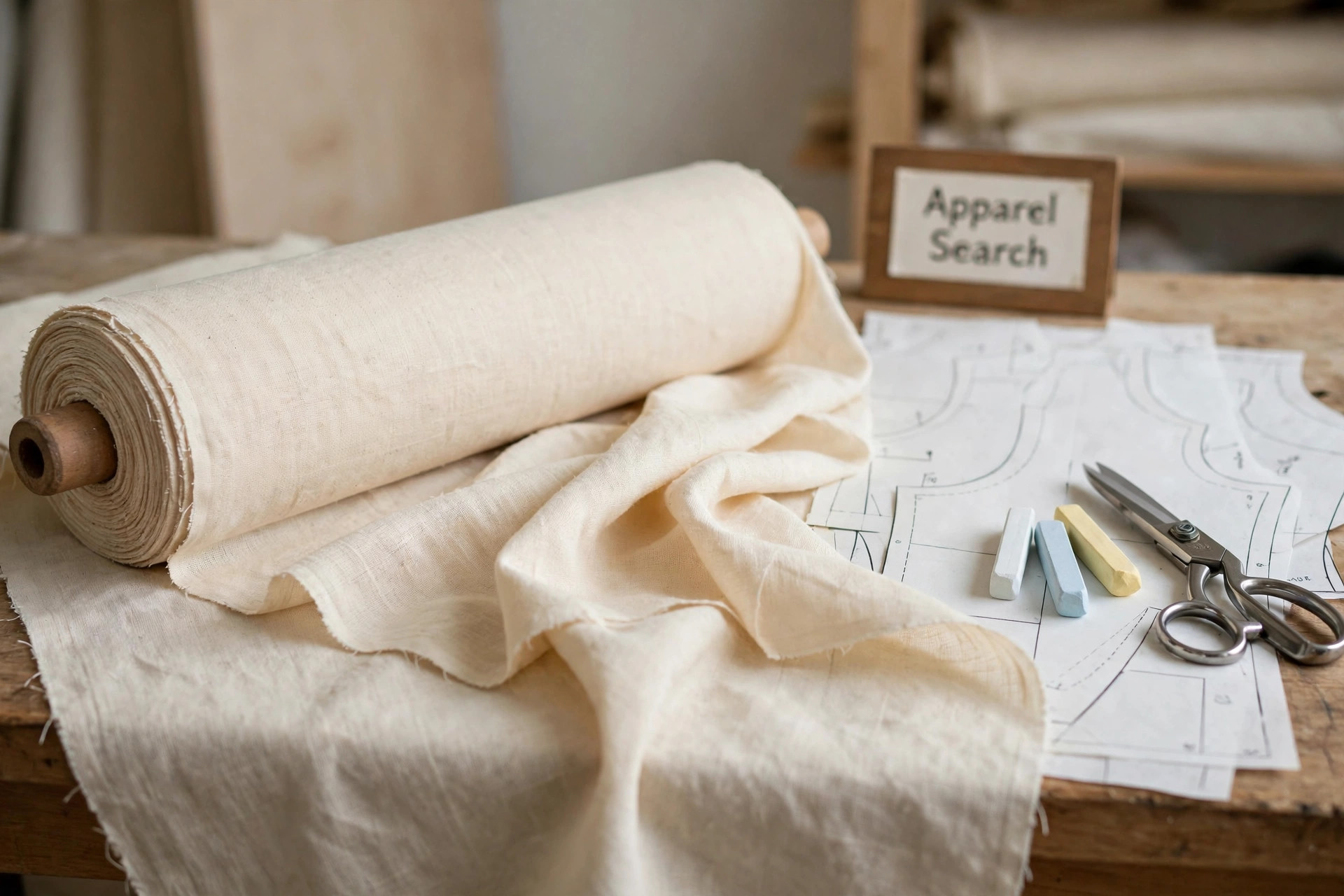
One Name, a Whole Range of Cottons
Muslin's breadth confuses buyers because the name covers a spectrum held together by plain weave and cotton fiber rather than by one specification. At the fine end stand the historic muslins — Bengal handwoven cloths of legendary fineness, sheer enough to pass through a ring in the famous comparisons, and the fine dress muslins Europe imported from the 17th century onward for summer dresses, veils and curtains. At the everyday end stand plain medium muslins: unbleached or white cotton of moderate count, sold by the bolt for linings, patterns, backing and the test garments discussed below. Between them lie printed and dyed muslins for inexpensive dress and craft use.
The shared traits are real — a simple plain weave, a soft matte surface with no applied gloss, good breathability and easy sewing — but weight and fineness must be specified beyond the name, since a sheer dress muslin and a sturdy toile muslin share little beyond structure. Judging a muslin in hand means judging yarn fineness, evenness and hand together, not trusting the single word. Its nearest neighbours are the other fine plain cottons, batiste, cambric and lawn, separated from muslin by fineness and finish rather than by weave.
The Mosul naming also places muslin in the geography of this glossary's cotton family: Mosul for muslin, Calicut for calico, Chennai for madras, and Bengal both for the finest historic weaves and for jamdani figured muslin work. European demand for these imported fine cottons in the 17th and 18th centuries reshaped the trade — muslin was among the cloths whose quality domestic industries first imitated and then mechanised — so the plain bolt in a modern fabric shop descends from one of the most contested textiles in trade history.
Muslin in the Sewing Room
Muslin's second career is as the sewing room's standard material, and it earned the place on properties the definition implies: plain, fine-to-medium cotton is stable, presses well, marks easily with pencil and tailor's chalk, tears straight on the grain for quick cutting, and is inexpensive enough that a failed draft costs little. Pattern makers drape and fit in muslin because its drape approximates ordinary dress fabrics honestly — unlike paper, it reveals where a garment pulls, gapes or hangs badly on a body.
The word then completed its migration: in American sewing usage, a muslin is the test garment itself, whatever cotton it is cut from, and couture houses use the French equivalent, toile. Home sewers use the same cloth for quilt backing, embroidery grounds where a soft plain cotton is wanted, and protective covers. A fabric introduced to Europe as a luxury fine cotton now survives at every level from heirloom sheer to disposable draft — the widest range of any plain cotton name in the glossary.
Common Questions
Why is a test garment called a muslin?
Because it is traditionally made in muslin — an inexpensive, plain cotton that drapes well enough to reveal fit problems and is cheap enough to cut, mark and discard. In pattern making, a muslin means the trial version of a garment sewn to check fit and design before cutting the real fabric; the garment took the fabric's name.
Where does the word muslin come from?
From Mosul, the city in modern Iraq the fabric is named for. Muslin was introduced to Europe from the Middle East in the 17th century, and the trade name carried the city with it, as calico carried Calicut and madras carried Chennai — place names recording the trade routes of fine cottons.
How does muslin differ from cambric and calico?
All three are plain cotton cloths, distinguished by finish and fineness. Muslin is the fine, soft, plain cloth, historically the sheerest and finest of the group in its best grades. Cambric is firmer and slightly glossy from calendering. Calico, in British usage, is the plain unbleached utility cotton, coarser in character than fine muslin and bought for economy.