Batiste
Fabric Definitions — fabric and textile definitions from Apparel Search
Search Apparel Search
At a Glance
Definition: Batiste is a very fine, soft plain-weave fabric, traditionally of cotton or linen, and the softest and lightest of the fine white cloths worn against the skin.
Pronunciation: bah-TEEST
Category: Fabric Definitions
Word Origin
The cloth takes its name from Jean-Baptiste, the linen weaver of Cambrai credited with first making it.
Batiste is a very fine, soft plain-weave fabric, traditionally woven from cotton or linen. It is the softest member of the family of fine white cloths: lighter and more lustrous than cambric, its close relative, and prized wherever cloth rests directly against the skin. Its fineness comes from the yarns themselves — fine, combed and even — rather than from any special finish, which is why genuine batiste feels smooth in a way that coarser cottons imitating it do not.
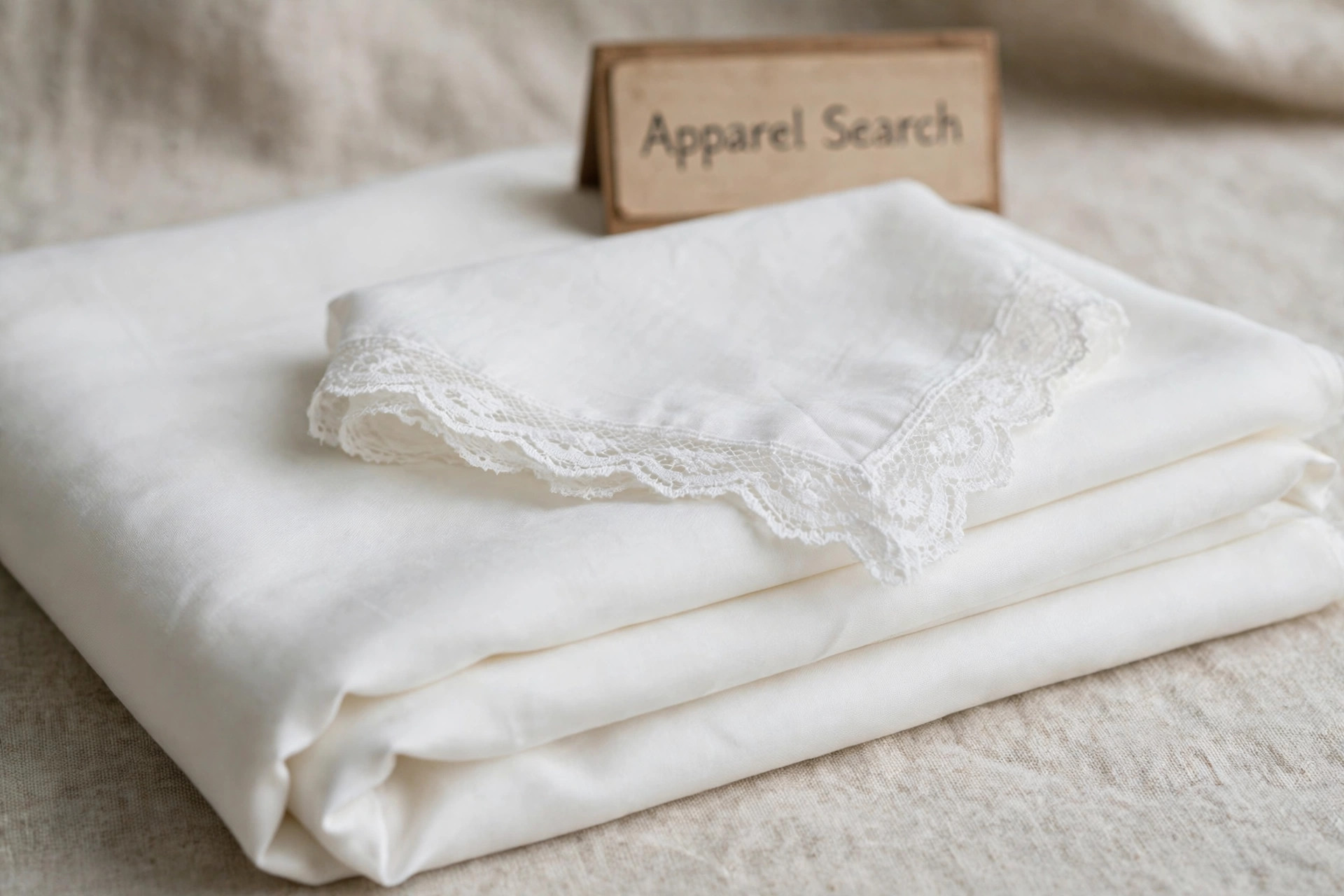
Construction and Properties
Batiste is woven from fine, combed yarns in a balanced plain weave and finished to a smooth surface with a faint natural lustre; on cotton batiste, mercerising deepens that sheen. The cloth is soft rather than crisp, semi-sheer in white, and exceptionally smooth, because its yarns are finer and more even than those of lawn or cambric. Linen batiste, the original form, keeps the cool, slightly crisp hand of fine linen, while cotton batiste is softer and far more common today. Wool and synthetic batistes also exist, made for blouses and linings. Fine construction carries a price in durability: batiste snags and wears sooner than coarser cottons, and it rewards gentle washing and flat storage.
Where Batiste Is Used
Batiste's softness put it next to the skin historically: handkerchiefs, lingerie, nightdresses, christening gowns and baby clothes, anywhere a seam or fibre might irritate. Heirloom sewing still specifies batiste — often Swiss batiste — for christening and baby garments, combined with lace insertion and fine embroidery. In adult clothing it appears in summer blouses and shirts, in dress linings for sheer fabrics, and as the ground cloth for whitework embroidery, where its even weave lets threads be counted accurately. Its smoothness also made it a traditional lining for delicate garments that could not tolerate a rougher cloth against an embroidered or beaded outer layer.
Batiste, Lawn and Voile
The three fine cottons divide by hand. Lawn is crisp and smooth, holding a pressed shape. Voile is the sheerest and airiest of the three, woven openly from hard-twist yarns. Batiste is the softest and finest, with the gentlest drape and a slight lustre — the one chosen for babies, handkerchiefs and anything worn against the skin. The wider family of light dress fabrics also includes organza, challis and muslin, each defined separately in this section.
Handling a Delicate Cloth
Everything about batiste's construction argues for gentle treatment. It should be hand-washed, or machine-washed cold on a delicate cycle, dried flat or on a line, and ironed on a medium setting while still slightly damp. Hot water, hard wringing and rough wash loads are all hard on yarns this fine, and flat storage suits the cloth better than hanging. Treated that way, a batiste handkerchief or christening gown can be handed down; treated like ordinary shirting, it wears out noticeably sooner — the standing bargain of the finest cloth in its family.
Not to Be Confused With
Batiste is often confused with cambric, its close relative from the same Cambrai tradition of fine plain-weave cloths. Cambric is slightly heavier and crisper in the hand; batiste is the finer, softer and lighter grade, with a faint natural lustre. In practice the two names overlap between makers, so weight and hand are better guides than the label alone.
Common Questions
What is batiste fabric used for?
Traditionally handkerchiefs, lingerie, nightdresses, christening gowns and baby clothes, because it is the softest of the fine plain-weave cottons. Today it is also used for summer blouses and shirts, linings for sheer dresses, heirloom sewing and whitework embroidery grounds.
Is batiste the same as cambric?
They are close relatives: batiste is generally understood as the finer, softer grade of the same family of plain-weave cloths from the Cambrai region. Cambric is slightly heavier and crisper, while batiste is lighter, softer and faintly lustrous. The names overlap between makers, so weight and hand are better guides than the label.
How should batiste be washed?
Gently: hand-wash, or machine-wash cold on a delicate cycle, dry flat or on a line, and iron on medium while slightly damp. Its fine yarns snag and wear faster than ordinary cotton shirting, so hot water, hard wringing and rough wash loads should be avoided.