Challis
Fabric Definitions — fabric and textile definitions from Apparel Search
Search Apparel Search
At a Glance
Definition: Challis is a soft, lightweight plain-weave fabric with a matte finish and a fluid, flowing drape, first woven in wool and now made most often in rayon.
Pronunciation: SHAL-ee
Category: Fabric Definitions
Word Origin
By tradition the name comes from an Anglo-Indian word for soft — a fitting label for a cloth defined by its soft hand. The fabric itself was first woven, in wool, at Norwich, England, in the 1830s.
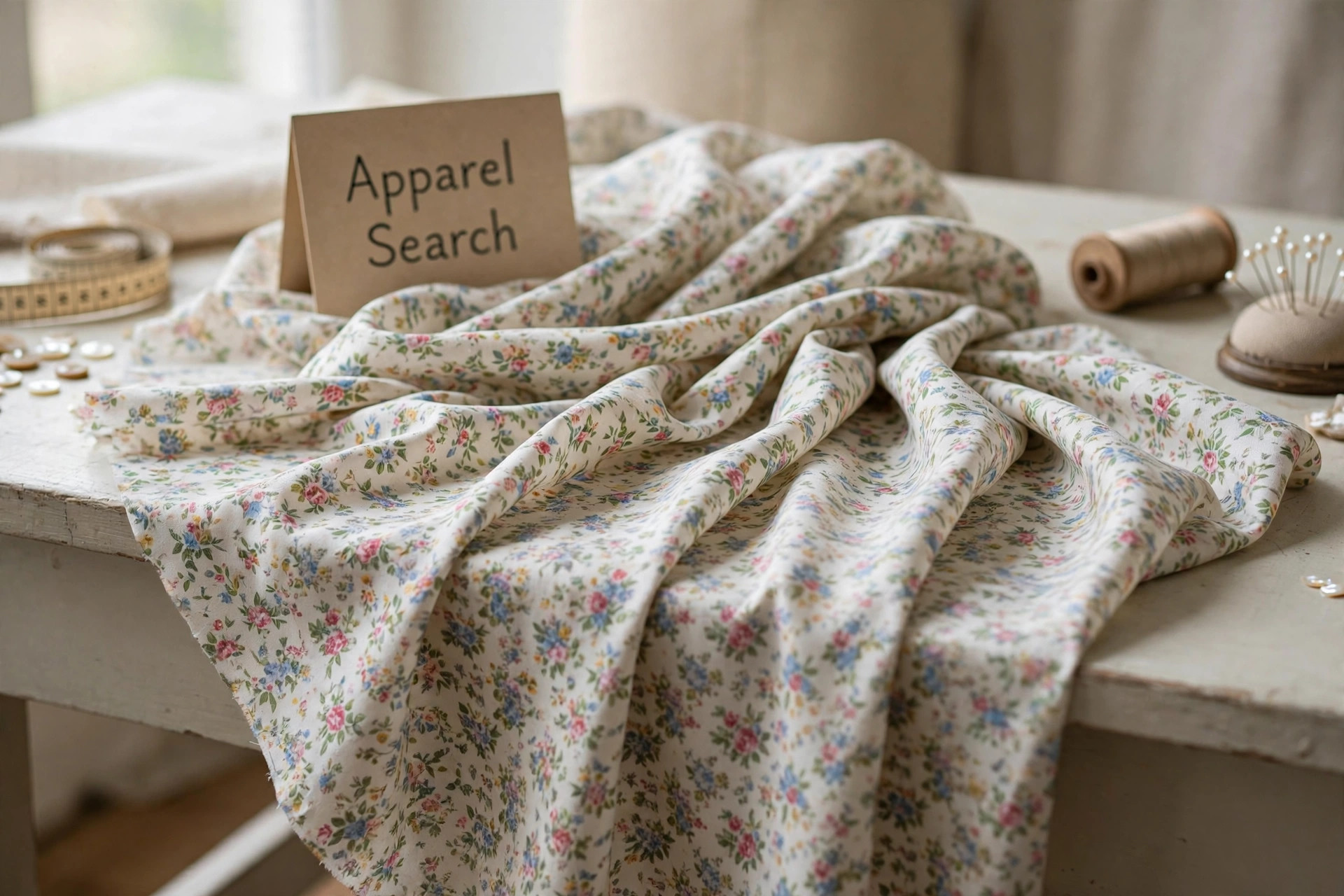
Challis is a soft, lightweight plain-weave fabric with a matte finish and a fluid, flowing drape. It was first woven in wool at Norwich, England, in the 1830s. The challis sold today is most often rayon, whose smooth fibres print with the clear, rich colour the fabric has become known for — the name describes the soft weave and hand, not one fixed fibre.
Construction and Properties
Challis is woven in a plain weave from fine, softly twisted yarns, then brushed or finished so the surface takes on a slight, peach-like softness. The original wool version is warm for its weight and is still made for ties, scarves and dresses. Rayon challis is the dominant modern form for a practical reason: rayon takes dye deeply and evenly, so challis became a favourite ground for floral and paisley prints. Its drape is heavier and more liquid than cotton lawn and softer than crepe, which suits garments that are meant to move rather than hold a shape.
The fabric breathes well and feels cool against the skin, but it is not hard-wearing. It abrades along fold lines and can stretch on the bias, and the rayon versions weaken when wet and may shrink, so the care label on a challis garment deserves attention before the first wash, not after it.
The same properties govern sewing with it. Because rayon challis can shrink noticeably on its first wash, pre-washing the yardage before cutting is standard practice, and because it weakens when wet and stretches on the bias, it rewards gentle handling and loose, flowing pattern shapes rather than fitted ones. Wool challis asks for the other regime — dry-cleaning rather than washing — and blends behave according to their mix, which is why two fabrics both sold as challis can carry quite different care labels.
Where Challis Is Used
Dresses are its main garment — printed shirt dresses, midi dresses and summer frocks that rely on drape rather than structure — followed by blouses, loose trousers, scarves and linings. Wool challis also has a long history in men's ties and cravats, where its matte surface and soft knot set it apart from silk. One practical virtue shapes all of these uses: challis is opaque despite its lightness, so dresses and blouses can be worn unlined where voile or organza would need a lining underneath. That keeps challis garments simple to make and cool to wear.
Challis Beside Its Neighbours
Challis sits between the crisp sheers and the textured dress fabrics. Set against crepe, it is smooth where crepe is crinkled, and although both drape, they drape differently — crepe with spring, challis with flow. Set against batiste and voile, challis is the opaque, softer choice, the one to pick when the garment should not be sheer at all. Those three comparisons — texture, drape and opacity — are usually enough to place it correctly on a fabric table.
Common Questions
What is challis fabric made of today?
Most modern challis is rayon (viscose), chosen because it prints beautifully and drapes fluidly. The original challis was wool, and wool challis is still made for ties, scarves and dresses; cotton and blended challis also exist. The name describes the soft plain weave and hand, not one fixed fibre.
Does challis shrink?
Rayon challis can shrink noticeably on its first wash and is weaker when wet, so wash it cold and gently, or dry-clean better garments. Pre-washing the fabric before sewing is standard practice. Wool challis should be dry-cleaned, and blends behave differently, so check the care label.
Is challis good for summer dresses?
Yes — it is one of the standard summer dress fabrics. It is light, breathable and opaque without a lining, and its fluid drape suits loose, moving shapes. Its weakness is durability rather than comfort: it is a fabric for dresses in rotation, not for hard daily wear.