Voile
Fabric Definitions — fabric and textile definitions from Apparel Search
Search Apparel Search
At a Glance
Definition: Voile is a soft, sheer plain-weave fabric, most often cotton, woven from tightly twisted yarns in an open construction.
Pronunciation: Voile is pronounced "vwahl" — a French loanword, from the French for veil.
Category: Fabric Definitions
Word Origin
Voile is the French word for veil — a name that describes exactly what the cloth does: it covers while letting light and outlines show through.
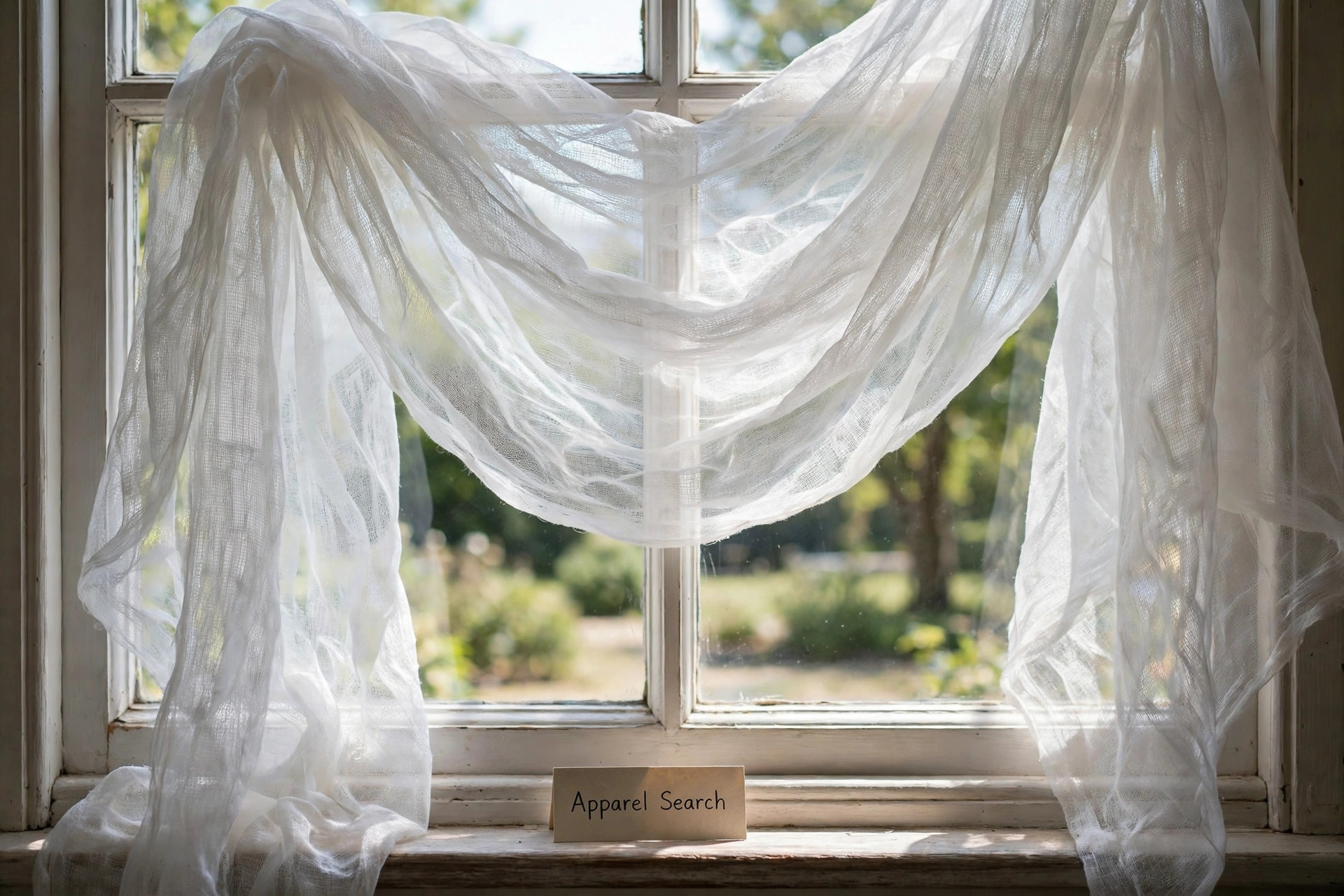
Voile (from the French for veil) is a soft, sheer plain-weave fabric, most often cotton, woven from tightly twisted yarns in an open construction. The hard twist keeps the fine threads from filling the cloth, so voile stays translucent and airy while holding together — the lightest of the everyday dress fabrics.
Construction and Properties
Voile's character comes from its yarns: both warp and weft are given a much harder twist than ordinary cotton cloth, then woven in a plain weave with space deliberately left between threads. The result is a fabric that is sheer without being fragile, with a smooth surface, a soft but slightly springy drape and good breathability. Cotton voile is the standard; silk, wool and synthetic voiles exist, and cotton-polyester blends add crease resistance.
Voile takes dye and print well, which is why printed voile is a summer staple. It does crease in wear, shrinks unless pre-washed, and needs a fine needle and care at seams, where the open weave can slip.
Where Voile Is Used
Summer clothing is voile's main territory: dresses, blouses, shirts, scarves and children's party dresses, often lined or layered because of the sheerness. Its softness against the skin makes it a traditional fabric for undergarments and nightdresses, and its translucency — light passes, outlines blur — has made voile a curtain fabric for as long as it has been a dress fabric; voile panels are the standard sheer curtain in many homes. In dressmaking it also serves as a light underlining for other sheer fabrics, adding body without weight. For sheer styling — layering, coverage and how to wear sheer fabrics tastefully — see the Sheer Clothing Guide.
Voile, Lawn and Batiste
These three fine cottons sit side by side. Lawn is woven from combed, finer yarns in a closer construction, so it is smoother and less sheer than voile. Batiste is the softest and finest of the three, with a gentle lustre. Voile is the sheerest and airiest — the choice when translucency itself is the point. Its other close relations include organza, challis, cambric and muslin.
Common Questions
Is voile see-through?
Yes, in a single layer voile is translucent: strong outlines show through, especially in white and pale colours. Dresses and blouses in voile are usually lined, worn over a camisole, or gathered and printed, all of which reduce the sheerness. Curtain voile uses exactly this property to soften daylight.
How do you wash voile?
Machine-wash cotton voile cold on a gentle cycle or hand-wash it, and dry it flat or on a line out of strong sun. Expect some shrinkage on the first wash, so pre-wash voile before cutting a garment. Iron on a medium setting while slightly damp for the smoothest finish.
What is voile made from?
Traditionally cotton, and cotton voile remains the most common. Voile is also woven in silk for evening scarves and blouses, in wool for lightweight scarves, and in polyester or cotton-polyester blends where easy care matters more than the natural hand.