Plain Weave
Fabric Definitions — definitions of fabrics, cloths, laces and textile materials from Apparel Search
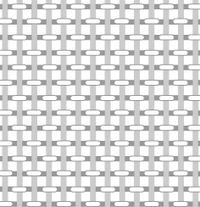
Plain weave (also called tabby weave or taffeta weave) is the most basic of three fundamental types of textile weaves. It is strong and hard-wearing, used for fashion and furnishing fabrics. In plain weave, the warp and weft are aligned so they form a simple criss-cross pattern: each weft thread crosses the warp threads by going over one, then under the next, and so on.
Plain weave is one of the three fundamental structures compared in our guide to basic weave structures — part of the Weaving & Woven Fabric Construction guide — where its one-over, one-under rule is set against twill's stepping diagonal and satin's long floats.
In plain weave, the warp and weft are aligned so they form a simple criss-cross pattern. Each weft thread crosses the warp threads by going over one, then under the next, and so on. The next weft thread goes under the warp threads that its neighbor went over, and vice versa.
- Balanced plain weaves are fabrics in which the warp and weft are made of threads of the same weight (size) and the same number of ends per inch as picks per inch.
- Basketweave is a variation of plain weave in which two or more threads are bundled and then woven as one in the warp or weft, or both.
A balanced plain weave can be identified by its checkerboard-like appearance. It is also known as one-up-one-down weave or over and under pattern.
Some examples of fabric with plain weave are chiffon, organza, and taffeta.
Satin weave and twill weave are the other two main textile weaves.
Designation tabby
According to the 12th-century geographer al-Idrīsī, the city of Almera in Andalusia manufactured imitations of Iraqi and Persian silks called attābī, which David Jacoby identifies as "a taffeta fabric made of silk and cotton originally produced in Attabiya, a district of Baghdad."
References
- Kadolph, Sara J., ed.: Textiles, 10th edition, Saddle River, New Jersey, Pearson/prentice-Hall, 2007, ISBN 0-13118769-4
Learn more about fabric.
Learn about knit fabrics.
Learn about woven fabrics.
|
|
The Simplest Interlacing, and the Strongest Starting PointEvery woven fabric is a negotiation between warp and weft, and plain weave is the most direct version of it: the weft travels over one warp thread, under the next, over, under, across the whole width, and the next weft row reverses the sequence. No other weave interlaces as often, and that frequency is the source of plain weave's properties. With a crossing at every single thread, the yarns lock each other firmly in place, so the cloth is stable, resists slipping and distortion, holds printed patterns in register, and wears hard for its weight. The trade-off is pliability: all those interlacings crimp the yarns, so plain weave is firmer and less drapey than twill or satin of the same yarn, and a very tightly woven plain cloth can feel boardy. Where the warp and weft are balanced — same yarn size, same thread count in both directions — the surface settles into the even checkerboard the definition describes, each direction contributing equally to strength and appearance. A Weave That Spans Chiffon to CanvasBecause the structure is neutral, plain weave takes the character of whatever yarn is put into it. Filament silk woven plain and fine gives taffeta, crisp and rustling; sheer filament yarns give chiffon and organza, two of the definition's named examples, where the same over-and-under grid becomes transparent cloud or stiff gauze depending on yarn and finish. Cotton in plain weave becomes muslin, percale, cambric and lawn; heavy yarns in plain weave become canvas and duck. The name tabby preserves the weave's age: the 12th-century geographer al-Idrīsī records that Almería in Andalusia made imitations of Iraqi and Persian silks called attābī, identified as a taffeta fabric of silk and cotton first produced in Attabiya, a district of Baghdad — the plain-weave silk of Baghdad gave English both 'tabby' and, through the cat named for its striped coat, an everyday word. For anyone reading fabric descriptions, plain weave is the baseline: when a cloth is called a twill or a satin, the claim is about a departure from this grid; when nothing is said, plain weave is usually what is on the loom. Common QuestionsWhat are the three fundamental textile weaves?Plain weave, twill weave and satin weave. Plain weave is the most basic of the three: a simple over-one, under-one interlacing. Twill shifts the interlacing to form diagonal lines, and satin floats yarns over several threads to produce a smooth, lustrous face. What is balanced plain weave?A plain weave in which the warp and weft are made of threads of the same weight (size) and the same number of ends per inch as picks per inch. A balanced plain weave can be identified by its checkerboard-like appearance, and is also known as one-up-one-down weave or the over and under pattern. What is basketweave in relation to plain weave?Basketweave is a variation of plain weave in which two or more threads are bundled and then woven as one, in the warp or the weft or both. The interlacing is the same over-and-under pattern, but the bundled threads give a larger, more pronounced checkerboard texture, as in Oxford cloth. More to ExploreMore from Apparel Search: Fabric Definitions | Clothing Industry Glossary | Fashion Terms | Apparel Search Home
|