Lawn Cloth
Fabric Definitions — fabric and textile definitions from Apparel Search
Search Apparel Search
At a Glance
Definition: Lawn cloth, or lawn, is a lightweight, sheer plain-weave textile woven from fine, high-count yarns — originally of linen, now chiefly of cotton — with a silky, untextured feel.
Also known as: Lawn
Category: Fabric Definitions
Word Origin
The name derives from Laon, a city in France, which produced large quantities of linen lawn.
Lawn cloth, or lawn, is a plain weave textile, originally of linen but now chiefly cotton, designed using fine, high-count yarns, which results in a silky, untextured feel. It can be made using combed or carded yarns; lawn made using combed yarns, with a soft feel and slight luster, is known as nainsook. Lawn is a lightweight, sheer cloth, crisper than voile but not as crisp as organdy.
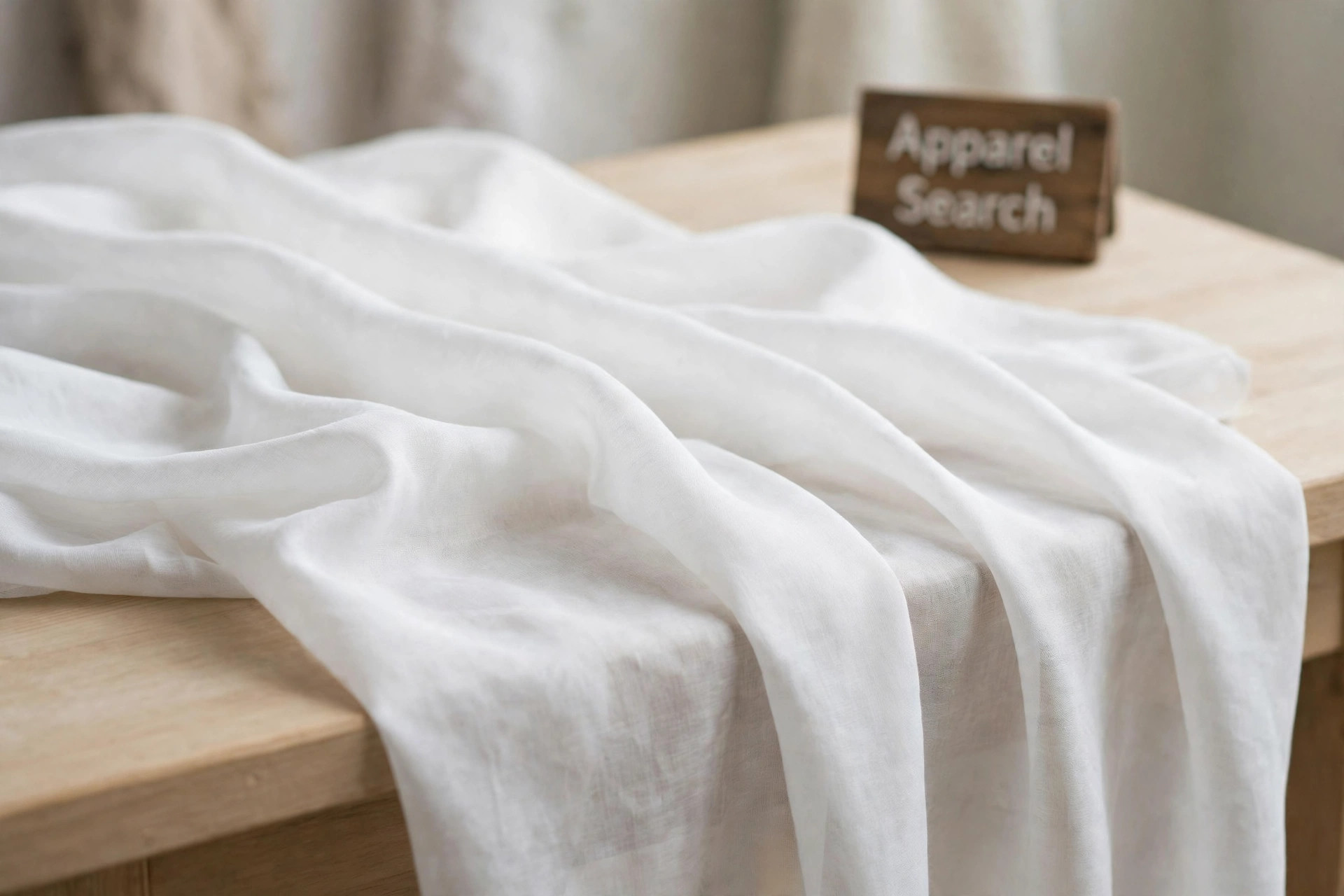
Fine Yarns, Plain Weave, Controlled Crispness
Lawn shows how much character a plain weave can carry when the yarns are fine enough. High-count yarns — many fine threads to the inch — produce the silky, untextured surface the definition emphasizes: there are no slubs, ribs or patterns to interrupt the hand, only smoothness and a controlled degree of body. That body is lawn's balancing point among sheers. Voile achieves sheerness with high-twist yarns and a softer, drapier result; organdy achieves it with a stiff, crisp finish that holds shapes almost like paper; lawn sits between, able to be finished soft for blouses and nightwear or semi-crisp for collars, cuffs and shirting, while retaining enough substance to sew cleanly and to hold a hem.
Lawn is known for its semi-transparency, which can range from gauzy or sheer to an almost opaque effect, known as lining or utility lawn. The finish used on lawn ranges from soft to semi-crisp to crisp, but the fabric is never completely stiff. Lawn can be white, or may be dyed or printed, and printed lawns were a summer dress staple because the smooth, fine surface takes print cleanly. The Laon origin fits the specification: a French linen town cloth of fine repute, transferred in modern production to cotton, which supplies fine combed yarns at workable cost while keeping the same plain-weave definition.
Nainsook and the Lawn Finish
The yarn preparation sets the quality. Lawn made using combed yarns — combing removes short fibers and aligns the rest, so the yarn, and therefore the cloth, is smoother and more even — has a soft feel and slight luster, and is known as nainsook. Lawn made with carded yarns is the plainer, less lustrous grade of the same cloth. Separately, the term lawn is also used in the textile industry to refer to a type of starched crisp finish given to a cloth product. The finish can be applied to a variety of fine fabrics, prints or plain, and it borrows the cloth's name because it reproduces lawn's characteristic hand — a clean, slightly crisp finish on a fine fabric.
Where Lawn Is Used
Lawn cloth is commonly used for dresses, blouses, nightwear, underwear, lingerie, curtains, collar cuffs, shirting, infant wear, and handkerchiefs — a list of jobs needing a fine, smooth, light cloth against skin or in small tailored details. Handkerchiefs and infant wear exploit the softness and washability; collars and cuffs exploit the semi-crisp grades; curtains exploit the semi-transparency. It is also commonly used in liturgical vestments in the Anglican churches, such as the surplice and episcopal rochet, where a white, fine, slightly crisp cloth reads as formal. Care is gentle washing; the finishes soften gradually, moving a crisp lawn toward the softer end of its own range, which users generally accept as the cloth maturing rather than failing.
Not to Be Confused With
Lawn is often confused with batiste, the other fine plain-weave cotton in this family. Both are woven from fine yarns in a plain weave, but they divide by hand: batiste is the finer, softer cloth, with a faint lustre, chosen for handkerchiefs and garments worn against the skin, while lawn is the crisper cloth, sold in finishes from soft to semi-crisp to crisp and ranging from gauzy and sheer to almost opaque. If the cloth holds a pressed, slightly crisp shape, it is behaving as lawn; if it drapes softly with a gentle sheen, it is behaving as batiste.
Common Questions
What is nainsook?
Lawn made using combed yarns, giving a soft feel and slight luster, as distinct from lawn made with carded yarns. Combing removes short fibers and aligns the rest, so the yarn — and therefore the cloth — is smoother and more even; nainsook is the name for lawn in that softer, lustrous quality.
How crisp is lawn compared with voile and organdy?
Between them. Lawn is lightweight and sheer with a range of finishes from soft to semi-crisp to crisp, but it is never completely stiff: it is crisper than the softer, more flowing voile and less crisp than organdy, the stiffest of the three sheer plain weaves. Lawn's semi-transparency also ranges from gauzy to almost opaque in lining or utility lawn.
What is a lawn finish?
In the textile industry the word lawn also names a type of starched crisp finish given to a cloth product, which can be applied to a variety of fine fabrics, prints or plain. The finish borrows the cloth name because it reproduces lawn's characteristic hand — a clean, slightly crisp finish on a fine fabric.