Calico
Fabric Definitions — fabric and textile definitions from Apparel Search
Search Apparel Search
At a Glance
Definition: Calico is a plain cotton fabric made from unbleached, often incompletely processed cotton, lighter and less coarse than canvas or denim and kept inexpensive by its unfinished, undyed state.
Category: Fabric Definitions
Word Origin
Calico is named for Calicut, the port on the Malabar Coast of India through which these cotton cloths reached Europe. The name travelled with the trade, long outliving the route that gave it to the cloth.
Calico is a fabric woven from cotton that has not been bleached and is often not fully processed, so flecks of unseparated husk can still show in the cloth. It sits well below canvas and denim in coarseness and weight, and because nothing has been spent on bleaching, dyeing or finishing it, it remains very cheap. That plain description, however, conceals a word with a split meaning and an outsized place in trade history.
The Cloth Itself
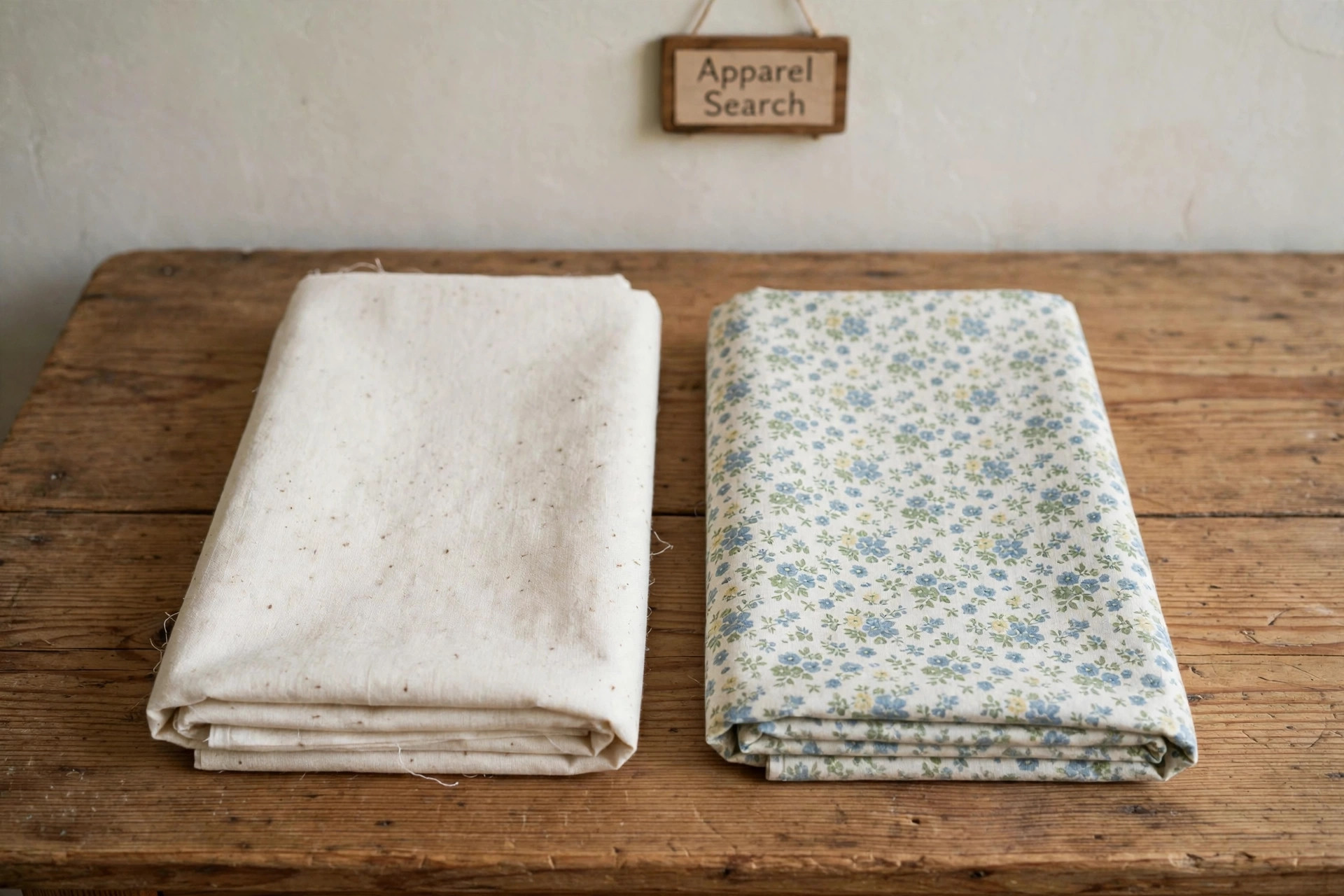
Start with the cloth before the complications of the name. Calico is woven from cotton that has been left unbleached and is often only partly processed, so fragments of husk that were never fully separated from the fibre can still appear in the finished piece. The cloth keeps a natural, undyed look, and it is noticeably less coarse and less thick than canvas or denim. Its cheapness is no mystery of manufacture: it is the direct saving from every finishing step — bleaching, dyeing, refining — that was simply never applied to it.
One Word, Two Cloths
Anyone ordering calico needs to know which side of the Atlantic the seller is on. In British use, calico is the plain unbleached cloth itself — the inexpensive utility cotton bought for pattern toiles, linings, aprons and craft work. In American use, the same word settled onto a printed cotton, typically carrying a small floral pattern on a light ground, remembered as the dress fabric of nineteenth-century frontier clothing; the plain unbleached cloth in America is more often called muslin. Both meanings descend from the same Indian trade cloth, and mixing them up causes genuine purchasing mistakes: a British calico order arrives plain and unprinted, an American one arrives patterned.
Underneath the split, the shared core is constant — a simple plain-weave textile in cotton of modest quality, a cloth characterised by economy rather than by any finish. Calico is what cotton cloth looks like before money is spent on it, and that is exactly what its buyers, in either sense of the word, are paying for.
The Bans of 1700 and 1720
Calico's place in history is far larger than its simplicity suggests. At the end of the seventeenth century, Indian hand-produced cottons were finer, cheaper and better printed than anything European makers could match, and demand for them ran high enough to threaten Britain's established wool and silk interests. The response was legislation: in 1700 Britain banned the importation of cotton cloth from India in an effort to prop up its own textile industry. The ban failed in its purpose and was strengthened in 1720.
The consequences ran in both directions. The policy almost destroyed the Indian textile industry it was aimed at, and India was reduced to buying British textiles. At home, British makers — shielded from the imported cloth and driven to imitate it — put their money into the spinning and weaving machinery that turned cotton into the first great factory industry. The unbleached length in a modern craft shop is the direct descendant of the fabric at the centre of that contest: still unbleached, still inexpensive, still bought precisely because nothing has been spent on finishing it. For the raw material itself, see the cotton definition and the fiber definition.
Common Questions
What makes a cotton fabric a calico?
Its unfinished state. Calico is woven from unbleached cotton that is often not fully processed, so it keeps a natural, undyed appearance and may show flecks of husk. It is a plain, light-to-medium cotton, less coarse and thick than canvas or denim, and its low price follows directly from the processing steps that are skipped.
Where does the word calico come from?
From Calicut, the port on the Malabar Coast of India through which these cotton cloths were traded to Europe. Indian calicoes were superior to early British cottons, which is precisely why British producers sought protection against them.
What were the Calico Acts?
The laws of 1700 and 1720 that first banned the import of Indian cotton cloth into Britain and then strengthened the ban, in an effort to prop up the British textile industry. The policy nearly destroyed the Indian textile industry it targeted, and India was forced to buy British textiles instead.