Satin Fabric Mills
Satin's glossy face and dull back come from long warp floats over a plain-weave ground. This directory page keeps the original satin mill listings and explains what separates one satin from another.
Shop Satin Fabric Now
Shop Satin Fabric on Amazon Shop Satin Fabric on eBayThese links open the Apparel Search shopping guides for Amazon and eBay, where the product links are kept in one place.
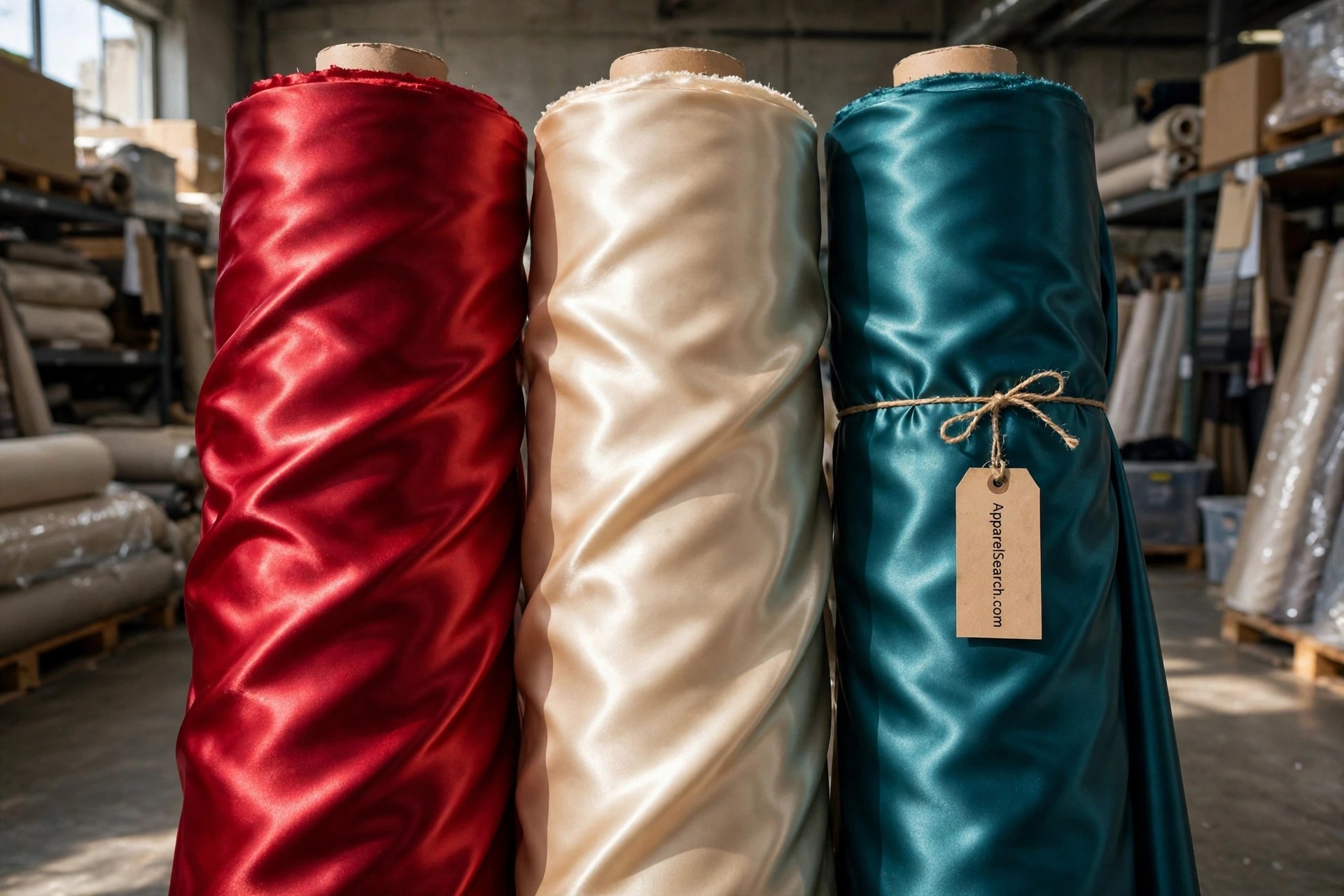
The Satin Weave
Satin is defined by its weave: warp yarns float over four or more weft yarns before binding down once, so the face of the cloth is almost entirely smooth, parallel warp. Light reflects off those long floats in one direction, which is why satin shines, and why the back of the fabric - mostly weft - looks matte by comparison. The structure needs fine, even yarns to work; historically that meant silk, and silk satin remains the luxury standard, but most satin woven today is polyester filament, with nylon, acetate and rayon versions also common.
The mills listed below are the ones the original Apparel Search satin page carried, concentrated in Pakistan, China, Indonesia and India - the weaving centers that supply the world's dress, lining and bridal markets - with their Fabric Mills by Name profiles linked for each. Between them they cover the satin qualities the trade buys every day, from lightweight charmeuse-style cloth to heavy duchess satin.
Satin Qualities a Buyer Will Meet
Charmeuse is the soft, fluid satin used for blouses, lingerie and bias-cut dresses; duchess satin is its opposite, a stiff, heavy satin woven for bridal gowns and structured evening wear. Crepe-back satin puts a crepe texture on the reverse so both faces can be used. Stretch satin adds elastane for fitted garments, and satin twill weaves the floats on a diagonal for extra durability in linings and uniforms. A mill's satin range is usually described by weight (in momme for silk, grams per square meter for synthetics), width, and whether the cloth is piece-dyed, printed or supplied greige for the buyer's own dyehouse.
Finish matters as much as construction. Anti-static and easy-care finishes serve the lining trade; sanded or sueded backs soften polyester satin for apparel; and for bridal and occasion wear, color matching and consistency across dye lots are the points buyers check first, because a gown's panels must match exactly under showroom and daylight alike.
Sourcing Notes
When requesting satin samples, state the fiber, the quality name, the finished width and the end use, and ask for the mill's standard color card as well as its lab-dip procedure. Check the face of the swatch in natural light: satin's shine hides small weaving faults that show up once the cloth is dyed dark, so dark colors deserve a careful inspection of the greige or a strike-off. For silk satin, confirm the momme weight and whether the yarn is spun or filament; for polyester, confirm whether the mill weaves or buys in its filament yarn, which affects lot-to-lot consistency.
One more distinction the listings illustrate: several of these mills are composite operations that spin, weave, dye and finish under one roof, while others weave only and send satin out for finishing. Composite mills offer shorter lead times and single-point responsibility for color, which matters in bridal and occasion programs where a late or off-shade delivery cannot be re-dyed in time. Weaving-only mills are often cheaper on greige cloth and let the buyer choose the finish house. Neither model is better in the abstract - the right choice depends on whether the program values speed and accountability or greige price and finishing flexibility - and the profiles linked below are the place to check which model each listed mill follows before requesting samples.
Satin also asks more of the garment factory than most fabrics: its slippery face shifts under the presser foot, so factories pin or clip generously, cut with sharp blades to avoid snagging the floats, and finish seams so the fabric's tendency to fray does not shorten the garment's life.
Fabric Mills and Factories in This Directory
The mills below are the listings the original Apparel Search directory carried on this page. Each name opens that company's profile in the Fabric Mills by Name directory.
Ahmed Fine Textile Mills Limited
A fabric mill based in Pakistan, profiled in the Apparel Search Fabric Mills by Name directory and listed among the mills supplying this fabric type.
Dyed Fabrics
A fabric mill based in Pakistan, profiled in the Apparel Search Fabric Mills by Name directory and listed among the mills supplying this fabric type.
Glacial Exports
Profiled in the Apparel Search Fabric Mills by Name directory and listed among the mills supplying this fabric type.
Gulshan Weaving Mills
A fabric mill based in Pakistan, profiled in the Apparel Search Fabric Mills by Name directory and listed among the mills supplying this fabric type.
Kuanging Industrial Co. Ltd.
A fabric mill based in Taiwan, profiled in the Apparel Search Fabric Mills by Name directory and listed among the mills supplying this fabric type.
Lotus Mills
Profiled in the Apparel Search Fabric Mills by Name directory and listed among the mills supplying this fabric type.
PT. Frans Putratex
A fabric mill based in Indonesia, profiled in the Apparel Search Fabric Mills by Name directory and listed among the mills supplying this fabric type.
Rashid Textile Printing Ind. (Pvt.) Ltd.
Profiled in the Apparel Search Fabric Mills by Name directory and listed among the mills supplying this fabric type.
Shenghong Group Co Ltd
A fabric mill based in China, profiled in the Apparel Search Fabric Mills by Name directory and listed among the mills supplying this fabric type.
Vardhman Fabrics LTD
Profiled in the Apparel Search Fabric Mills by Name directory and listed among the mills supplying this fabric type.
Wazir Group
A fabric mill based in Pakistan, profiled in the Apparel Search Fabric Mills by Name directory and listed among the mills supplying this fabric type.
Wujiang Hengyu Textile Dyeing Finishing Co.,Ltd.
A fabric mill based in China, profiled in the Apparel Search Fabric Mills by Name directory and listed among the mills supplying this fabric type.
Zibo Ermao Textile Co. Ltd.
A fabric mill based in China, profiled in the Apparel Search Fabric Mills by Name directory and listed among the mills supplying this fabric type.
Common Questions
What fiber is most satin made from today?
Polyester filament accounts for most modern satin because it is consistent, durable and inexpensive. Silk satin remains the premium option, and nylon, acetate and rayon satins serve specific lining and apparel uses.
What is the difference between charmeuse and duchess satin?
Charmeuse is light, soft and fluid, made for blouses and flowing dresses. Duchess satin is heavy and stiff, woven to hold the structured shapes of bridal and evening gowns.
How can I tell the face of a satin fabric?
The face is the glossy side, formed by the long warp floats. The back looks noticeably duller because the weft yarns dominate it.
More to Explore
- Ahmed Fine Textile Mills Limited
- Antibacterial Fabric
- Bamboo
- Basalt
- Boucle
- Breathable
- Broadcloth
- Brocade
- Burlettes
- Canvas
- Carbon
- Chambray
- Chenille
- Chiffon
- Circular
- Clothing Industry Employment
- Clothing Industry Factories
- Conversion Charts
- Corduroy
- Cotton
- Crepe
- Crochet
- Damask
- Denim
- Dobby
- Double Knit
- Drill
- Duck
- Dyed Fabric
- Dyed Fabrics
- Embroidered
- Embroidery Directory
- Fabric
- Fabric Definitions
- Fabric Directory
- Fabric Retail
- Fabric Wholesalers
- Fashion Industry News
- Fiberglass
- Fibers Directory
- Fil-a-Fils
- Filter Cloth
- Flame Retardant
- Fleece
- French Terry
- Gabardine
- Gauze
- Georgettes
- Ginghams
- Glacial Exports
- Greige Fabric
- Gulshan Weaving Mills
- Herringbone
- Horse Hair
- Interlining
- Interlock
- Jacquard
- Jersey Fabric
- Kuanging Industrial Co. Ltd.
- Lace
- Lacoste
- Linen
- Lining
- Long Fiber Reinforced Thermalplastics
- Lotus Mills
- Mesh
- Metallic
- Muslin
- Narrow
- Net
- Non Woven Fabric
- Novelty
- Nylon
- Ottoman
- Oxford
- Percale
- Pile
- Pique
- Pointelle
- Polar Fleece
- Polyester
- Poplin
- Printed
- Printing Directory
- PT. Frans Putratex
- Quilted
- Raschel
- Rashid Textile Printing Ind. (Pvt.) Ltd.
- Reflective
- Rib
- Sateen
- Seersucker
- Shenghong Group Co Ltd
- Silk Fabric
- Single Jersey
- Smart Fabrics
- Stretch
- Suede
- Taffeta
- Tassars
- Terry
- Textile Machinery
- Textiles
- Thermal
- Tricot
- Tulle
- Tweed
- Twill
- Vardhman Fabrics LTD
- Velcro
- Velour
- Velvet
- Viole
- Vynil
- Waffle
- Waterproof
- Wazir Group
- Wool
- Wujiang Hengyu Textile Dyeing Finishing Co.,Ltd.
- Yarn Dyed
- Yarn Factories
- Zibo Ermao Textile Co. Ltd.
Looking for Fabric Mills and Suppliers?
The wider directory behind these pages is the Fabric section hub, which opens the whole Apparel Search fabric mill directory: fabric types from A to Z, the Fabric Mills by Name profiles, and the dyeing, printing and finishing directories that support them.