Vynil Fabric Factories
Vynil is a spelling variant of vinyl fabric: a woven or knitted base cloth coated with PVC to make it waterproof, wipe-clean and glossy or matte as required. This page explains coated fabric and lists the mill in this directory.
Shop Vinyl Fabric Now
Shop Vinyl Fabric on Amazon Shop Vinyl Fabric on eBayThese links open the Apparel Search shopping guides for Amazon and eBay, where the product links are kept in one place.
What Vinyl Fabric Is
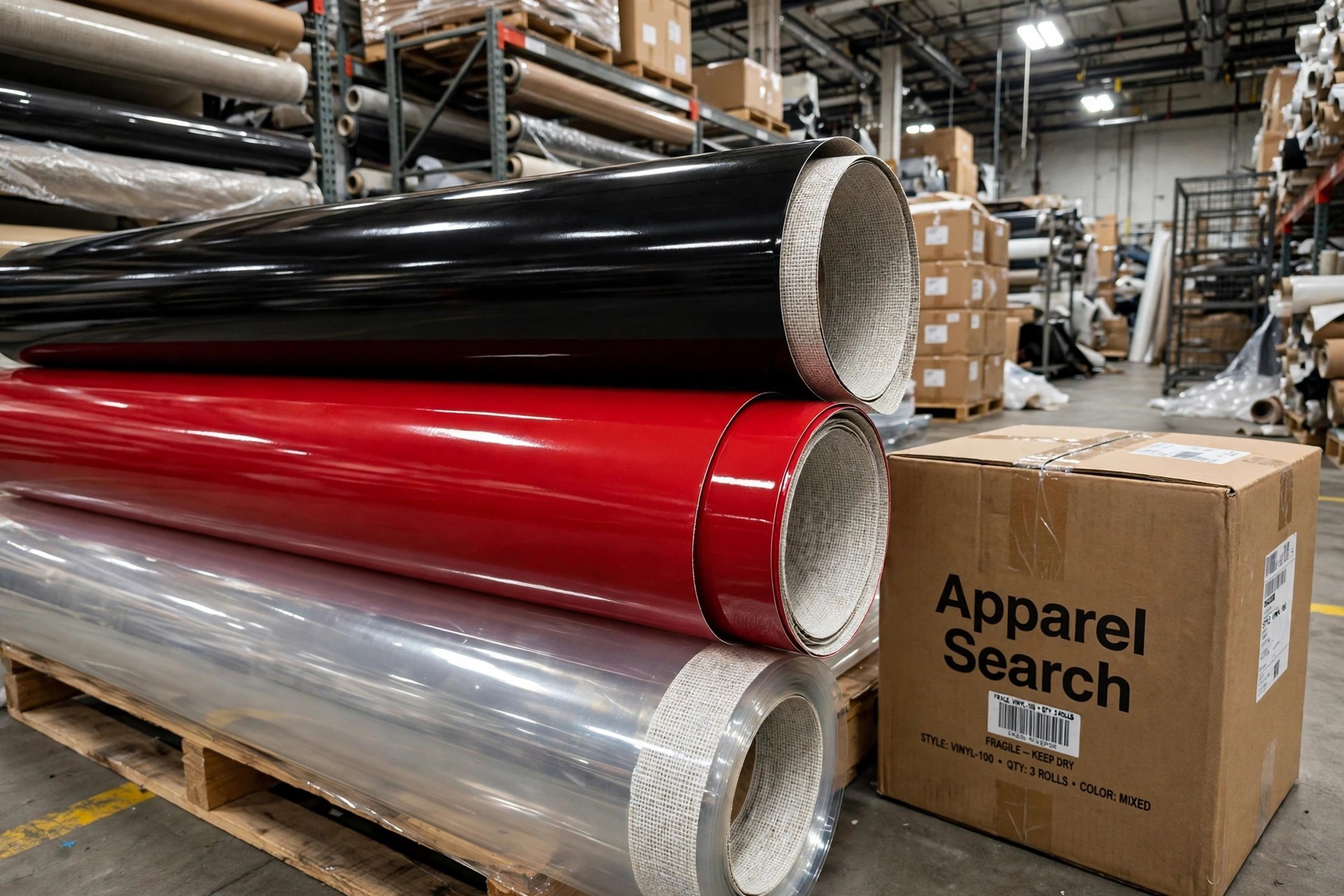
Vinyl fabric is not woven from vinyl yarn. It is a coating construction: a base cloth - woven polyester or cotton, or a stretch knit for apparel grades - is coated with polyvinyl chloride, usually plasticized to keep it flexible, and often embossed with a grain so the surface reads as leather, patent shine, or a technical matte texture. The coating seals the cloth completely, which gives the finished material its defining properties: it does not absorb water, it wipes clean, it resists staining and abrasion, and it can be heat-welded or radio-frequency sealed into seams that are themselves waterproof, something no stitched woven cloth can claim.
Weight, backing and plasticizer decide the grade. Light apparel vinyl on a knit back stretches and drapes enough for jackets, skirts, trousers and rainwear with a deliberate shine. Upholstery vinyl is heavier, on a woven or nonwoven back, built for abrasion cycles and cleaning chemicals in restaurants, vehicles, boats and hospitals. Clear vinyl, sold by gauge, is a film rather than a coated cloth and serves for windows, covers and pouches. This page's file name and title use the spelling vynil; the material itself is searched, specified and sold worldwide as vinyl.
Where Vinyl Fabric Is Used
Fashion uses vinyl in cycles, and each return is for the same reason: nothing else gives that lacquered, light-reflecting surface. Raincoats and trench coats, skirts, trousers, corsetry and stage costumes, bags and footwear uppers all take vinyl well, and its waterproof finish makes it a practical choice for aprons, bibs, changing mats and protective workwear beyond the fashion rail. Because the coating carries the color and the finish, metallic, holographic, transparent-tinted and printed vinyls are all straightforward variations for a coater to run.
Outside apparel, coated vinyl is a workhorse: tarpaulins and truck covers, tents and awnings, inflatable products, gym and wrestling mats, marine seating, medical cushions and examination-table covers, and the banners and signage that hang outdoors for years. Many of those goods began as apparel-industry coating capacity applied to wider widths and heavier gauges, which is why a clothing-fabric directory has always kept a page for the material: the mills, the machinery and often the customers overlap with the garment trade on both sides.
Working With and Caring for Vinyl
Vinyl does not sew like cloth. It does not heal needle holes, so seams are planned once and sewn once, with longer stitches, a walking or roller foot, and clips instead of pins everywhere outside the seam allowance. It sticks to a standard presser foot and feed dogs, which tissue paper or a Teflon foot cures, and it cannot be pressed with a hot iron - shaping is done with fingers, low heat from a distance, or not at all. Cut edges need no finishing because the coating cannot fray, one of its genuine conveniences for makers.
Care is wiping, not washing: mild soap and water for soil, no solvents unless the maker approves them, and storage rolled or hung rather than folded, because a hard fold can crack the coating permanently, especially in cold rooms. Plasticizer slowly migrates out of PVC over years, which is why old vinyl stiffens; keeping it clean, out of ultraviolet light and away from heat extends its flexible life considerably. Buyers for regulated uses should also ask about phthalate and lead compliance, since coated goods for children and medical use are restricted in many markets.
The Mill in This Directory
One listing follows: Jong Stit Knitting Co. Ltd. of Thailand. A knitting company is a fitting sole listing for this page, because the stretch vinyls used in apparel are coated onto knitted bases, and the mill's profile is in the Fabric Mills by Name directory.
A buyer sourcing coated fabric through any mill should specify the base cloth, total weight and thickness, coating finish and emboss, width, and the performance the end use demands - flame retardancy for contract seating, cold-crack resistance for outdoor goods, stretch and recovery for garments - and should test a production sample by sewing, wiping and flexing it, not just by looking at a swatch. Coated fabrics fail at seams and folds, so the sample test should imitate the product's hardest day, not its easiest.
Fabric Mills and Factories in This Directory
Each name below opens the company's profile in the Fabric Mills by Name directory, and each listing gives the company's country.
Jong Stit Knitting Co. Ltd.
Country: Thailand.
Common Questions
What is vynil fabric?
Vynil is a spelling variant of vinyl fabric: a woven or knitted base cloth coated with PVC, making it waterproof, wipe-clean and able to be embossed with leather-grain, patent or matte finishes.
Can vinyl fabric be sewn and washed?
It sews with a walking foot, longer stitches and clips instead of pins, and needle holes are permanent, so seams are sewn once. It is not washed; it is wiped clean with mild soap and water and stored rolled or hung to avoid cracked folds.
Which mill does this directory list for vynil?
One: Jong Stit Knitting Co. Ltd. (Thailand), linked to its Fabric Mills by Name profile.
More to Explore
- Antibacterial Fabric
- Bamboo
- Basalt
- Boucle
- Breathable
- Broadcloth
- Brocade
- Burlettes
- Canvas
- Carbon
- Chambray
- Chenille
- Chiffon
- Circular
- Clothing Industry Employment
- Clothing Industry Factories
- Conversion Charts
- Corduroy
- Cotton
- Crepe
- Crochet
- Damask
- Denim
- Dobby
- Double Knit
- Drill
- Duck
- Dyed Fabric
- Embroidered
- Embroidery Directory
- Fabric
- Fabric Definitions
- Fabric Directory
- Fabric Retail
- Fabric Wholesalers
- Fashion Industry News
- Fiberglass
- Fibers Directory
- Fil-a-Fils
- Filter Cloth
- Flame Retardant
- Fleece
- French Terry
- Gabardine
- Gauze
- Georgettes
- Ginghams
- Greige Fabric
- Herringbone
- Horse Hair
- Interlining
- Interlock
- Jacquard
- Jersey Fabric
- Jong Stit Knitting Co. Ltd.
- Lace
- Lacoste
- Linen
- Lining
- Long Fiber Reinforced Thermalplastics
- Mesh
- Metallic
- Muslin
- Narrow
- Net
- Non Woven Fabric
- Novelty
- Nylon
- Ottoman
- Oxford
- Percale
- Pile
- Pique
- Pointelle
- Polar Fleece
- Polyester
- Poplin
- Printed
- Printing Directory
- Quilted
- Raschel
- Reflective
- Rib
- Sateen
- Satin
- Seersucker
- Silk Fabric
- Single Jersey
- Smart Fabrics
- Stretch
- Suede
- Taffeta
- Tassars
- Terry
- Textile Machinery
- Textiles
- Thermal
- Tricot
- Tulle
- Tweed
- Twill
- Velcro
- Velour
- Velvet
- Viole
- Waffle
- Waterproof
- Wool
- Yarn Dyed
- Yarn Factories
Looking for Fabric Mills and Suppliers?
The wider directory behind this page is the Fabric section hub, which opens the whole Apparel Search fabric mill directory: fabric types from A to Z, the Fabric Mills by Name profiles, and the dyeing, printing and finishing directories that support them.