Velour Fabric Factories
Velour is the knitted pile fabric with a soft, plush hand and a gentle sheen - the comfortable cousin of velvet, made to stretch, drape and wash more easily. This page explains the fabric and lists the mills that make it.
Shop Velour Fabric Now
Shop Velour Fabric on Amazon Shop Velour Fabric on eBayThese links open the Apparel Search shopping guides for Amazon and eBay, where the product links are kept in one place.
What Velour Is
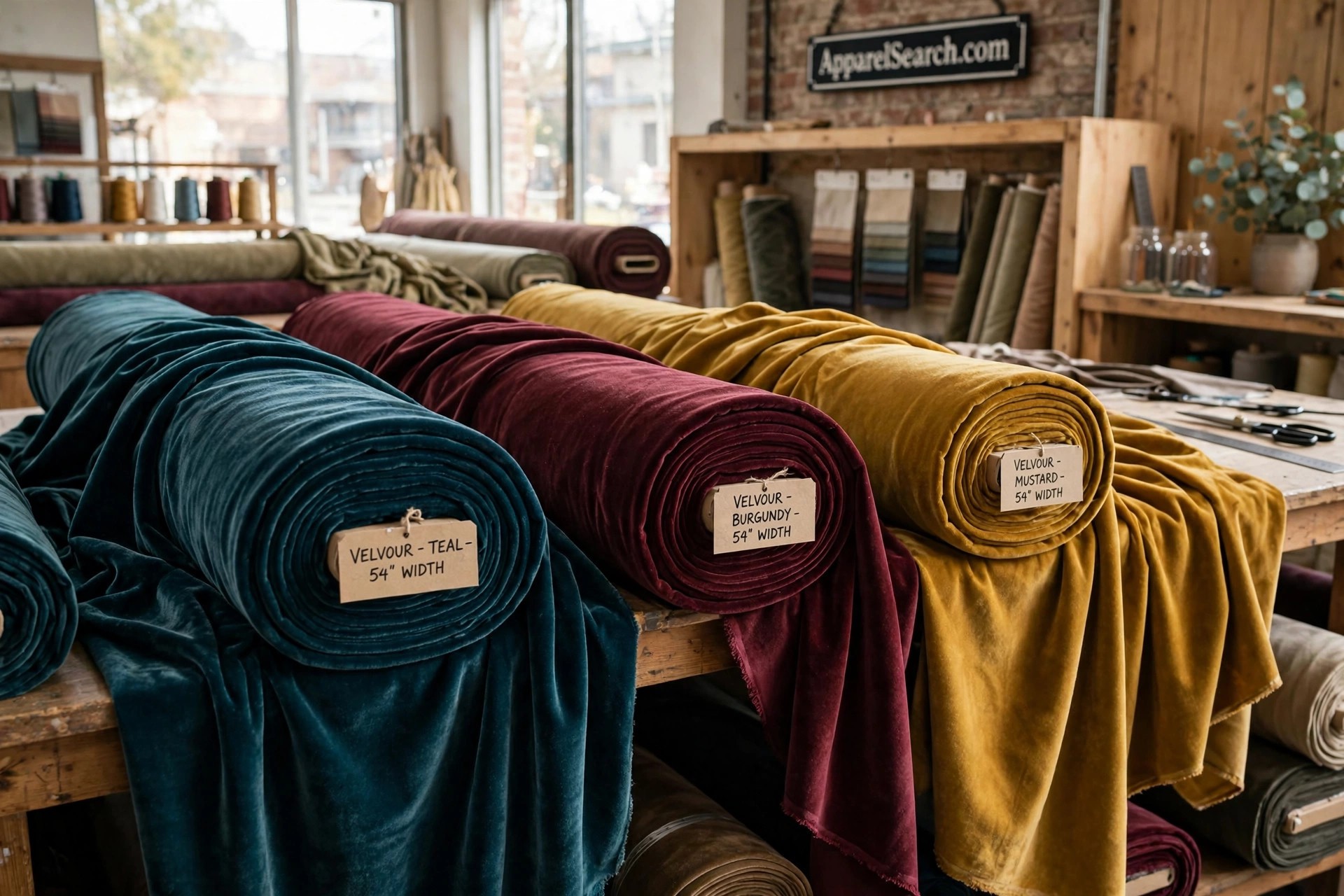
Velour is a knitted fabric with a cut pile: the base is knitted, most often on a circular machine, with extra yarn worked in as loops that are then cut and brushed into a dense, even nap. That knitted construction is the whole story of the fabric's character. Where woven velvet is firm, formal and unforgiving, velour stretches, recovers, drapes around the body and survives the washing machine, which is why it became the standard cloth for tracksuits, loungewear, robes, children's clothing, dance and skating costumes, and the soft toys and upholstery that want a plush touch without a formal price.
Most apparel velour today is polyester, cotton, or a blend of the two, sometimes with a small percentage of elastane for closer fit. Cotton velour breathes and feels natural but can fade and flatten with hard washing; polyester velour holds color and pile through years of laundering, which is why it dominates sportswear and costumes. Pile direction matters in cutting: the nap runs one way, pieces cut in opposite directions shade differently in the light, and a careful maker lays every pattern piece with the nap running the same way, exactly as with velvet and corduroy.
Velour, Velvet and Velveteen
The three pile fabrics are confused constantly, and each has its own page in this directory for good reason - velour here, velvet on its own page in this same letter. Velvet is woven, traditionally with a warp pile, and is the dressiest and most delicate of the three. Velveteen is woven too, with a short weft pile on a cotton ground, firm and matte where velvet is fluid and shining. Velour alone is knitted, and the test is simple: turn the fabric over and stretch it. A knit stretches and shows interlocking loops on the back; a woven pile fabric does neither in the same way.
That difference decides what each fabric should become. A velour tracksuit, robe or child's romper works because the cloth moves with the wearer and washes clean; the same garment in woven velvet would fight every movement and demand specialist care. Conversely, a formal gown or a tailored jacket that needs structure and depth of shine belongs in velvet, and putting velour in its place reads as casual no matter how rich the color. Choosing between them is choosing a construction first and a look second.
Uses, Care and Working With Velour
Beyond clothing, velour serves wherever a soft, light-absorbing surface is useful: jewelry and watch displays, theater curtains and costume stock, car seat covers, pet bedding, and the plush covering of toys and cushions. Its pile photographs softly and swallows glare, which display makers value as much as garment makers value its comfort. In upholstery grades the base knit is heavier and the pile denser, but the family resemblance - and the care rules - stay the same.
Wash velour inside out, cool, and dry it gently; heat and harsh spinning crush the pile, and a soft brush or a cool steam pass lifts it again afterward. Sewing needs a walking foot or a stretch needle and a little patience, because the pile creeps under a standard presser foot and the knit edge curls. Seams should be finished, since cut pile sheds short fibers at first, and a test seam on a scrap settles stitch length before the garment itself goes under the needle.
The Mills in This Directory
Two listings follow: Birim Textile San Tic Ltd Sti of Turkey, and Changshu Sunwell Knitting Textile Co., Ltd. of China. Turkey's knit industry and the Changshu cluster in China are both long-established sources of knitted pile fabrics. These are the two mills this directory profiles for velour specifically; many more mills make the fabric than are listed here.
A buyer approaching either mill should ask for the fiber content, the pile weight in grams per square meter, the elastane percentage if any, and wash-test results for pile retention and colorfastness, and should order a strike-off or a sample length in the exact color before committing - velour shades shift between dye lots more visibly than flat fabrics because the pile catches light differently at every angle. Confirm the usable width as well, since knitted pile goods vary, and a narrow roll changes the marker efficiency of every garment cut from it.
Fabric Mills and Factories in This Directory
Each name below opens the company's profile in the Fabric Mills by Name directory, and each listing gives the company's country.
Birim Textile San Tic Ltd Sti
Country: Turkey.
Changshu Sunwell Knitting Textile Co., Ltd.
The same mill also appears in this directory's velvet listings.
Common Questions
What is the difference between velour and velvet?
Velour is knitted and velvet is woven. Velour stretches, drapes softly and washes easily, suiting tracksuits, loungewear and costumes; velvet is firmer, more formal and more delicate, suiting dressy garments.
What is velour fabric made from?
Most velour is polyester, cotton, or a blend of the two, sometimes with a little elastane. Cotton velour breathes naturally; polyester velour holds its color and pile best through repeated washing.
Which mills does this directory list for velour?
Two: Birim Textile San Tic Ltd Sti (Turkey) and Changshu Sunwell Knitting Textile Co., Ltd.
More to Explore
- Antibacterial Fabric
- Bamboo
- Basalt
- Birim Textile San Tic Ltd Sti
- Boucle
- Breathable
- Broadcloth
- Brocade
- Burlettes
- Canvas
- Carbon
- Chambray
- Changshu Sunwell Knitting Textile Co., Ltd.
- Chenille
- Chiffon
- Circular
- Clothing Industry Employment
- Clothing Industry Factories
- Conversion Charts
- Corduroy
- Cotton
- Crepe
- Crochet
- Damask
- Denim
- Dobby
- Double Knit
- Drill
- Duck
- Dyed Fabric
- Embroidered
- Embroidery Directory
- Fabric
- Fabric Definitions
- Fabric Directory
- Fabric Retail
- Fabric Wholesalers
- Fashion Industry News
- Fiberglass
- Fibers Directory
- Fil-a-Fils
- Filter Cloth
- Flame Retardant
- Fleece
- French Terry
- Gabardine
- Gauze
- Georgettes
- Ginghams
- Greige Fabric
- Herringbone
- Horse Hair
- Interlining
- Interlock
- Jacquard
- Jersey Fabric
- Lace
- Lacoste
- Linen
- Lining
- Long Fiber Reinforced Thermalplastics
- Mesh
- Metallic
- Muslin
- Narrow
- Net
- Non Woven Fabric
- Novelty
- Nylon
- Ottoman
- Oxford
- Percale
- Pile
- Pique
- Pointelle
- Polar Fleece
- Polyester
- Poplin
- Printed
- Printing Directory
- Quilted
- Raschel
- Reflective
- Rib
- Sateen
- Satin
- Seersucker
- Silk Fabric
- Single Jersey
- Smart Fabrics
- Stretch
- Suede
- Taffeta
- Tassars
- Terry
- Textile Machinery
- Textiles
- Thermal
- Tricot
- Tulle
- Tweed
- Twill
- Velcro
- Velour Fabric Search
- Velvet
- Viole
- Vynil
- Waffle
- Waterproof
- Wool
- Yarn Dyed
- Yarn Factories
Looking for Fabric Mills and Suppliers?
The wider directory behind this page is the Fabric section hub, which opens the whole Apparel Search fabric mill directory: fabric types from A to Z, the Fabric Mills by Name profiles, and the dyeing, printing and finishing directories that support them.