Poplin Fabric Guide
Welcome to the Poplin Fabric hub. From this one page you can reach everything Apparel Search covers on the crisp, fine-ribbed cloth — the fabric itself, its mills, its wholesalers and its stores — with the essentials of the fabric explained along the way.
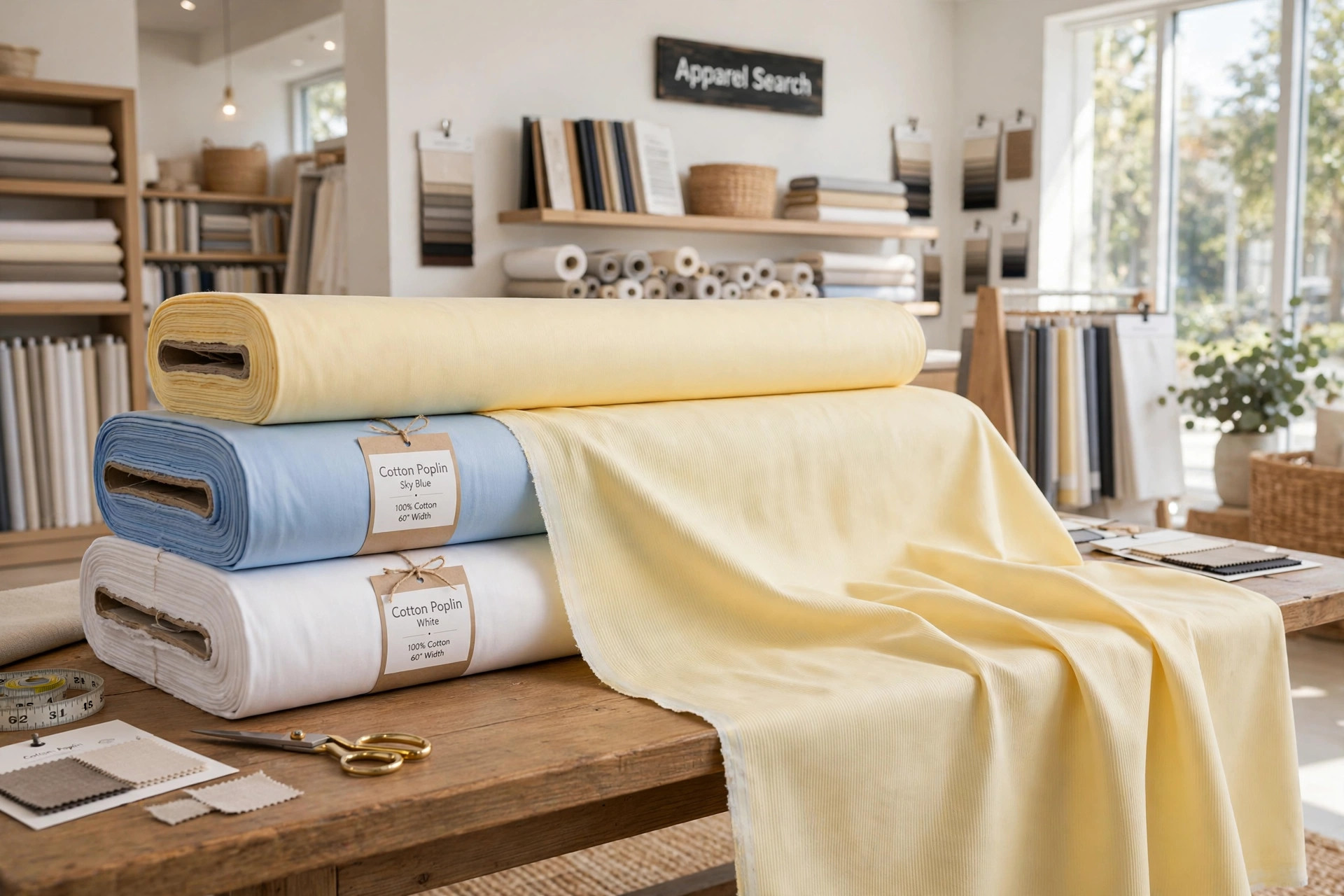
Start With the Cloth Itself
Poplin is a plain-weave fabric with a very fine horizontal rib, traditionally made with a silk warp and a worsted weft and today woven most often in cotton, polyester or cotton blends. The rib comes from using a finer thread in one direction and a slightly heavier thread in the other, so the surface shows a subtle corded texture while staying smooth, light and closely woven. Our explainer page in this cluster covers the construction in detail, along with the fabric's history and its place among the classic shirting cloths.
That construction explains poplin's working character. The tight weave resists wind and sheds light rain better than looser cloths, the smooth face takes dye and print cleanly, and the fabric holds a pressed crease well, which is why it has been a staple for dress shirts, blouses, dresses, uniforms, rainwear shells and lightweight trousers for well over a century. Poplin also sews predictably: it does not stretch on the straight grain, it frays less than open weaves, and it presses flat at seams.
Poplin, Broadcloth and Twill: Knowing the Difference
Shoppers often meet poplin beside two near neighbors. Broadcloth is also a plain weave, but it is woven with yarns of similar size in both directions, giving it a smoother, flatter surface without poplin's fine rib. Twill is a different weave altogether, recognizable by its diagonal lines, and fabrics such as chino and gabardine use it for a heavier, more casual cloth. If you run a fingernail lightly across the fabric and feel a faint cord running across the width, you are most likely holding poplin.
Fiber matters as much as weave. All-cotton poplin breathes, absorbs moisture and softens with washing, which suits shirts and summer dresses. Polyester and cotton-blend poplins wrinkle less, dry faster and keep a sharper crease, which suits uniforms, workwear and travel clothing. Neither is better in the abstract: the right choice depends on whether the garment's job calls for natural-fiber comfort or easy-care durability, and the hub pages in this cluster help you weigh that choice for each channel of the trade.
Find the Trade: Mills, Wholesalers and Stores
This hub organizes the poplin trade into the three channels buyers actually use. The mills pages explain how poplin is woven and finished, what to ask a producer about yarn counts, widths and shrinkage, and how greige cloth becomes the finished fabric garment makers order. The wholesalers pages cover the distributors who hold stock between mill and factory, with guidance on minimums, shade lots and reorder reliability. The stores pages speak to retail buying by the yard — judging the rib and hand at the counter, choosing fiber content, and pre-washing before you cut.
Use the channel that matches your quantity. A home sewer needs a store and a few yards; a small brand needs a wholesaler's stock program or a trial order in proven colors; a uniform or shirting program negotiates with mills directly and accepts mill minimums in return for its own specifications and shades. Moving between the pages in this cluster, you can follow poplin from the loom to the warehouse shelf to the cutting table without leaving the guide, and each page links onward to the next step in that chain.
Keep Exploring From Here
Poplin rewards a little comparison shopping in knowledge as well as in price. Because it is a shirting-weight cloth, it sits naturally alongside the other plain and twill weaves covered across Apparel Search, and the wider fabric guides let you compare weight, drape and care before committing to a fabric for a pattern or a production run. Note too how versatile the cloth has proved: the same weave that makes a formal dress shirt also makes school uniforms, medical and service clothing, quilt backs and lightweight summer suits.
If you have suggestions on how we can improve this guide, or resources that should be added to this section, please do not hesitate to let us know — helpful additions make the hub more useful for every reader who follows. We hope these resources assist your research, whether you arrived as a sewer choosing a shirting, a student learning the classic weaves, or a buyer building a poplin program for a coming season.
Looking for Fabric Mills and Suppliers?
Begin broader research in the Apparel Search fabric directory or return to the main Fabric Search hub for every fabric cluster.