Poplin Fabric
Poplin is the smooth, finely ribbed plain-weave fabric behind crisp shirts, shirt dresses and uniforms. This guide explains how its weave is built, which fibers it uses today, and how to choose and care for it.
Shop Poplin Fabric Now
Shop Poplin Fabric on Amazon Shop Poplin Fabric on eBayThese links open the Apparel Search shopping guides for Amazon and eBay, where the product links are kept in one place.
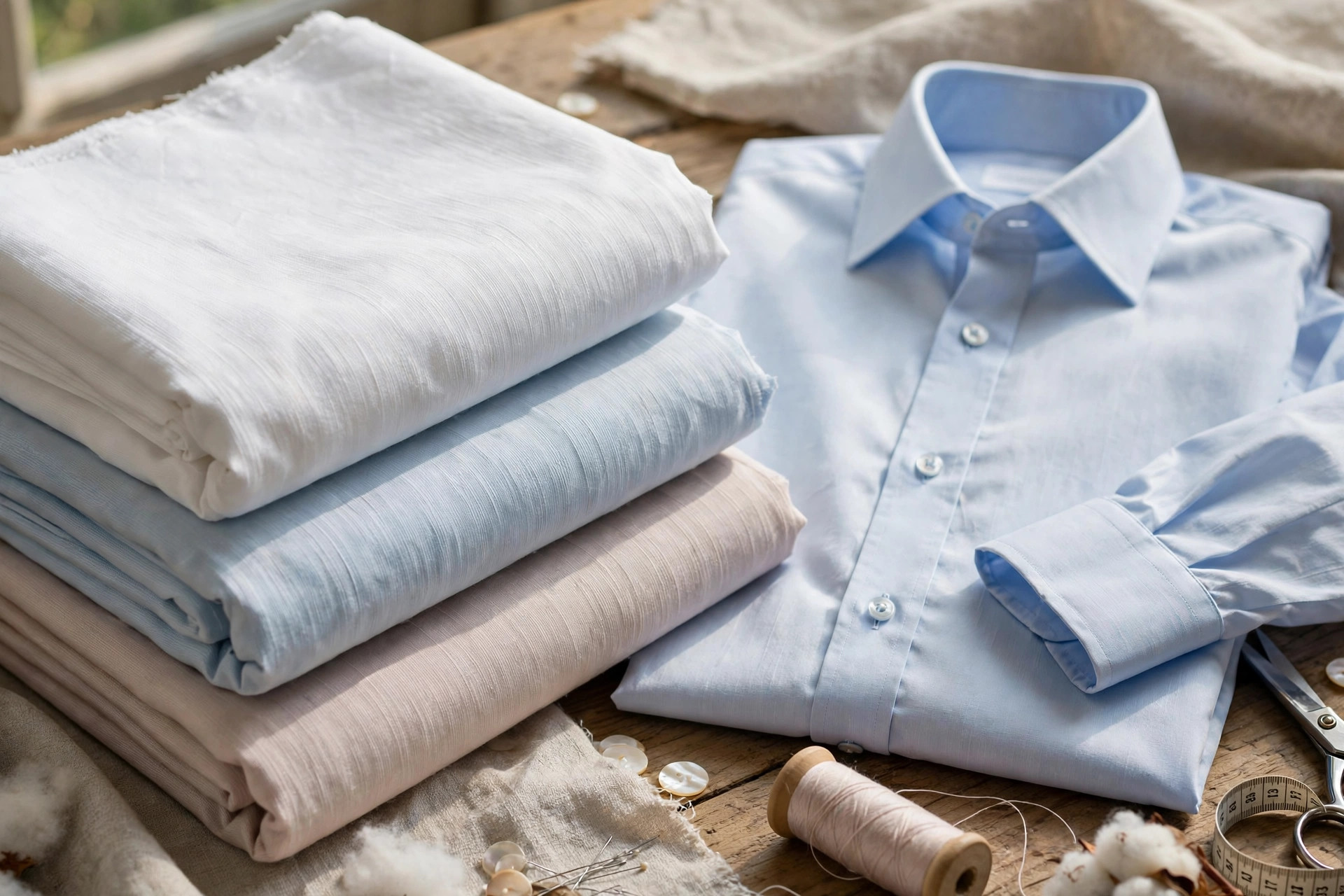
What Poplin Is
Poplin is a plain-weave fabric with a subtle crosswise rib. The rib comes from the yarn balance: many fine warp yarns are packed closely across the width, while a slightly heavier weft yarn passes over and under them one by one, so the surface shows fine horizontal ridges you can feel with a fingertip. The result is a cloth that is smooth, dense and crisp without being stiff, with a clean matte face that takes dye and print evenly and presses to a sharp fold.
The name reaches back to an older cloth woven with a silk warp and a wool weft, but modern poplin belongs to cotton first. The Apparel Search poplin fabric definition gives the formal wording. Definitions at Wikipedia, Britannica and The Free Dictionary, linked in the references below, agree on the essentials: plain weave, a ribbed effect, and a history that moved from a luxury mixed-fiber cloth to an everyday shirting staple.
Fibers, Weights and Finishes
Cotton poplin is the classic form, breathable and comfortable for shirts, blouses, dresses and pajamas. Polyester and cotton blends trade a little breathability for crease resistance, easy care and lower cost, which is why uniforms, medical wear and school clothing so often specify poly cotton poplin. Silk poplin and wool blend poplins survive at the dressier end for blouses and tailored dresses. Whatever the fiber, the construction test is the same: fine, tightly packed warp yarns over a heavier weft, giving that ribbed yet smooth hand.
Weight sorts poplin by job. Light poplins serve blouses, shirt dresses, linings and summer garments. Medium weights are the shirting and uniform standard. Heavier poplins, sometimes brushed or lightly coated, appear in jackets, trench style coats and workwear. Finishes widen the range further: mercerized cotton poplin gains luster and dye depth, easy care finishes reduce ironing, and water resistant finishes suit outerwear. Always handle a swatch, because two cloths both sold as poplin can differ in rib prominence, body and opacity.
Poplin, Oxford and Broadcloth
Shoppers still ask: what is the difference between oxford fabric and poplin fabric? Oxford is a basket weave, usually with colored warp and white weft, giving a textured, slightly flecked surface and a softer, more casual hand, familiar from button down shirts. Poplin is a true plain weave with a fine rib, smoother and crisper, suiting dress shirts and sharper garments. The two overlap in shirting but read differently at a glance and iron to different effects.
Broadcloth is poplin's closest relative, and the names are sometimes used loosely for similar fine plain weaves. In careful trade use, broadcloth emphasizes a very smooth, lustre finished surface, while poplin keeps its recognizable fine rib. When a pattern or a uniform specification names one of them, buy the named cloth rather than a near substitute, because collars, cuffs and pleats behave slightly differently in each, and a reordered garment must match the original fabric exactly.
Using and Caring for Poplin
Poplin is easy to sew. Its stable plain weave frays less than loose weaves, holds a pressed crease, and suits the precise work shirts demand: collars, cuffs, plackets, pleats and topstitching all sit cleanly. It is a friendly cloth for a first shirt project, though its crispness shows every wobble, so cut accurately and test your tension on an offcut. Beyond shirts, poplin serves shirt dresses, skirts, children clothing, aprons, linings and light curtains, anywhere a smooth, opaque, easy handling woven is wanted.
Care follows the fiber. Cotton poplin washes well, may crease in the wash as crisp cottons do, and rewards a warm iron for that pressed shirting finish. Poly cotton versions emerge smoother and dry faster, which is half their appeal for uniforms worn daily. Check opacity in pale colors against the light before cutting, and pre wash fabric the way the garment will be washed, since a dense cotton weave can still shrink a little on its first wash. Looked after plainly, poplin keeps its rib, its color and its crisp hand for years.
Common Questions
What is poplin fabric made from?
Most modern poplin is cotton or a polyester cotton blend, woven as a plain weave with fine, closely packed warp yarns and a slightly heavier weft. Silk and wool blend poplins exist for dressier garments, echoing the cloth's mixed-fiber origins.
Is poplin good for shirts?
Yes, poplin is one of the classic shirting fabrics. It is smooth, dense, breathable in cotton, presses crisply and holds collars, cuffs and plackets neatly, which is why dress shirts, uniforms and shirt dresses use it so widely.
What is the difference between poplin and oxford fabric?
Poplin is a plain weave with a fine crosswise rib and a smooth, crisp hand. Oxford is a basket weave with a more textured, casual surface, often with a flecked color effect. Both serve shirting, but poplin reads dressier.
More to Explore
References & Further Reading
Looking for Fabric Mills and Suppliers?
Find producers and sellers through the poplin pages linked from the Fabric Search hub, or explore the full Apparel Search fabric section for other woven classics.