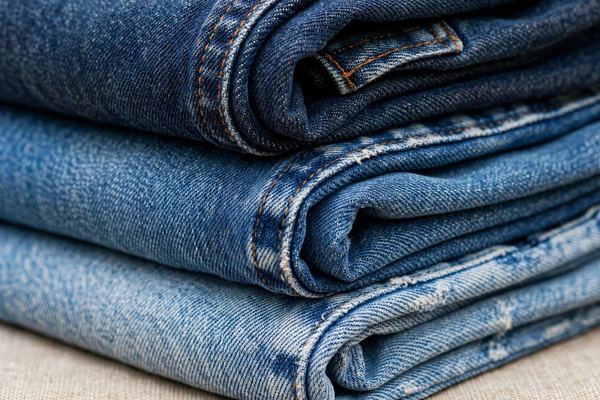
Denim is a sturdy cotton twill fabric recognizable by its diagonal weave and indigo-dyed surface. Originally workwear, it is now one of fashion's most versatile fabrics. The same basic cloth makes a five-dollar pair of work jeans, a designer's runway jacket and a pair of raw selvedge jeans an enthusiast will fade carefully for years - what changes is the weight, the loom, the dye and the wash. This guide explains how denim is made, the types and weights on the label, the washes and finishes in the shop, and how to choose and care for a pair that lasts.
This page is the short version. For the full treatment of the fabric, including weave types, selvedge and raw denim, washes and finishes, and shrinkage and care in depth, work through the Denim Fabric Guide series.
01 / The fabric
What Denim Is
Denim is a warp-faced cotton twill. In the weave, the lengthwise warp threads pass over two or more crosswise weft threads, which creates the diagonal rib you can see on the surface. Only the warp is dyed - traditionally with indigo - while the weft is left undyed, which is why jeans are blue on the outside and pale on the inside, and why they fade the way they do: the indigo sits on the surface of the warp yarn rather than soaking through it, so abrasion and washing gradually rub the blue away and expose the white core.
The name is generally traced to "serge de Nîmes," a sturdy twill from Nîmes in France, and its cousin jean cloth took its name from Genoa. Cloth of this family clothed sailors and laborers for centuries before it became the uniform of the American West in the late 1800s, when riveted work pants turned it into the most successful workwear fabric in history - and eventually into a fashion staple.
02 / Performance
How Denim Feels and Performs
Denim's appeal is durability with a personal payoff. The tight twill weave resists abrasion and tearing far better than a plain weave of the same weight, and because it is cotton it breathes reasonably and feels familiar against the skin. Uniquely among fabrics, denim records its own life: it molds to the wearer's body, creases at the hips and behind the knees, and fades in patterns - whiskers, honeycombs, wallet and phone outlines - that no two pairs share. That individuality is the whole point of raw denim culture, and a bonus in every other pair.
Strengths
- Extremely durable - the twill weave resists wear and tearing
- Molds to the wearer and softens with age
- Fades into patterns unique to each pair
- Available in weights for every season and job
- Versatile - workwear, casualwear and fashion alike
Trade-offs
- Heavy weights are stiff and need breaking in
- Indigo can rub off (crock) onto shoes and upholstery
- Untreated denim shrinks in the first wash
- Thick denim is slow to dry
- Stretch denim can bag out at knees and seat
03 / Varieties
Types of Denim
- Raw / dry denim - unwashed and untreated; fades uniquely with wear. It starts stiff and dark, and every crease and fade is earned by the person wearing it.
- Selvedge denim - woven on old-style shuttle looms with a clean finished edge; prized by enthusiasts. The slow looms make narrower cloth with a denser, more characterful texture.
- Stretch denim - blended with elastane for comfort and flexibility. One or two percent is enough to transform the fit of skinny and slim jeans.
- Lightweight denim / chambray - lighter weaves for shirts and summer garments. Chambray is strictly a plain weave rather than a twill, but it shares denim's blue-and-white coloring and casual role.
- Heavyweight denim - 14oz and above; extremely durable, used in workwear and premium jeans. It stands up almost by itself when new and takes real commitment to break in.
04 / Weight
Denim Weights
Denim is measured in ounces per square yard. Lightweight is under 12oz, midweight 12-16oz, heavyweight over 16oz. Heavier denim lasts longer but needs breaking in. As a guide to the numbers: a typical pair of shop-bought jeans is around 12 to 13 ounces - heavy enough to feel substantial, light enough to be comfortable from the first wearing. Summer shirts and dresses drop to 8 ounces or below, where the cloth behaves more like a sturdy shirting. At the top end, 18 to 21 ounce and heavier denims are a specialist world of motorcycle jeans, workwear and enthusiast pieces that can take weeks of wear before they soften - and then last for many years.
Weight is not quality by itself: a well-made 12oz jean will outlast a poor 16oz one. Yarn quality, weave density and construction decide the rest.
05 / Finishes
Washes and Finishes
Most jeans are sold washed, and the wash is a finish applied to raw cloth. A rinse (or one-wash) simply removes stiffness and shrinkage while keeping the color deep. Stonewashing tumbles the garments with pumice to abrade the surface into an even, lived-in fade; enzyme washes achieve a softer version of the same effect with less damage to the cloth. Distressing adds whiskers, abrasion and repairs by hand or laser. Denim also comes in black, grey and colored dye versions, in coated finishes that imitate leather, and in resin-treated "dry look" styles. The key structural finish is sanforization - pre-shrinking the cloth so a finished garment changes little in the wash. Unsanforized, shrink-to-fit denim is sold oversized on purpose and molds itself at the first soak.
06 / Buying
How to Choose Denim and Fit
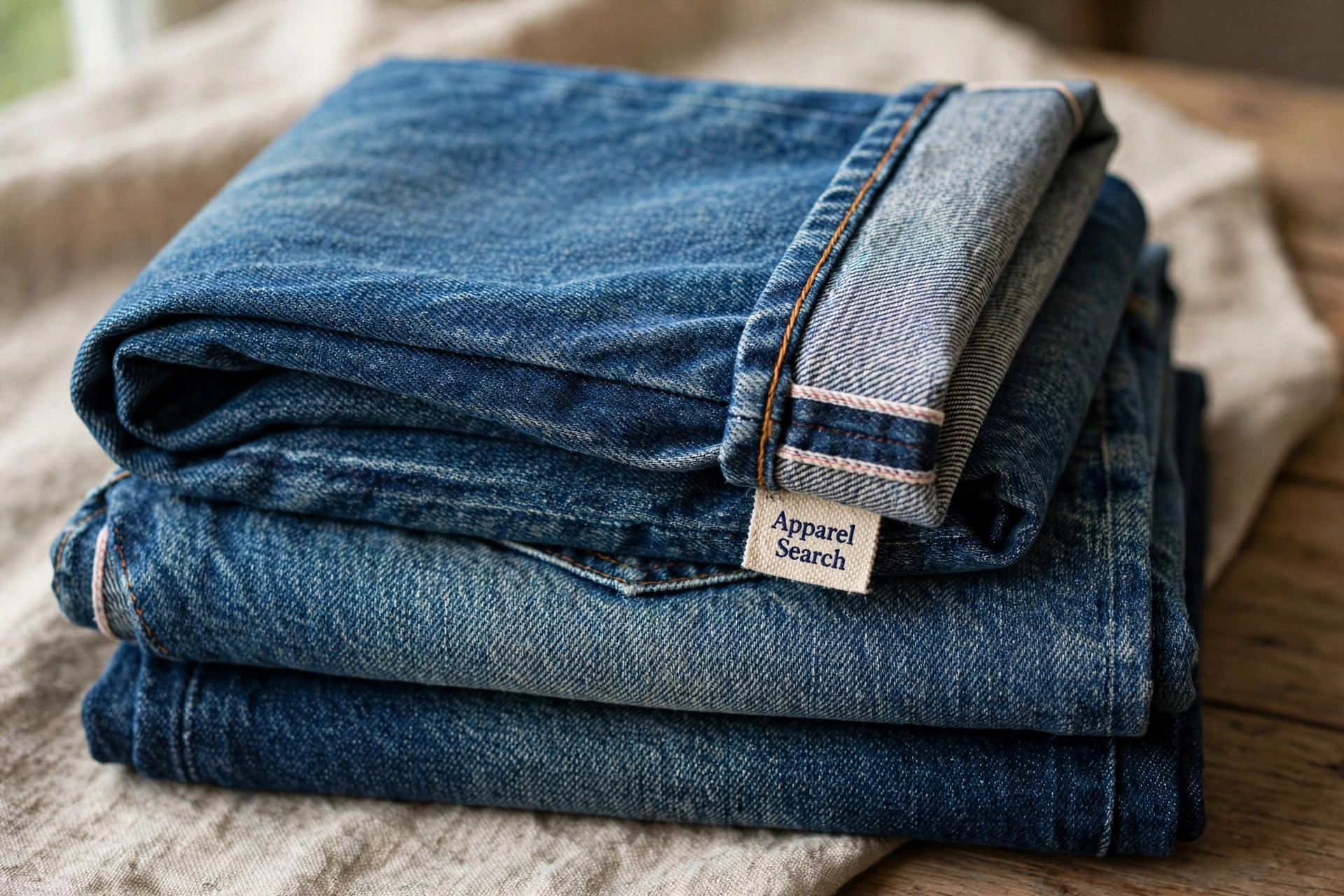
Choose the weight for the season and the job first - midweight for year-round jeans, lightweight for summer, heavyweight only if you enjoy breaking denim in. Then fit: denim relaxes with wear, especially at the waist, so a new pair should feel snug rather than comfortable in the shop; with stretch denim, buy the snug side of your size, because elastane blends bag out fastest. If you are buying raw or unsanforized denim, follow the maker's shrink allowance exactly and size for the pair after its first soak, not before.
Finally, look at construction: chain-stitched hems, sturdy rivets or bar tacks at pocket corners, and a clean selvedge edge with its colored ID thread if that is what you are paying for. Turn the jeans inside out - tidy, dense stitching there predicts a long life better than any label claim.
07 / Care
Caring for Denim
Wash denim sparingly in cold water, inside out, to preserve color. Hang dry when possible. Raw denim fans often wait months before the first wash. See the fabric care guide for details.
Between washes, spot-clean marks, air jeans after wearing, and fold or hang them rather than leaving them in a heap. When a wash is due, a gentle cycle and a mild detergent keep the indigo where it belongs; skip the tumble dryer, which fades, shrinks and weakens the cotton. Also see the denim definition.
Denim at a Glance
Common Questions
How often should you wash jeans?
As rarely as practical. Washing is what fades and weakens denim, so spot-clean marks, air jeans after wearing, and wash only when they need it - cold, inside out, and hang dried. Fans of raw denim often wait months before the first wash to earn sharp, high-contrast fades.
What does selvedge mean?
Selvedge (from "self-edge") denim is woven on old-style shuttle looms that finish the cloth's edges as they weave, so the edge cannot fray. It is usually marked by a colored ID thread in the edge, visible when jeans are cuffed. Selvedge cloth is narrower, slower to make and often denser and more textured.
Will denim shrink or stretch?
Both. Unsanforized denim shrinks noticeably at its first wash, while sanforized denim changes very little. With wear, jeans stretch - especially at the waist, seat and knees - and washing recovers some of that stretch. Stretch denim with elastane relaxes the most, so buy it snug.
What denim weight is best for everyday jeans?
Midweight denim, 12 to 16 ounces per square yard, is the everyday sweet spot: durable and substantial without being hard to break in, and wearable most of the year. Go under 12 ounces for summer jeans and shirts, and over 16 only for workwear or if you enjoy the break-in project.
More to Explore
Explore more: Fabric Directory | Fabric Industry Guide