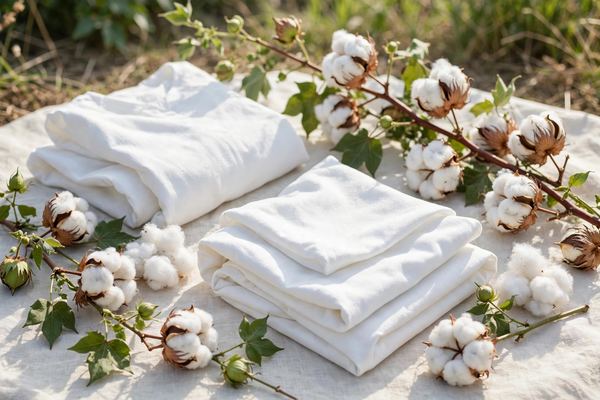
Cotton is the world's most popular natural fiber - soft, breathable, and versatile. It comes in many forms, each with different qualities. The t-shirt in your drawer, the jeans on the rail and the sheets on your bed are very likely all cotton, yet they feel nothing alike - because "cotton" names the fiber, not the finished cloth. This guide explains where cotton comes from, what it does well and where it struggles, the types and weaves you will meet on labels, and how to choose and care for it so it lasts.
01 / The fiber
What Cotton Is
Cotton is a natural fiber that grows as a soft, fluffy boll around the seeds of the cotton plant. The fiber is almost pure cellulose - the same plant material found in linen and rayon, which is why cotton behaves like a plant fiber in the wash and on the skin. After the bolls are picked, a machine called a cotton gin separates the fiber from the seed. The fiber is then cleaned, carded so the strands lie parallel, and spun into yarn for weaving or knitting.
The single most important measure of a cotton is its staple - the length of the individual fibers. Longer fibers spin into smoother, stronger yarn with fewer loose ends, so the finished cloth is softer, resists pilling, and wears longer. Shorter-staple cotton is perfectly serviceable and makes up most everyday clothing, but it cannot match the feel of a long-staple cloth. Nearly every quality difference between two cotton garments - and most of the price difference - traces back to staple length and the care taken in spinning and weaving.
02 / Performance
How Cotton Feels and Performs
Cotton's reputation rests on comfort. It is soft against the skin, breathes well because air moves through its fibers, and absorbs perspiration instead of letting it sit on the surface - a cotton shirt can take up a surprising amount of moisture before it feels wet. It is also a strong fiber, and unusually, it gets stronger when wet, which is why cotton towels, denim and work clothes tolerate hard washing. Cotton takes dye and prints beautifully, which is why it comes in more colors and patterns than any other fiber.
Strengths
- Soft, breathable and comfortable in heat
- Absorbent - good for towels, bedding and underwear
- Strong, and stronger when wet
- Easy to dye, print and wash
- Gentle on skin; rarely irritating
Trade-offs
- Wrinkles easily, especially in plain weaves
- Shrinks in hot water and hot dryers
- Absorbs water but dries slowly
- Can mildew if stored damp
- Loose cotton knits can stretch out of shape
03 / Varieties
Common Types of Cotton
- Upland cotton - the standard cotton of everyday clothing. Its medium-length staple makes the great majority of the world's cotton: t-shirts, denim, towels, sheets and most of the cotton garments in any shop.
- Pima / Supima cotton - extra-long staple fibers make it softer and more durable than standard cotton; used in premium shirting and t-shirts. Supima is the licensed name for Pima cotton grown in the American Southwest.
- Egyptian cotton - long-staple cotton prized for bedding and fine garments. Grown in the Nile delta, its smooth yarns weave into lustrous, long-wearing cloth.
- Organic cotton - grown without synthetic pesticides; popular for eco-conscious clothing. It is certified at the farm level, so look for a recognized certification on the label.
- Cotton jersey - knit cotton with stretch, used for t-shirts and casual wear. The stretch is mechanical - it comes from the knit loops, not from elastic fiber.
- Cotton twill / chino - diagonal weave, durable; used for chinos and workwear.
- Denim - heavy cotton twill; see our denim fabric guide.
04 / Construction
Cotton Fabrics and Weaves
The same cotton yarn becomes very different cloth depending on how it is built. In a plain weave - one thread over, one under - you get crisp, flat fabrics: poplin for shirts and dresses, fine lawn and voile for summer blouses, and brushed flannel for warm shirts and bedding. A twill weave, with its diagonal ribs, makes tougher cloth: denim, chino and gabardine, the fabrics of jeans, workwear and trench coats. A cotton sateen weave floats threads over the surface for a smooth sheen, most often met in bed sheets.
Knitted cotton behaves differently again - the loops give it give and softness. Jersey is the single knit of t-shirts; interlock is a thicker double knit that keeps its shape better; rib knits grip cuffs and necklines; and brushed fleece - often a cotton blend - traps warmth in sweatshirts and hoodies. When a label just says "cotton," the weave or knit is what decides whether the garment is a crisp shirt, a soft tee or a rugged pair of jeans.
05 / Buying
How to Choose Cotton
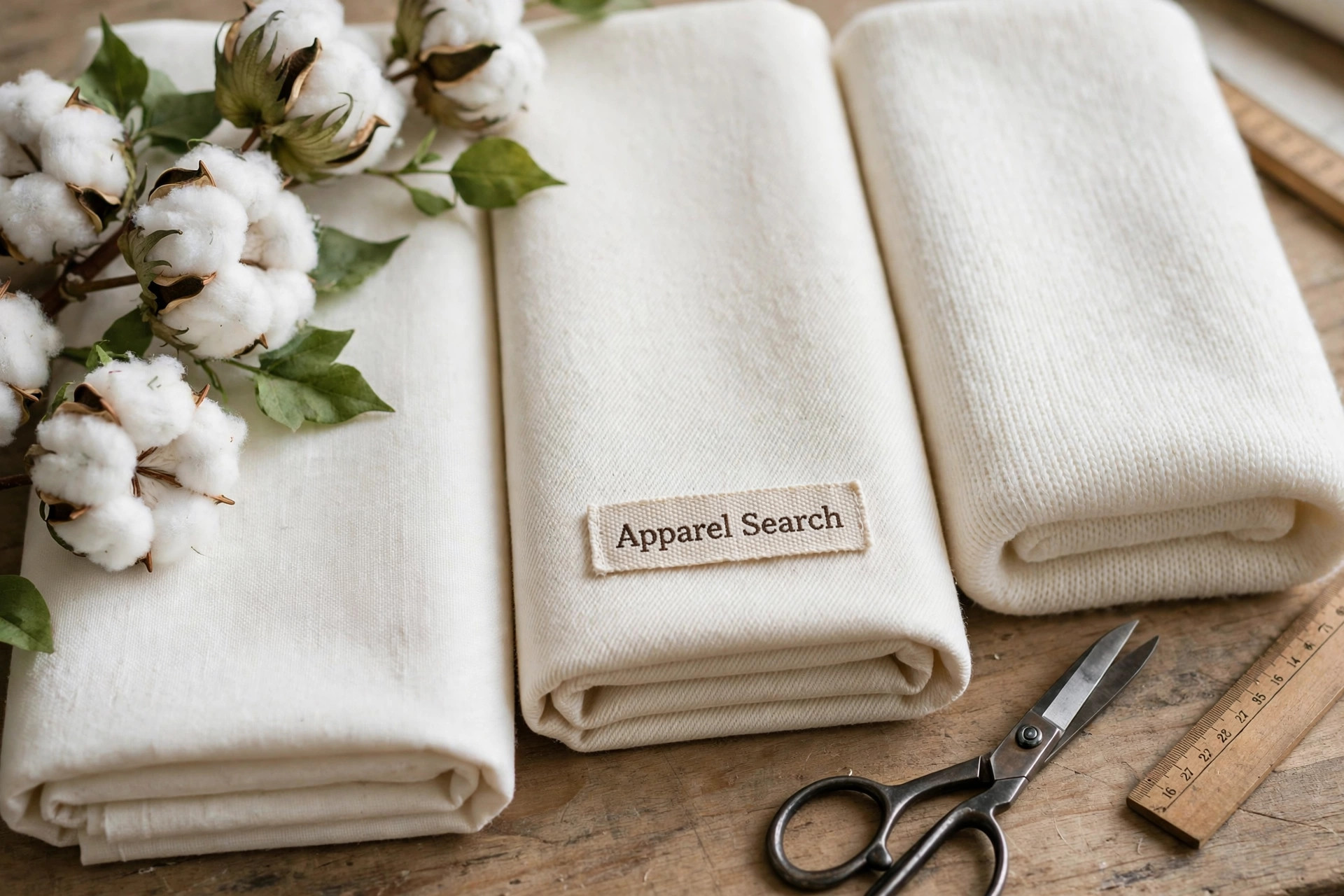
Start with the staple: for shirts, sheets and anything that touches your skin all day, a long-staple cotton (Pima, Supima or Egyptian) is worth its premium in softness and wear. Next, match the cloth to the job - light plain weaves for summer shirts and dresses, medium twills for trousers, heavy denim or canvas where abrasion is expected, and knits wherever comfort and movement matter more than a crisp finish.
Then read the whole label, not just the word "cotton." Blends change the bargain: cotton-polyester wrinkles less and dries faster but feels less natural; a few percent of elastane helps jeans and t-shirts keep their shape. Percentages tell you how much of cotton's character survives - a "cotton-rich" garment at 60 percent behaves quite differently from pure cotton. Finally, if the fit matters, choose pre-shrunk cotton or allow for a little shrinkage at the first wash.
06 / Care
Caring for Cotton
Machine wash cotton in cool or warm water; tumble dry on low or line dry. Cotton can shrink in hot water, so pre-shrunk garments hold their size best. See the fabric care guide for details.
A few habits extend that routine: wash dark colors inside out and with similar colors to slow fading, use a warm iron for a crisp finish on woven cotton, and always store cotton clean and fully dry - folded damp cotton is the one that mildews. Treated kindly, cotton actually improves with washing, softening over its first years of wear.
Cotton at a Glance
Common Questions
Does cotton shrink?
Yes. Cotton fibers relax and pull tighter in hot water and high dryer heat, so a cotton garment can shrink - most noticeably at its first wash. Pre-shrunk garments hold their size best. To keep cotton true to size, machine wash it in cool or warm water and tumble dry on low or line dry.
What is the difference between Pima and regular cotton?
The difference is staple length - the length of the individual fibers. Pima is an extra-long-staple cotton, so its yarns are smoother, softer and stronger, and cloth made from it resists pilling. Regular upland cotton has shorter fibers and is the everyday standard used in most t-shirts, jeans and bed sheets.
Is cotton a good fabric for hot weather?
Yes, with one caveat. Cotton is breathable and absorbs perspiration, which makes it comfortable in heat. But because it holds the moisture it absorbs, it dries slowly and can feel heavy and damp during hard exercise, where a cotton blend or a technical fabric may feel drier.
How do you wash cotton without fading it?
Wash cotton in cool or warm water with similar colors, turn dark garments inside out, and tumble dry on low or line dry in the shade. Hot water and hot drying are what fade and shrink cotton fastest.
More to Explore
Explore more: Fabric Directory | Fabric Industry Guide