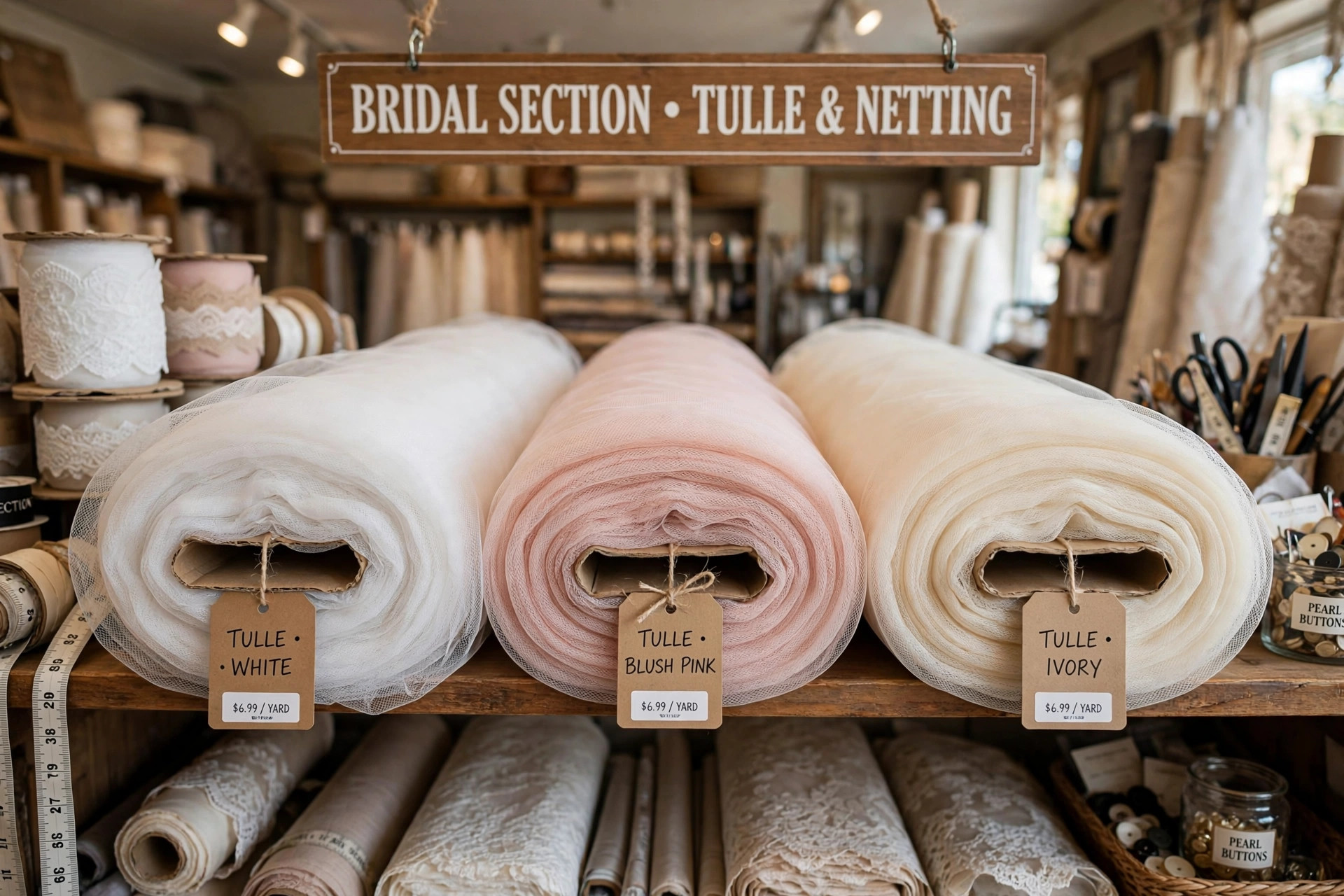
Tulle is a fine, lightweight net. It comes in dramatically different stiffnesses, and picking the wrong one is the most common tulle mistake - stiff tulle will not drape, and soft tulle will not hold a skirt out.
Types of Tulle
- Silk tulle - the finest and softest; drapes beautifully for veils and couture.
- Nylon tulle - crisp and springy; the classic choice for petticoats and tutus.
- Polyester tulle - affordable and widely available in many colors; slightly stiffer hand.
- Stiff / bridal tulle - holds volume; used for underskirts and structured veils.
- Soft / drape tulle - fluid net for overlays, draping, and illusion details.
- Glitter and novelty tulle - sparkle or patterned nets for costumes and occasion wear.
Choosing Tulle
Decide stiffness first: scrunch a corner - if it springs back crisply it will hold volume; if it collapses softly it will drape. Check the mesh size (smaller holes look finer) and buy the widest width available, since gathered skirts eat yardage fast. For veils, silk or soft nylon tulle; for petticoats, stiff nylon.
Best Uses
Bridal veils, ballet tutus and costumes, petticoats, evening gown overlays, fascinators, and gift wrapping.
Sewing Tips
- Tulle does not fray, so edges can be left raw - cut with a rotary cutter for clean lines.
- Gather with two rows of long basting stitches, or use a ruffler foot for even gathers.
- Layer multiple tiers rather than one thick piece for a fuller, softer look.
- Use a sharp universal needle and a straight stitch; zigzag is rarely needed.
- Handle gently at the machine - tulle snags on rough fingernails and burrs.
Care
Hand wash tulle in cool water with mild soap and air dry. Avoid wringing, which crushes the mesh. Store rolled rather than folded to prevent permanent creases, and keep away from Velcro and jewelry that snag.
Also see the Tulle in the Fashion Glossary and the tulle fashion term page.
Explore more: Fabric Directory | Fabric Industry Guide