Textile Price Links
Textile prices are never a single number on a single chart. This page gathers the pricing routes buyers use most often, explains what each fiber category covers, and shows how to read price information without mistaking a marketplace listing or a regional statistic for a universal quote.
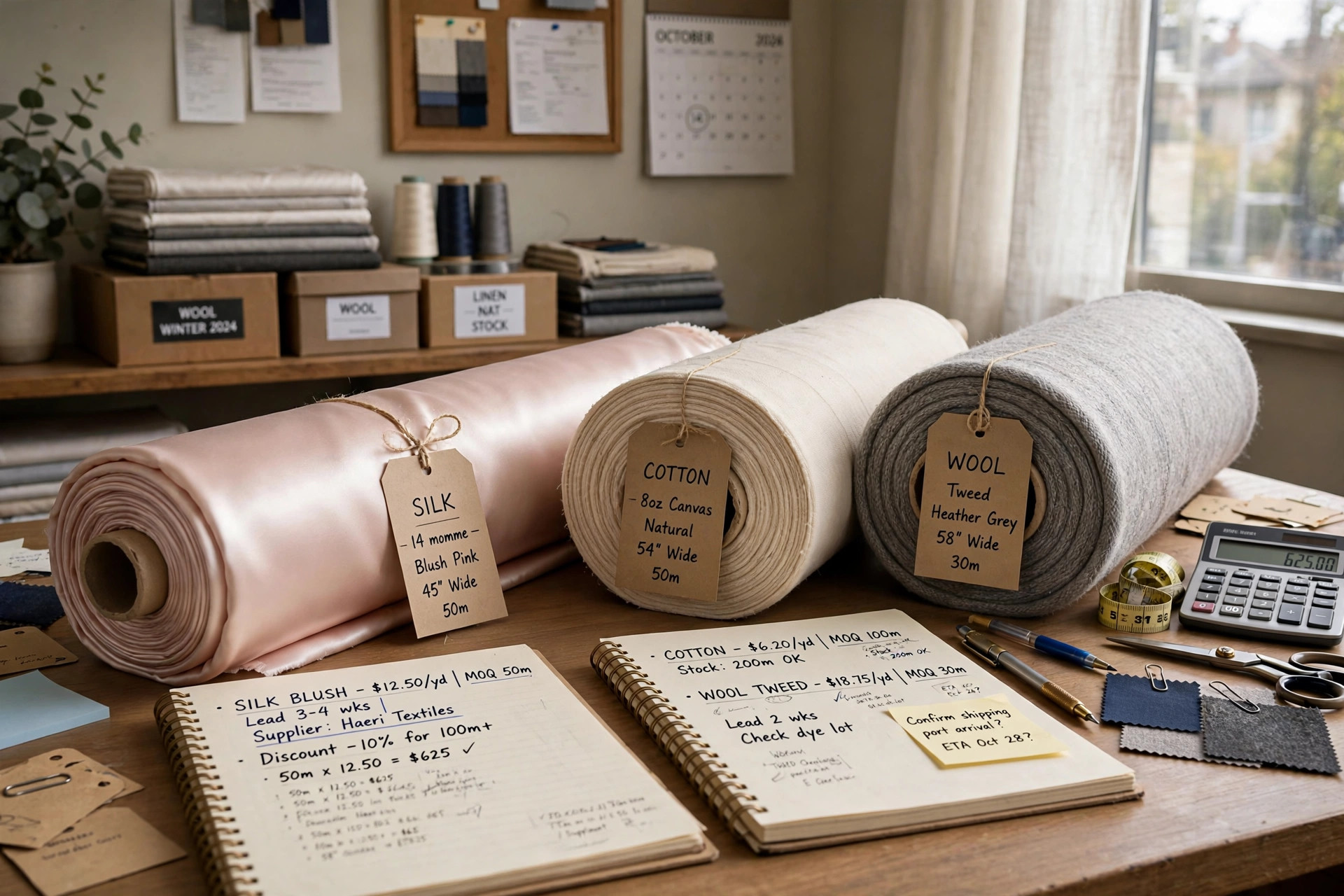
Why Textile Pricing Needs More Than One Source
Every fiber trades in its own market, on its own calendar, and in its own units, which is why a useful pricing page is a set of links rather than a single price table. Cotton is quoted against futures and regional spot markets, wool against auction results, and silk against producing-country statistics and exchange data, while polyester and nylon follow petrochemical feedstocks as much as farm output. A buyer who checks only one source will miss the movement in the others, and a garment budget built on one fiber alone can be undone by a swing in a blend partner. The original Apparel Search page made exactly this point by grouping cotton, wool, polyester, nylon and yarn pricing together, so a reader researching silk could move sideways into the fibers that compete with it or are blended with it.
It also helps to separate three different kinds of price information before using any of it. First are official statistics and exchange figures, which describe bulk fiber or yarn traded in volume and are best for direction and history. Second are mill and supplier quotations, which reflect a specific construction, width, finish and order quantity. Third are retail and marketplace listings, which show what small quantities cost today but say little about contract pricing. None of the three is wrong, but each answers a different question, and confusing them leads to unrealistic costings. This guide keeps those layers distinct so readers can choose the right tool for sourcing, budgeting or general research.
The Fiber Price Categories Linked From Here
Cotton pricing matters far beyond cotton garments, because cotton sets the reference point against which many blends and substitutes are judged. Wool prices, driven by auction sales and by grade and micron count, affect suiting, knitwear and outerwear budgets in a different rhythm from cotton. Polyester prices track energy and polymer markets and can move quickly, which is why converters and mills watch them closely even for fabrics that are only part polyester. Nylon pricing follows a smaller, more specialized market tied to apparel, hosiery and performance textiles. Yarn prices sit between fiber and fabric: they translate raw material costs into the form spinners actually sell, adding spinning, twisting and dyeing costs that a fiber chart alone cannot show.
Within this silk section, the companion pages narrow the focus further. The silk prices page collects raw silk sources, including producing-country statistics and exchange references. The silk yarn prices page deals with thrown and spun silk yarns, where twist, denier and preparation change the cost substantially. The silk fabric prices page addresses finished cloth, where weaving, dyeing and finishing dominate. Reading the three together teaches a useful habit: always ask which stage of production a price describes. A low raw-material figure does not mean inexpensive finished fabric, and a high retail fabric price does not mean the fiber itself has become scarce. The categories are a ladder, and each rung adds labor, loss and handling.
How Buyers, Students and Researchers Use These Links
For a product developer, price links are an early-warning system. Checking fiber direction before opening a costing helps set a realistic target price, choose between a pure fiber and a blend, and decide whether to lock in fabric early or wait. For a small brand or independent maker, the same links explain why a supplier quote has changed between seasons, which makes negotiation calmer and more factual. Instead of arguing about a single number, both sides can point to the underlying fiber movement and discuss the parts of the price that are construction, quantity and delivery rather than raw material.
Students and researchers use pricing sources differently. Historical series show how wars, harvests, energy shocks and fashion cycles have moved textile costs, and how synthetics gradually changed the economics of natural fibers. A statistics page from a silk-producing country, an auction report for wool, or a futures history for cotton each preserves a piece of that story in primary form. When using older data, note the date, the grade and the market carefully, and compare like with like across years. Currency, unit and quality differences can create apparent jumps that are really just changes in how a series was reported.
Getting a Real Quote After the Research
Reference prices prepare you to ask better questions, but they never replace a quotation for the exact fabric you intend to buy. When you approach a mill or supplier, specify fiber content, yarn size, construction, width, weight, color, finish, quantity and delivery point, because each one moves the price. Ask what period the quote covers, whether it includes dyeing and finishing, and what minimum quantity it assumes.
Finally, keep notes as you research. Record the source, the date you checked it, the grade or construction it described, and the unit it used, so a figure found months later can still be interpreted correctly.
Common Questions
Why is there no single price list for all textiles?
Each fiber, yarn and fabric is traded in different markets, grades and units, and finished fabric adds weaving, dyeing and finishing costs. A single list would mix unlike things and mislead more than it helped.
What is the difference between a fiber price and a fabric price?
A fiber price covers the raw material only. A fabric price also includes spinning, weaving or knitting, dyeing, finishing, inspection, handling and the supplier margin, so it is normally much higher.
How should I use historical price data?
Note the market, grade, unit and date, and compare the same series over time rather than mixing sources. Historical data is best for direction and context, not as a quote for a current order.
Looking for Fabric Mills and Suppliers?
For mills, suppliers and wider fabric categories beyond pricing, continue into the main fabric directory on Apparel Search and the Fabric Search hub.