Wool Yarn Prices
Wool yarn is where most makers actually meet the wool market, in a cone or a ball rather than a bale. This page explains how wool yarn prices are formed and how to use the marketplace and trade sources linked from the original guide.
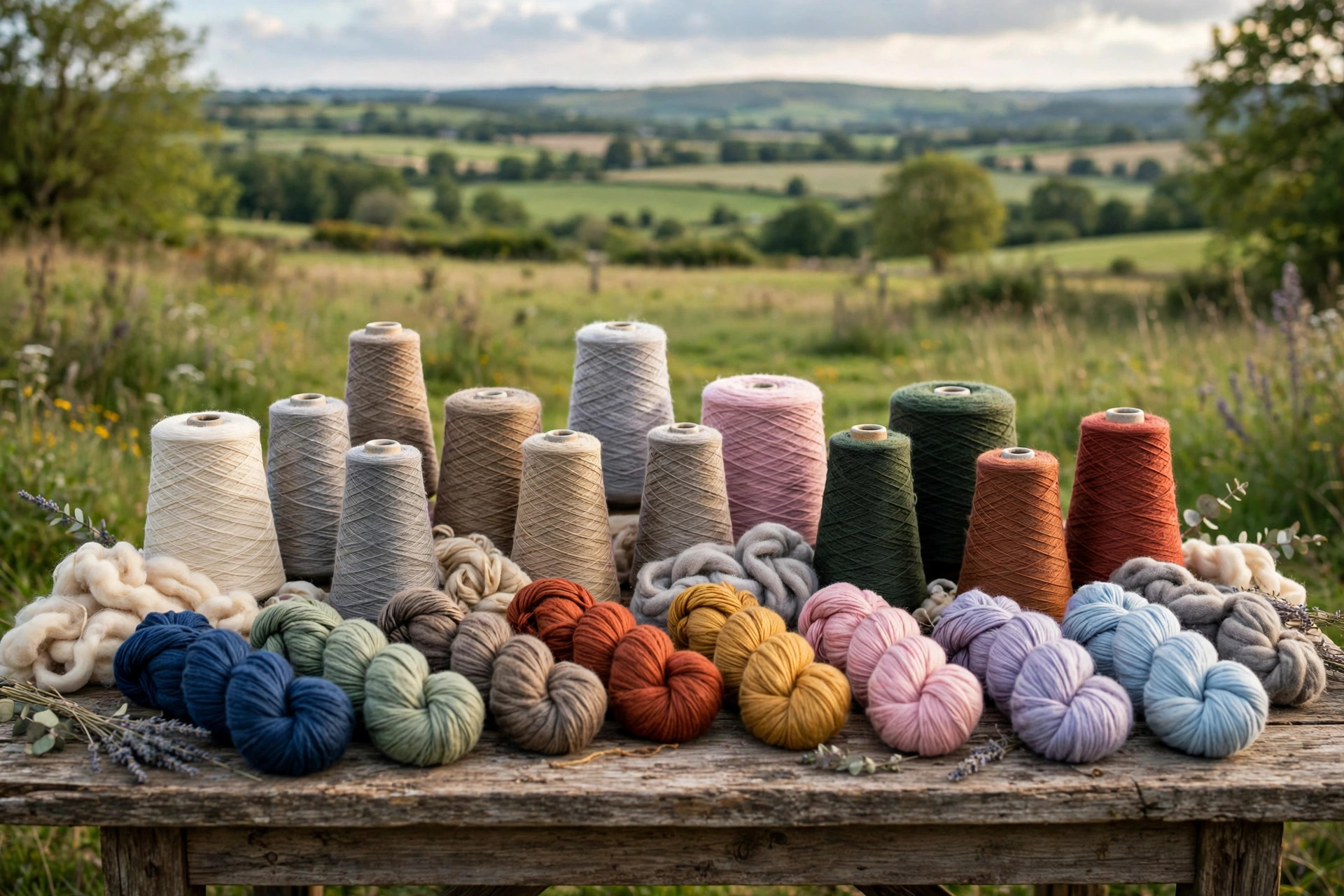
From Fibre Price to Yarn Price
A wool yarn price starts with the fibre, and fibre diameter remains the strongest single influence, because fine apparel wools cost far more than coarse grades before any processing begins. But between the bale and the cone sit several real costs that a buyer is also paying for: scouring and carding or combing the wool, spinning it to a specified count, twisting and winding it onto cones or hanks, and dyeing it, whether as fibre, yarn or in a later stage. Each step adds labour, energy, machinery time and waste.
The spinning system matters to price as well as to character. Worsted yarns, spun from longer, combed fibres aligned in parallel, are smoother, stronger and more expensive to produce, and they make the clear, firm surfaces of suiting and fine knitwear. Woollen spun yarns, carded rather than combed, are loftier and softer per unit of weight, trap more air, and suit blankets, tweeds and casual knitwear. Two yarns of the same wool and the same nominal count can therefore be priced quite differently, and both prices can be fair.
Blends add a third dimension. Wool is blended with polyester or nylon for abrasion resistance and easier care, with silk or alpaca for surface and softness, and with elastane in small amounts for stretch. A blended yarn's price reflects each component and the difficulty of marrying fibres that behave differently in dyeing and spinning, which is why the cheapest route to a lower yarn price, quietly changing the blend, is also the one most likely to change the fabric you end up with.
The Yarn Price Sources in This Guide
The original Wool Yarn Prices page listed a small, practical set of sources: the marketplace listings of large international trading platforms, where wool and wool blend yarns are offered by sellers in many countries, a dedicated source for wool yarn prices from China, one of the largest spinning nations, and a major Indian marketplace catalogue for woollen yarn, reflecting India's long established woollen and worsted trade. Together they give a reader offers from the two largest textile producing regions as well as a global marketplace view.
Used properly, these sources answer the question of what is being asked. Marketplace listings show asking prices for stated counts, blends and minimum quantities, and the range across many sellers is genuinely informative: a tight cluster of prices suggests a well supplied standard product, while a wide scatter warns that the specification is unusual or that listings are not describing the same yarn. Trade sources organised by product, such as the China wool yarn price listings, help a buyer follow a narrower category over time rather than taking a single day's snapshot.
What none of these sources can do is quote your delivered price. Shipping, duties, testing, payment terms and the cost of a rejected lot all sit outside a listing. Treat online prices as the opening of a conversation with a spinner or merchant, in which you confirm the specification in writing, request a sample cone, and have the yarn tested in your own fabric before volume is committed.
Comparing Yarn Prices Without Fooling Yourself
Match the specification before you match the number. A comparable wool yarn quotation states the fibre content and wool quality, the spinning system, the yarn count and ply, the twist level where it matters, the colour and whether the price is for undyed or dyed yarn, the put-up, cone or hank and its weight, and the quantity the price is based on. If two quotations differ on any of these, they are prices for different products, and choosing the lower one is not a saving.
Watch the units as carefully as the figures. Yarn is priced by weight, but counts are expressed in several systems, metric, worsted and woollen counts among them, and a conversion error turns an apparent bargain into an expensive mistake. Confirm whether a price is per kilo or per pound, whether it includes dyeing, and whether the minimum quantity for that price is one you can actually use, because the attractive figure in a listing is often tied to a volume few smaller buyers reach.
Finally, use the upstream guides in this section as your reference. The wool prices page shows the fibre market your spinner is buying in, and a yarn increase that mirrors a fibre increase is a different conversation from one that appears while fibre is flat. Arriving at a negotiation knowing both numbers, your specification and the market behind it, is most of what professional yarn buying consists of.
Common Questions
Why do two wool yarns of the same count cost different amounts?
Because count is only one part of the specification. Fibre fineness, worsted versus woollen spinning, blend, dyeing, twist and quantity all change the cost, so two yarns at the same count can legitimately be priced far apart.
Are marketplace yarn prices the prices I will pay?
They are asking prices from individual sellers for stated quantities, before shipping, duties and terms. Use them to judge the market range, then confirm a delivered price and test a sample before committing to volume.
What is the difference between worsted and woollen yarn?
Worsted yarn is spun from longer, combed, parallel fibres, giving a smooth, strong yarn for suiting and fine knits. Woollen yarn is carded rather than combed, giving a loftier, softer yarn for blankets, tweeds and casual knitwear.
More to Explore
References & Further Reading
Looking for Fabric Mills and Suppliers?
See the fibre end of the chain in the other wool guides, reached from the Fabric Search hub, or find yarn and fabric suppliers in the Apparel Search fabric directory.