Cotton Defined
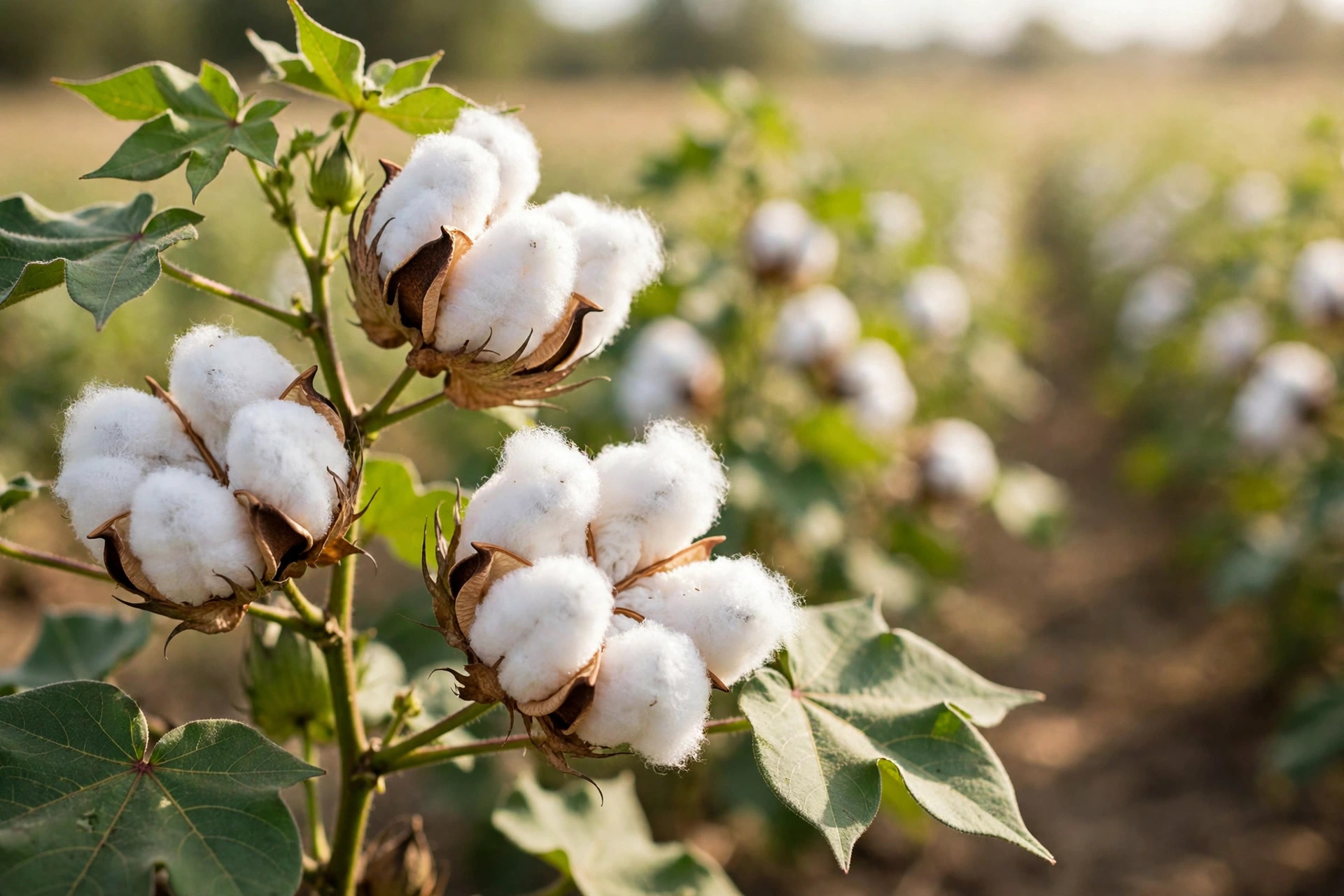
Cotton is a soft, fluffy staple fiber that grows in a boll around the seeds of the cotton plant — the starting point for yarn, thread, and the most widely used natural-fiber cloth in clothing today.
Shop Cotton Fabric Now
Shop Cotton Fabric on Amazon Shop Cotton Fabric on eBayThese links open the Apparel Search shopping guides for Amazon and eBay, where the product links are kept in one place.
What Cotton Is
Cotton is a soft, fluffy staple fiber that grows in a boll, or protective capsule, around the seeds of cotton plants of the genus Gossypium. Each part of that sentence matters. Staple fiber means the individual fibers have a usable length that allows them to be twisted together into a continuous yarn. Fluffy describes the opened boll as it is picked, before ginning separates fiber from seed. The boll itself is the plant's protective capsule, opening at maturity to reveal the white lint that the textile industry buys, grades, spins, and weaves or knits into cloth.
The plant is a shrub native to tropical and subtropical regions around the world, including the Americas, Africa, India, and Pakistan. Cotton is therefore not a single-origin crop tied to one climate or continent. Different growing regions developed their own varieties and traditions over centuries, which is one reason cotton quality, staple length, and price can vary by origin. Understanding that geography matters when buyers compare growths, because fiber grown in one region may spin, dye, and finish differently from a visually similar fiber grown somewhere else.
From Boll to Yarn and Thread
The fiber most often is spun into yarn or thread and used to make a soft, breathable textile. Spinning aligns and twists the short staple fibers so they hold together under tension, producing yarns for weaving and knitting and finer threads for sewing. Breathability is central to cotton's appeal in apparel: air moves through cotton cloth more readily than through many synthetic fabrics, and the fiber absorbs moisture, which helps explain its long dominance in shirts, underwear, towels, bedding, and warm-weather clothing. Softness at the skin is the other quality wearers notice immediately, even before they think about durability or care.
That combination has made cotton the most widely used natural-fiber cloth in clothing today. Natural-fiber is the key qualifier. Man-made fibers compete on volume and price, but among fibers that grow rather than being manufactured — cotton, linen, wool, silk, and others — cotton holds the leading place in everyday apparel. If you want the fuller background, read more about cotton fibers and the companion cotton definition elsewhere on Apparel Search.
Why the Plant Grows Fiber at All
The botanical purpose of cotton fiber is to aid in seed dispersal. The fluffy lint is not produced for people; it helps the plant's seeds travel, catching air and moving away from the parent plant. Agriculture turned that natural mechanism into a textile system: breeding for longer, stronger, whiter fiber, harvesting bolls at scale, ginning out the seeds, and baling the lint for mills. Keeping the botanical purpose in mind also explains cotton's physical behavior. A fiber designed to be light and airy will be soft and lofty in yarn, will trap air for insulation, and will need twist and construction to gain strength in fabric.
For apparel buyers, the definition leads directly to practical questions. How long is the staple, and will it pill or wear quickly? Was the fiber carded or combed, and how smooth will the yarn feel? Will the finished cloth breathe in the end use, or has a heavy finish closed it down? Those questions connect this definition page to the pricing guides in this section, because each processing step that improves the fiber also adds cost. Start here for the meaning of the word, then use the Cotton Prices hub to follow the fiber into yarn and fabric prices.
Using This Definition in Buying and Learning
Students, designers, and sourcing staff often meet cotton first as a fabric name on a label, not as a plant fiber with a botany and a geography. Reversing that order helps. When a specification simply says cotton, ask which cotton: which origin, which staple, which yarn type, and which construction. A basic carded open-end yarn in a plain weave is a very different material from a combed ring-spun yarn in a fine knit, even though both are honestly labeled cotton. The definition gives you the shared starting point; the specification has to supply the rest before price or performance can be judged fairly.
Keep the key terms in mind: soft, fluffy, staple, boll, Gossypium, shrub, tropical and subtropical, spun into yarn or thread, breathable, most widely used natural-fiber cloth, and seed dispersal. Everything else in this Cotton section — information links, fiber prices, yarn prices, and fabric prices — builds on those facts. Return here whenever a supplier's description needs checking against the basics.
Common Questions
What is cotton, in one sentence?
Cotton is a soft, fluffy staple fiber that grows in a boll, or protective capsule, around the seeds of cotton plants of the genus Gossypium.
Where does the cotton plant come from?
The cotton plant is a shrub native to tropical and subtropical regions around the world, including the Americas, Africa, India, and Pakistan.
Why does the cotton plant grow fiber?
The botanical purpose of cotton fiber is to aid in seed dispersal. People spin that fiber into yarn or thread to make a soft, breathable textile.
Looking for Fabric Mills and Suppliers?
For mills, suppliers, and wider fabric guidance beyond this cotton definition, start from the main Fabric section on Apparel Search and work back into the Fabric Search guides.