Cotton Information Links
A short, institutional reading list for learning about cotton: market reports, trade and industry bodies, and trusted history, botany, and production references.
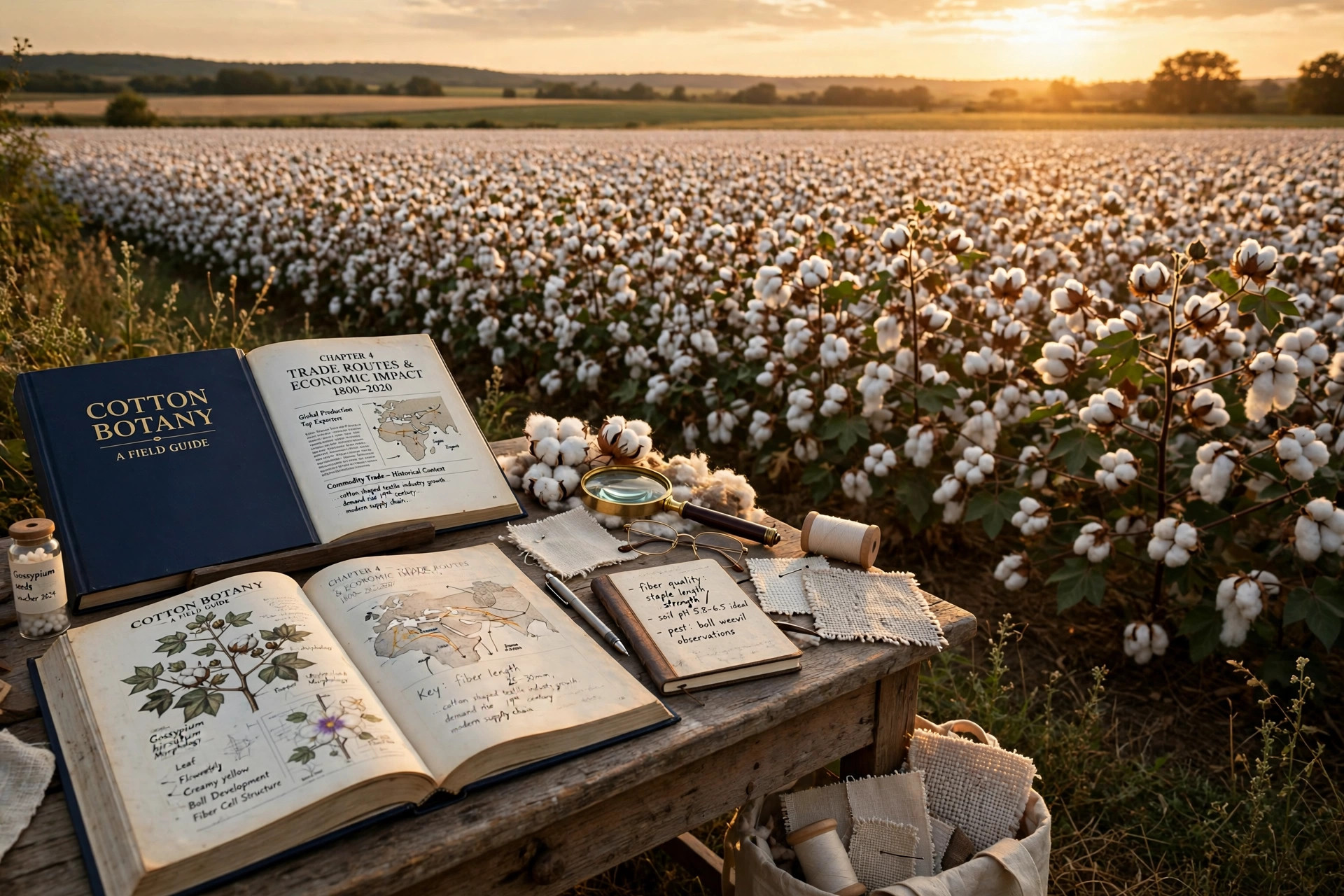
What Kind of Links Belong Here
Below are a few informational resources to help viewers learn more about cotton, and the character of that list matters. Every external resource on it is an institution, an industry body, a museum or encyclopedia, or an international information service — not a company selling fabric or yarn. That is why there are no commercial listings here. The organizations named here publish market news, set or explain trade rules, represent growers and textile manufacturers, preserve history, and explain the plant itself. They are References, collected centrally on the page, so a student or buyer can go to a primary source rather than a sales page.
Start with the official market picture. The USDA Agricultural Marketing Service publishes market news reports including cotton reports, and its Cotton Division supports the classification, standardization, and market news that help U.S. cotton move in an orderly way. Market reports answer a different question from a price headline: what grades are trading, where, and in what volume. A buyer who reads the underlying report understands whether a price movement reflects the whole market or a thin, unusual lot, and a student learns how a raw agricultural fiber becomes a graded, tradable commodity.
Trade, Industry, and Policy Bodies
The International Cotton Association is the trade body most closely associated with the rules and arbitration tradition of the international cotton trade, useful background for anyone who buys or sells cotton across borders. The National Cotton Council publishes news and current events for the U.S. cotton industry, speaking for growers, ginners, merchants, and related segments together. The National Council of Textile Organizations represents the U.S. textile industry more broadly, which helps place cotton inside the mills, jobs, and trade policy debates that affect whether fiber becomes fabric at home or overseas. Each body has a point of view, and naming that point of view is part of using it well.
UNCTAD's information on cotton takes the widest view, treating cotton as a global commodity with producing and consuming countries, development questions, and trade data. That perspective complements the U.S.-focused sources: cotton is grown, traded, spun, and worn worldwide, and prices or policies in one major producing country affect mills and garment makers in others. Reading a national council release beside an international commodity overview teaches a useful habit — check whether a claim about supply, demand, or sustainability is local, regional, or genuinely global before repeating it in a sourcing decision or a classroom.
History, Botany, and Naturally Colored Cotton
Some of the most distinctive links here are educational rather than commercial. The Smithsonian's material on naturally colored cotton explains fiber that grows in colors other than white, a topic that interests breeders, historians, and designers looking to reduce dye use for suitable end uses. Plant Cultures covers the history and botany of cotton, connecting the plant, its cultivation, and the cultures shaped by it. The New Georgia Encyclopedia entry on cotton production in the U.S. South grounds the story regionally, showing how cotton shaped an economy and a society, including the difficult histories that any honest account of Southern cotton must acknowledge.
These sources reward slow reading. Botany explains why fiber length and fineness vary; history explains why particular regions grow particular cottons and why trade routes formed as they did; the story of colored cotton shows that the familiar white fiber is a bred and selected norm, not the plant's only possibility. For designers, that background can inspire more thoughtful material choices. For buyers, it explains vocabulary that still appears in specifications and origin claims. For students, it turns a commodity name into a plant, a set of places, and a human history worth understanding before prices are even discussed.
How to Use This Page With the Price Guides
This information page and the price pages in this section do different jobs, and using them together works best. Come here when you need an institution, a report series, a trade body, or a trustworthy explainer. Go to the Cotton Prices page when you need exchanges and price reporting, and to the pricing links guide when you need the broader commodity-pricing picture. Readers can also go onward to Cotton Fiber coverage and Cotton News on Apparel Search, which remain the natural next steps for current stories and general fiber background.
Suggestions for educational links are welcome. Institutional, educational suggestions are the right fit for this page, while commercial sellers belong in the appropriate directory sections elsewhere on the site. A good suggestion names who publishes the resource, what it covers, and why a cotton learner would trust it. Keeping the list short, institutional, and genuinely educational is what makes it useful; a long undifferentiated link list would defeat the purpose of a curated information page.
Common Questions
What kinds of organizations are linked here?
Institutions and learning sources: the USDA, cotton and textile councils and associations, the Smithsonian, Plant Cultures, UNCTAD, and an encyclopedia. They are listed as References, not commercial listings.
Where should I look for official cotton market reports?
The USDA Agricultural Marketing Service publishes market news and cotton reports, covering classification, standardization, and market information for U.S. cotton.
What can I learn from the history and botany resources?
Plant Cultures covers cotton history and botany, the Smithsonian covers naturally colored cotton, and the New Georgia Encyclopedia covers cotton production in the U.S. South — the plant, its colors, and its regional history.
More to Explore
References & Further Reading
- Cotton production in the U.S. South
- International Cotton Association
- National Cotton Council News and Current Events
- National Council of Textile Organizations
- Naturally colored cotton
- Plant Cultures - History and botany of cotton
- UNCTAD Information on Cotton
- USDA AMS - Market News Reports - Cotton Reports
Looking for Fabric Mills and Suppliers?
For fabric mills, suppliers, and the full cloth directory beyond these cotton references, explore the main Fabric section on Apparel Search and the Fabric Search hub.