Nylon Fabric Prices
There is no single published price for nylon fabric, because every mill sets its own price from its own costs and margin. This page explains what a nylon fabric price actually covers and how buyers use marketplaces, price services and mill inquiries to build a realistic figure.
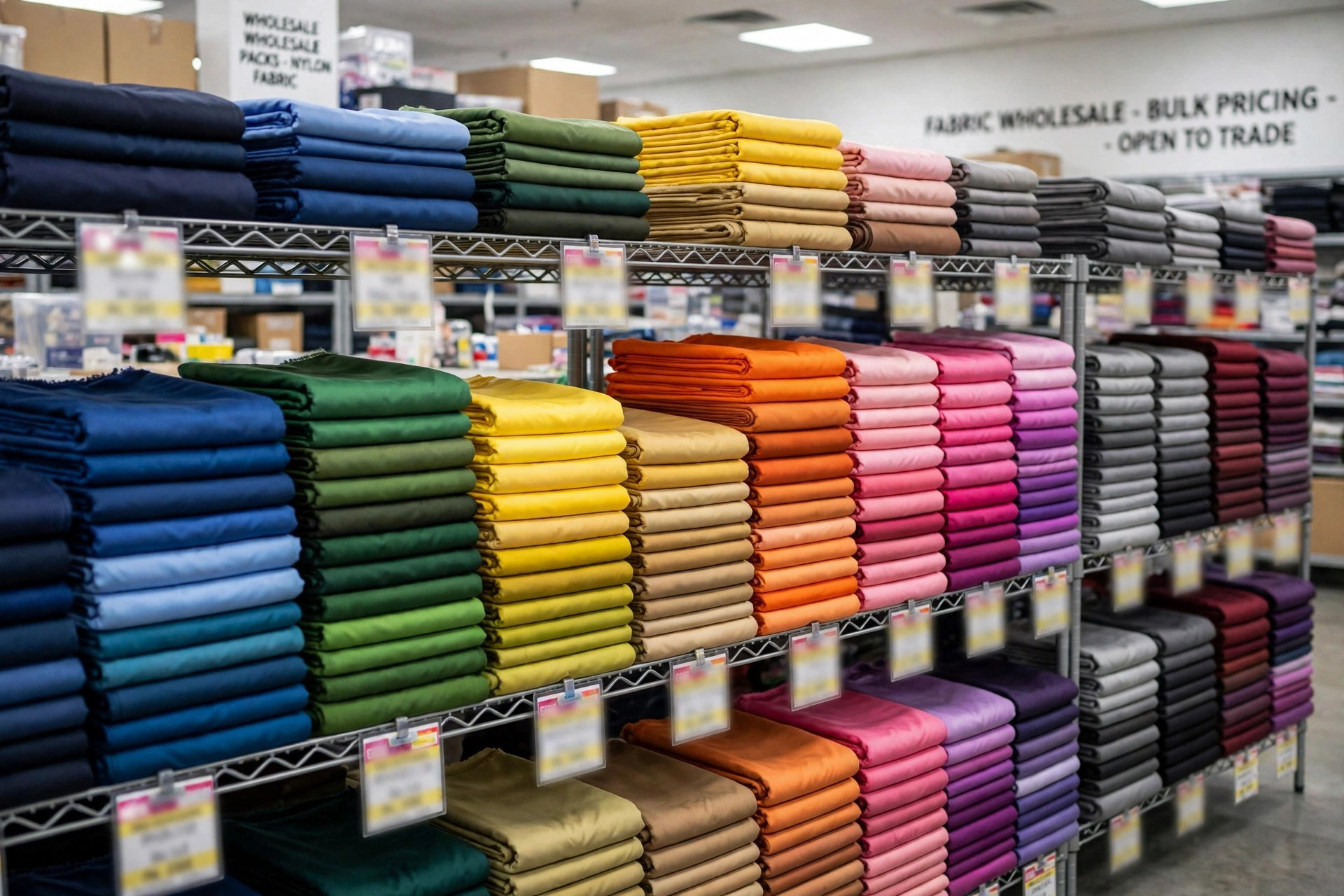
Why There Is No Single Exact Price
There is no single current price for nylon fabric. Mills set their own prices, and prices differ from mill to mill because each mill has a different cost structure and accepts a different profit margin. A price copied onto a guide page would be wrong for most readers within weeks, and wrong for any specific construction almost immediately.
That variation is the normal shape of the market. Nylon fabric is not one product. It ranges from featherweight taffeta and mesh to heavy ballistic weaves and coated industrial cloth, in different deniers, widths, finishes and dye methods. Until a buyer names the construction, the quantity and the finish, there is no price to quote, only ranges attached to other people's specifications. The useful question is not what nylon fabric costs in the abstract, but how to assemble a trustworthy price for your fabric.
What a Quoted Fabric Price Actually Covers
A mill's price for a nylon fabric bundles several costs a buyer should learn to separate. The yarn itself, filament or spun, in a stated denier, is usually the largest element, which is why fabric prices move when yarn prices move. Weaving or knitting, dyeing and finishing add conversion cost, and coatings, waterproof treatments or special finishes add more. Width matters because a wider fabric delivers more usable area per yard, and quantity matters because setup and dye-lot costs are spread across the order.
Two quotations for supposedly identical fabric often differ because the hidden specifications differ: one mill quotes greige goods and the other quotes dyed and finished cloth; one includes a coating and the other treats it as an extra; one price assumes a full production run and the other a short, expensive lot. Before comparing numbers, align the specification line by line, construction, denier, width, finish, color, quantity and delivery terms, or the cheaper quote may simply be the less complete one.
Using Marketplaces and Price Services as Benchmarks
Two very different resources, used together, show the two halves of price research. A marketplace search for nylon fabric returns live supplier offers: real fabrics, real minimum quantities and asking prices you can message about today. Those offers are excellent for discovering the going range for common constructions and for finding mills, but each offer describes one seller's fabric, photographed and specified by that seller, so treat the numbers as opening positions rather than market truth.
A specialist price service such as CCF Group tracks the nylon chain systematically, reporting prices by product category over time. That kind of data will not tell you what a specific finished fabric will cost, but it tells you the direction and pressure of the market: whether yarn and intermediate prices are rising or easing, which helps you judge whether a mill's increase is market-wide or negotiable. Benchmarks from a marketplace, trend data from a price service and a direct mill quote form a triangle; a price that makes sense against all three is one you can defend internally.
Asking Mills Directly, and Learning More
The most practical approach is to ask the makers: Nylon Fabric Mills can be asked regarding their pricing, and for any serious quantity a direct inquiry will beat every published estimate. Send the mill a complete specification and a realistic quantity, ask what the price includes, and ask which elements would change the price most if your specification flexed, a slightly different denier, a stock color instead of a custom dye, or a larger lot. Mills answer those questions readily because they reveal where your money actually goes.
Place fabric prices in the full nylon picture before you commit. Fiber background in About Nylon Fibers explains what you are buying, the sibling pages track the upstream stages that feed fabric cost, and the fabric definitions guide helps you name constructions correctly. A buyer who understands the chain can read a fabric quotation the way a mill wrote it, line by line, instead of accepting or rejecting a single unexplained number.
Common Questions
Why can't I find one exact current price for nylon fabric?
Because mills set their own prices from different cost structures and acceptable margins, and nylon fabric covers many constructions, deniers, widths and finishes. Any single published figure would not match a specific buyer's specification.
What should I check before comparing two nylon fabric quotations?
Align the specifications first: yarn type and denier, construction, width, whether the price is for greige or dyed and finished goods, coatings or special finishes, quantity and delivery terms. Apparent savings often come from a less complete specification.
How do marketplace listings and price services help if neither gives my exact price?
Marketplace offers show live asking prices and findable mills for common constructions, while a service like CCF Group shows market direction across the nylon chain. Together with a direct mill quote, they let you judge whether a price is fair.
More to Explore
References & Further Reading
Looking for Fabric Mills and Suppliers?
Follow the rest of the nylon chain in the Apparel Search fabric directory or via the Fabric Search hub, where yarn, resin and general nylon price guides sit alongside this one.