Nylon Prices and the Nylon Guide
This textile fiber guide helps apparel and textile industry readers locate information and pricing for nylon in all its forms. Start here for the basic facts, then follow the organized sections for yarn, fabric and resin prices and the full nylon definition.
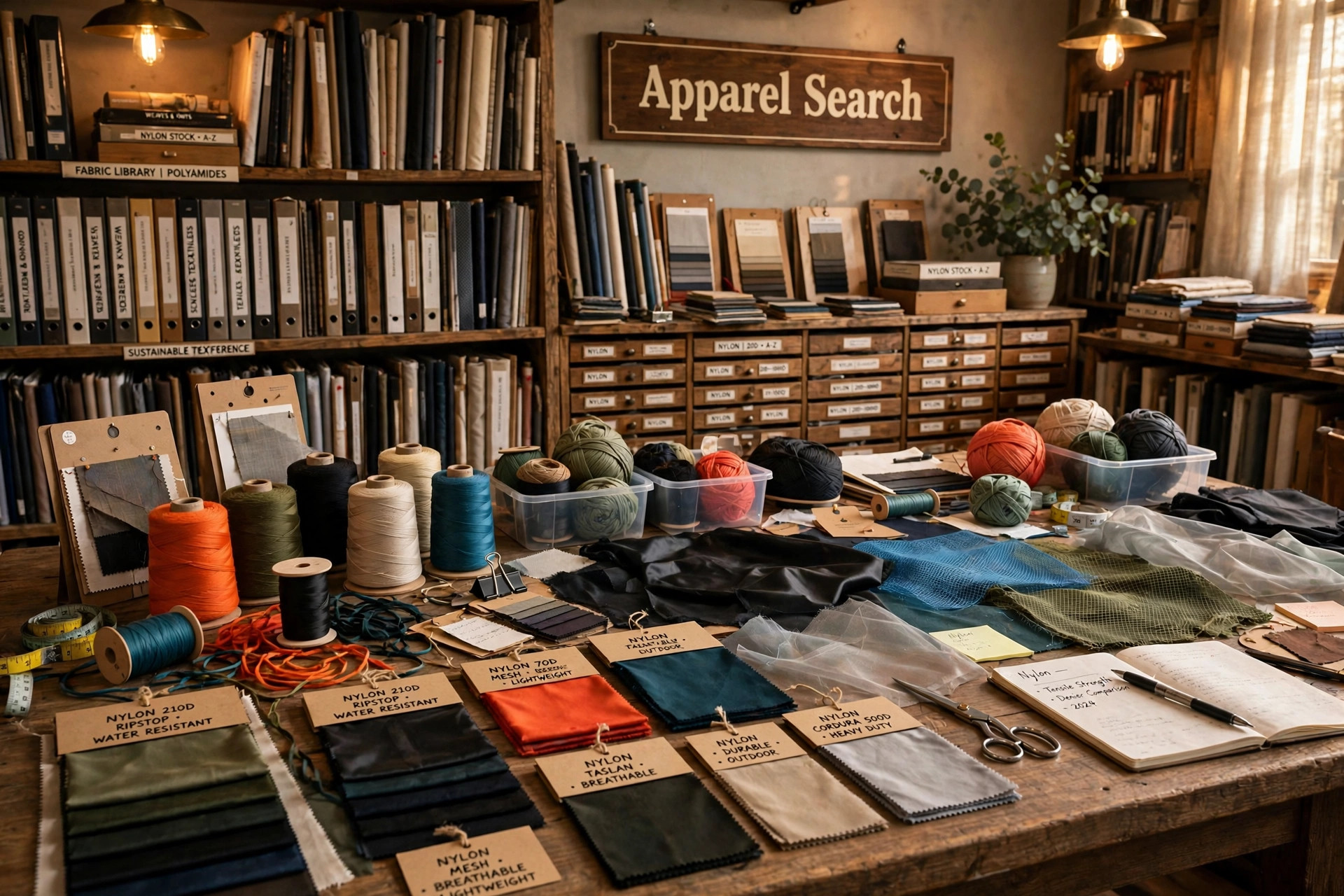
What This Nylon Hub Organizes
Welcome to the nylon guide. This textile fiber guide has been designed to assist members of the apparel industry and textile industry with locating information and pricing for nylon, and it is organized the way the nylon market itself is organized: by the form the material takes as it moves from polymer to finished goods. A visitor who needs a price first has to decide which nylon they mean, because chip, yarn, fabric and resin are priced in different places by different methods.
The sections gathered here cover each stage in turn: general nylon prices with the major reporting services, yarn prices by filament type, fabric prices and why mills quote them individually, and resin prices for the solid engineering material. A definition section explains the fiber itself, and a pricing-sites section connects nylon to the wider textile price landscape for cotton, silk, polyester and wool. Treat this page as the map and the linked pages as the territories; the map's job is to send you to the right territory quickly.
Basic Nylon Facts Worth Knowing First
Before researching prices, the original hub offered some basic information that may come in handy, and it still frames the market well. Nylon 6 fibers are made into textile, carpet and industrial yarns, which is why nylon 6 dominates the fiber price discussion. Nylon 6,6 is a general-purpose extruded grade of nylon that is tough, has good electrical insulating properties and noise-dampening characteristics, qualities aimed at solid parts rather than apparel cloth.
Nylon resins are noted for their performance properties, including high tensile strength, excellent abrasion, chemical and heat resistance, and a low coefficient of friction. Hence they are used in engineering plastics with applications in the automotive industry, electronics and industrial components and films for food packaging, as well as in fabric, carpeting, sportswear and recreational equipment. One fiber family thus serves a pair of industries, textiles and engineering plastics, and its pricing only makes sense when you know which industry's demand you are looking at.
Learning the Fiber Behind the Prices
Price research goes better with material knowledge, and this hub links two kinds. The Nylon Defined section gives the full educational treatment: what a polyamide is, how nylon 6 and nylon 6,6 differ, the properties list from luster variation to abrasion resistance, and the history from the 1935 laboratory discovery through stockings and wartime parachutes. The About Nylon Fibers material adds the fiber-maker's perspective.
It is also worth learning about nylon fiber as a textile raw material in its own right, separate from any single price. And because prices move with industry events, capacity changes, plant news and demand shifts, following textile fiber news is a practical habit for anyone who buys nylon regularly: the news explains the movements that the price tables only record.
How to Use This Guide Efficiently
Work in a fixed order and the guide becomes a routine rather than a rummage. First, identify your form and grade precisely, for example nylon 6 filament yarn of a stated type and denier, a named fabric construction, or nylon 6,6 resin. Second, open the matching price section and note both the assessed or reported level and the live marketplace range. Third, if your form is fabric, go to the mills as the fabric page advises, because fabric is quoted individually. Fourth, record what you found with its date, so next season's check starts from evidence.
If you arrive with a question this structure does not answer, the definition and fiber pages usually resolve it, because most nylon confusion is vocabulary confusion: the same word covering a fiber, a yarn, a fabric and a molding resin at once. Once the vocabulary is clear, the pricing sections fall into place, each covering one form with the sources that actually track it. That clarity, more than any single number, is what this hub was built to give the industry readers it serves.
Looking for Fabric Mills and Suppliers?
Browse beyond nylon in the Apparel Search fabric directory or return to the Fabric Search hub to compare nylon with cotton, silk, wool and polyester guides.