Stud Earrings
One stone or motif, sitting close on the lobe
Stud earrings are the simplest earring form: a single gemstone, pearl, metal ball or motif mounted on a straight post, held by a removable back, so the piece appears to float on the earlobe with no drop or movement. That low profile makes studs the default earring for everyday wear, workplaces, sport and sleeping, and the usual first earring after piercing. This guide covers stud construction, prong, bezel and martini and flat settings, the back types that decide security, sizing from tiny accent studs to statement solitaires, the stones and metals used, and wearing several studs along the ear. A stud looks simple, but its quality lives in details: post thickness, setting height and a back that grips without wobbling.
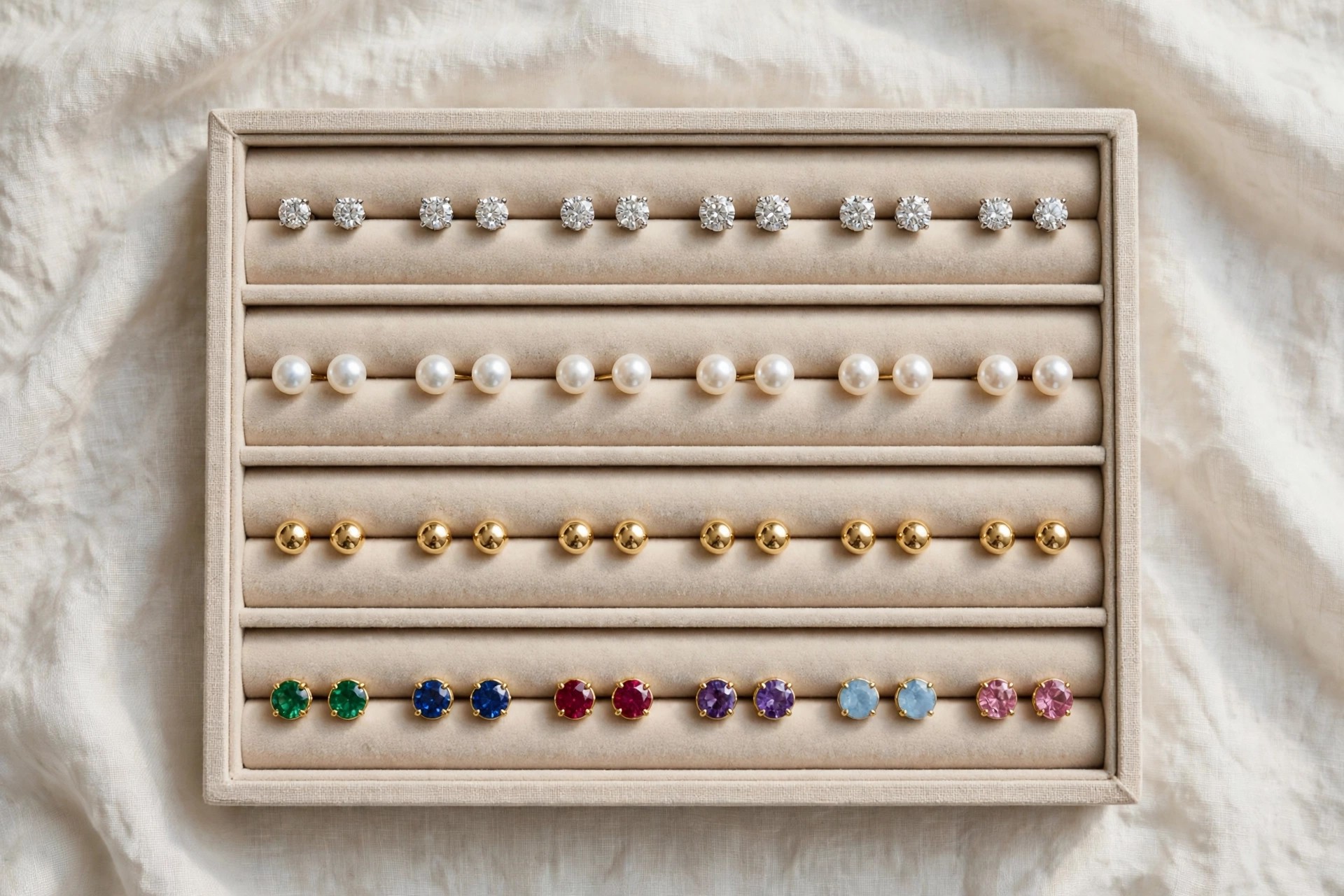
Stud Earrings: Timeless Simplicity and Elegance
Stud earrings are a classic and timeless style of jewelry that has been cherished for generations. These simple yet elegant earrings are characterized by their unassuming design, featuring a single gemstone or decorative element that appears to "float" on the earlobe. Stud earrings are beloved for their versatility, making them suitable for both everyday wear and special occasions. Here's a closer look at the charm and appeal of stud earrings:
Design and Characteristics:
Single Stone or Element: The defining feature of stud earrings is the solitary piece that adorns the earlobe. This centerpiece can be a single gemstone, a pearl, a metal motif, or even a symbol or shape, depending on the design.
Low Profile: Stud earrings have a low profile, hugging the earlobe closely without any dangling or moving parts. This minimalist design creates a clean and polished look.
Secure Fastening: Stud earrings typically use a post and clutch-back or screw-back mechanism to secure them in place, ensuring they remain snug and comfortable on the ear.
Versatile Sizes: Stud earrings come in a wide range of sizes, from tiny and delicate to larger and more prominent. This variety allows wearers to choose the size that best suits their style and occasion.
Types of Stud Earrings:
Diamond Stud Earrings: Perhaps the most iconic type of stud earrings, diamond studs feature one or more diamonds set in precious metals like gold or platinum. They exude elegance and are often chosen for special events and as gifts for significant occasions.
Gemstone Stud Earrings: Studs can feature various gemstones, including sapphires, rubies, emeralds, and more. The choice of gemstone can add a pop of color and personal meaning to the earrings.
Pearl Stud Earrings: Classic and sophisticated, pearl stud earrings showcase lustrous pearls as the central element. They are a timeless choice for both formal and casual attire.
Metal Stud Earrings: These studs feature metal elements like stars, hearts, or geometric shapes. They are perfect for those who prefer a non-traditional, contemporary look.
Cubic Zirconia Stud Earrings: Cubic zirconia, a diamond simulant, is often used to create affordable yet dazzling stud earrings that mimic the brilliance of diamonds.
Versatility and Styling:
Stud earrings are highly versatile and can be styled to suit various occasions:
Everyday Wear: Small, subtle stud earrings are ideal for everyday wear. They add a touch of elegance without being overly flashy.
Formal Events: Larger or more ornate studs, especially those featuring precious gemstones, are perfect for formal events such as weddings, galas, and parties.
Workplace: Many people choose stud earrings for the workplace as they convey professionalism and sophistication without being distracting.
Casual Outings: Casual, fun, and whimsical stud earrings can add personality to your everyday look.
Stud Earrings as Gifts:
Stud earrings make excellent gifts for loved ones due to their versatility and timeless appeal. Whether given as a birthday present, a graduation gift, or an expression of love, stud earrings are a thoughtful and enduring choice.
Stud earrings offer a versatile canvas for creativity, and jewelry designers have a wide range of materials at their disposal to craft unique and stylish studs. While simplicity is a hallmark of stud earrings, their popularity is in part due to the endless possibilities for creativity in design. Here are some of the most popular materials used for stud earrings and how designers can get creative with them:
1. Metals:
Gold: Gold stud earrings are timeless classics, available in various colors (yellow, white, rose) and carat weights. Designers can experiment with textures, finishes, and mixed-metal designs to create unique gold stud earrings.
Silver: Sterling silver is a popular and affordable choice for stud earrings. Designers can use oxidized silver for a vintage look or combine silver with other materials like gemstones or enamel for added depth and color.
- When shopping for sterling silver earrings, keep in mind the concept of tarnishing.
Platinum: Platinum studs are known for their durability and white luster. Designers can create minimalist platinum studs or incorporate diamonds and gemstones for added sparkle.
2. Gemstones:
Diamonds: Diamond stud earrings are iconic and come in various cuts, sizes, and settings. Designers can play with diamond shapes, like princess, emerald, or pear, and use innovative settings, such as bezel, halo, or illusion, to create stunning designs.
Colored Gemstones: Sapphires, rubies, emeralds, and other colored gemstones are popular choices for stud earrings. Designers can mix and match colors, create ombre effects, or use different cuts to add vibrancy and personality to the design.
3. Pearls:
Cultured Pearls: Pearl stud earrings are timeless and elegant. Designers can experiment with pearl sizes, colors (white, black, pink, etc.), and shapes (round, baroque) to create unique and modern designs.
4. Alternative Materials:
Cubic Zirconia: Cubic zirconia studs mimic the brilliance of diamonds and are budget-friendly. Designers can use these stones in various shapes and sizes to create affordable yet dazzling pieces.
Enamel: Enamel studs allow for a burst of color and creativity. Designers can use enamel to paint intricate designs or add patterns and motifs to their earrings.
Wood, Resin, and Acrylic: These materials offer a lightweight and unique alternative. Designers can incorporate natural textures, colors, and patterns to create stylish and eco-friendly stud earrings.
5. Mixed Media:
Combination of Materials: Designers can combine different materials in a single stud earring, such as metal with gemstones, enamel, or wood, to create intriguing contrasts and textures.
Asymmetry: Playing with asymmetry, designers can create stud earrings with varying shapes or sizes, providing a modern twist to the traditional stud design.
Customization: Many designers offer personalized stud earrings, allowing customers to choose their preferred materials, gemstones, and engraving, adding a sentimental touch to the jewelry.
In conclusion, while stud earrings are often associated with simplicity, jewelry designers have ample room for creativity. They can work with a variety of materials, finishes, and techniques to craft unique and personalized stud earring designs that cater to a wide range of tastes and styles. Stud earrings remain a versatile and beloved accessory that continues to evolve with innovative and imaginative designs.
Stud earrings are an embodiment of simplicity and elegance. Their enduring appeal lies in their ability to complement any style, occasion, or outfit, making them a staple in the world of jewelry. Whether chosen for their timeless beauty or meaningful symbolism, stud earrings continue to capture the hearts of jewelry enthusiasts around the world.
The Earring Every Collection Starts With
Studs are the foundation piece of earring wearing: the pair that stays in for work, travel and exercise, and the second and third piercings that let a wearer build a line of small points along the ear. Diamond studs are the famous version, bought once and worn for decades, but the same form carries pearls for classic dressing, colored gemstones for birthdays and anniversaries, and plain gold or silver balls and shapes for the simplest possible finish to an outfit.
Buying checks take a minute and save losses. Posts should be straight, of standard thickness, and long enough for the lobe with the back seated in the post's notch. Backs should grip firmly, with worn butterfly backs replaced cheaply before they slip. On valuable studs, screw backs or locking backs are worth their small extra cost, since a stud is the easiest earring to lose silently. Kept clean with a soft brush and soapy water, and checked each time they are put on, good studs are the lowest-maintenance fine jewelry most people own.
Common Questions
What is the difference between butterfly backs and screw backs?
A butterfly or friction back slides onto the post and grips with sprung metal curls; it is quick to use and standard on most studs, but it can loosen with wear. A screw back threads onto a threaded post, locking the stud in place, which suits valuable diamond and gemstone studs and children's earrings. Screw backs take longer to put on and the threads must be kept clean to work smoothly.
What size stud earring should I choose?
Size is measured across the stone or motif. Studs of 3 to 4 millimeters are subtle accents, 5 to 6 millimeters are the classic everyday scale, and 7 millimeters and above read as statement pieces. The right size depends on earlobe size and on other piercings: smaller lobes suit smaller studs, and a row of piercings usually graduates sizes down the ear. Diamond studs are also described by total carat weight for the pair.
What settings are used for stud earrings?
Prong settings, usually four prongs in a basket or a three-prong martini shape, hold faceted stones with maximum light entry. Bezel settings wrap the stone in a metal rim, giving a smooth, modern profile that protects the edges and suits active wear. Pearls and cabochons are often glued or pinned on flat pads. A low setting sits closer to the lobe and catches less on clothing and hair.