Clothing Auctions
Bidding formats, lots and single-garment auctions — how apparel auctions work and how to buy well in them
A clothing auction is simply a sale where the price is set by bidding instead of a tag. On eBay that covers everything from a single vintage dress ending on a Sunday night to multi-garment wholesale lots sold by the pound. This guide explains the formats a clothing buyer meets — timed auctions, fixed-price listings with offers, and job lots — and the discipline that applies to all of them: know the garment, know its ordinary price, and know your ceiling before the countdown starts.
Nothing here is a fixed catalogue — auction stock turns over daily, and the same category can hold a nearly new designer piece beside a well-worn basic. The sections below break the category down into what to search for, what to check, and how to bid without overpaying.
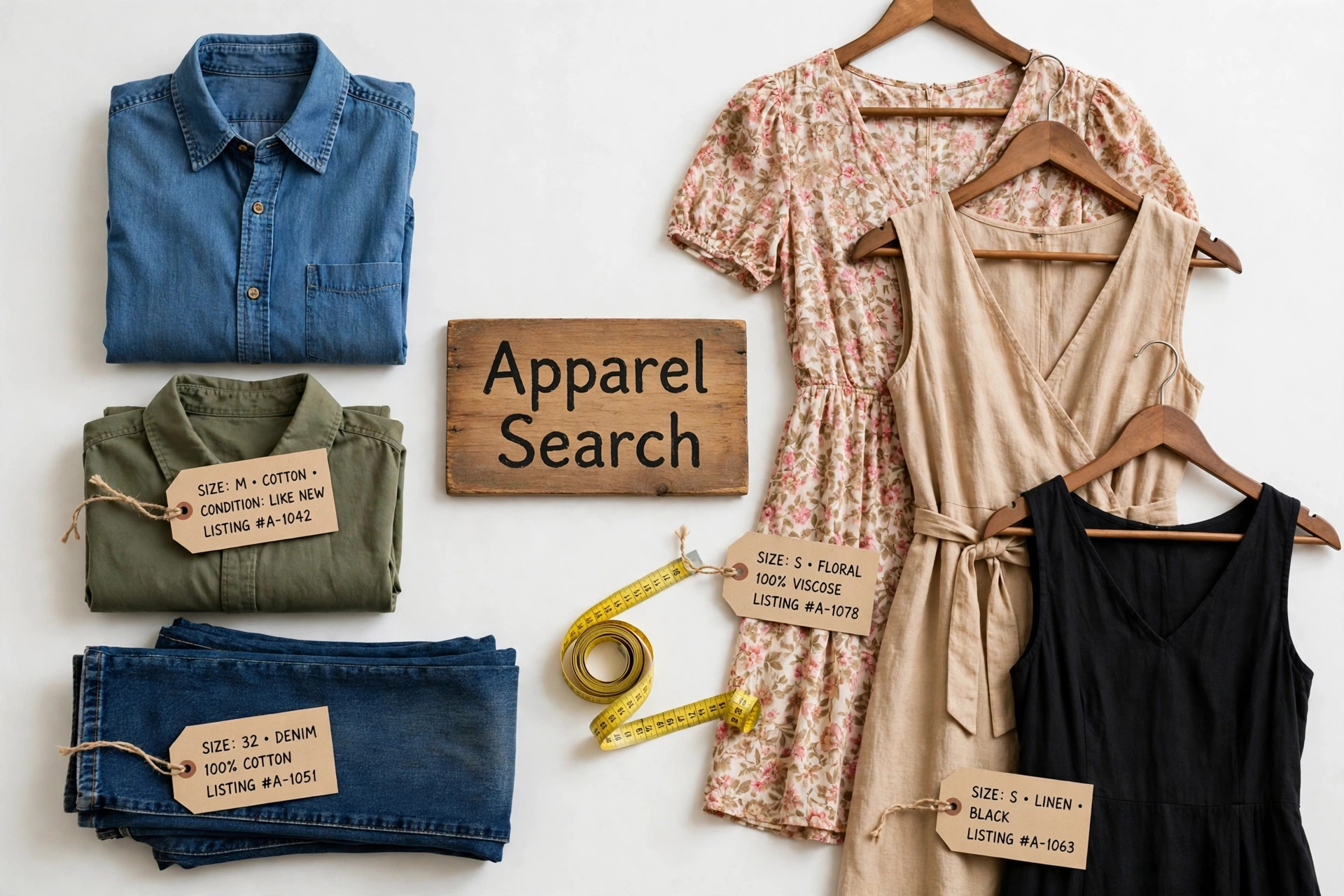
Auctions suit hunters; set prices suit planners. If the garment you want is a standard buy rather than a find, the Apparel Search Amazon clothing guide lays out the Amazon fashion departments for fixed-price shopping — a useful yardstick price before you bid here.
The Formats a Clothing Buyer Meets
The clothing at auction listings on eBay typically cover single garments sold one at a time, wardrobe bundles and mixed lots, wholesale and resale job lots, vintage and collectible pieces, designer samples and runway items and new-with-tags overstock. Sellers range from individuals clearing a wardrobe to specialist dealers and outlet accounts, so condition, photography and description depth vary a great deal from one listing to the next. Lots deserve extra arithmetic: divide the expected total, including postage, by the pieces you will actually wear or sell, and judge the lot on that figure alone. Start a search broad, then narrow by size, color and condition filters; saved searches with email alerts catch the short auctions that end before a casual browser ever sees them.
Seller wording is inconsistent, so run several searches rather than one: "clothing lot"; "wardrobe bundle"; "job lot clothes"; "auction NWT". Misspellings and vague titles are where the quiet bargains hide, because fewer bidders find those listings. Add a size and a garment word to every lot search — unfiltered lot searches drown in unsorted mixed bundles. Sort by ending soonest to catch neglected auctions, and by price plus postage to compare the true delivered cost — a low bid price with high shipping is rarely the cheapest route to the garment.
Judging Lots and Singles
Fit first: in a lot, only some pieces will be your size, so value a bundle on the pieces that fit and treat the rest as trade or donation stock. Auction listings cannot be tried on, so the measurements in the description — taken flat, in inches or centimetres — are the only reliable guide, and a seller who lists none is worth a message before bidding. On materials, expect mixed natural fibers, denim, knitwear wool and cotton and occasion synthetics. Mixed lots rarely list every fiber; judge them on the photographed labels of the headline pieces.
Condition decides value in this category more than age does. Ask what share of a lot is resale- or wear-grade and what share is seconds, returns or damaged stock — honest lot sellers say so plainly. Study the photographs at full size, read the returns policy, and check the seller's feedback for the pattern that matters — accurate descriptions — rather than the headline score alone. A garment described as new with tags should still show the tags in a photograph; if it does not, ask.
Bidding Discipline for Apparel Auctions
Timing shapes price here. Lot volume peaks at wardrobe-change time, in spring and early autumn, when clear-outs and shop closures push bundles onto the market together. For a reseller, auctions are a supply line; for a wearer, they are a way to buy one good garment for the price of a mediocre new one. Set a maximum that includes postage, bid it once, and let the automatic bidding work — chasing an auction past your ceiling is how bargains turn into overpayments. Never bid on a lot from its first photograph alone — the headline piece is chosen to attract bids, not to represent the bundle.
Common Questions
What should I check first when buying clothing at auction on eBay?
Measurements and condition. in a lot, only some pieces will be your size, so value a bundle on the pieces that fit and treat the rest as trade or donation stock. Then confirm the fabric content and read the seller's returns policy before bidding.
Which search phrases find the best clothing at auction listings?
Try several seller wordings — clothing lot, wardrobe bundle, job lot clothes — and save the searches so short or mis-titled auctions are caught before they end.
When is the cheapest time to buy clothing at auction at auction?
Lot volume peaks at wardrobe-change time, in spring and early autumn, when clear-outs and shop closures push bundles onto the market together. Bidding on off-peak endings and setting a firm maximum that includes postage keeps the delivered price down.
Photos
