Fashion Design Software Directory
Every category of software a fashion designer or apparel company designs with, in one directory
Fashion design software comes in many shapes and sizes. As fashion is continuously evolving, so is the fashion software: new programs come to market each year and new design features are added to the existing systems. You will find many uses for it — design fabrics, design garments, design fashion accessories — and the possibilities run from the first sketch to the production-ready pattern.
This directory organizes the field by the job each category does. Computer-aided design and pattern making software engineer the garment; product data management keeps its information straight; embroidery and textile design software create the surfaces; digital sketch tools draw the idea. The categories below link to the full Apparel Search guides and supplier directories for each.
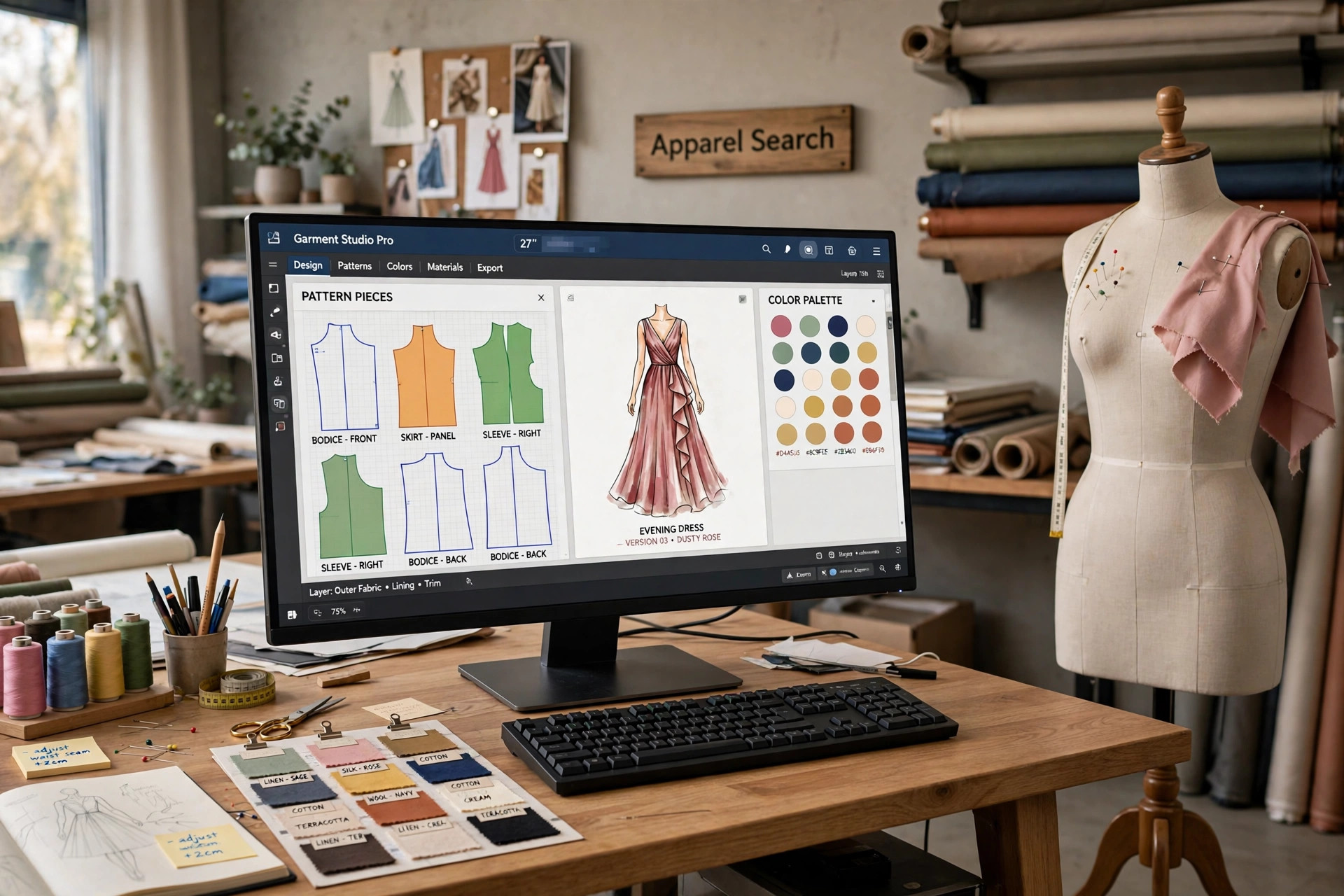
Design Software Categories
How the Design Software Categories Fit Together
A garment moves through the categories in order. It starts as a sketch — drawn by hand or with digital sketch software — and becomes a pattern in CAD and pattern making software, where pattern engineering shapes each piece, grading grows it through the size range, and marking lays the pieces into an efficient layout. Advanced automatic nesting squeezes the marker tighter than a human marker maker can, and 3D imaging lets the team fit and drape the garment on a virtual body before any fabric is cut.
Around that core, PDM — product data management — holds the style's information: sketches, measurements, materials, versions and approvals, so every department works from the same record (its fuller successor is PLM, covered in the software guides below). Textile design software creates the prints, weaves and knits that cover the garment's surface, and embroidery software digitizes the logos and motifs stitched onto it. Chosen well, the categories share files instead of forcing re-entry at every step.
Choosing Design Software
Start from the job you do most. A designer who presents concepts needs sketch and illustration strength; a pattern room needs engineering depth — grading rules, seam allowances, notch and drill control; a textile studio needs repeat, colorway and separation tools. Then look at the connections: whether patterns pass cleanly to the cutting room's CAM systems, whether style data flows into PDM or PLM, and whether the file formats your factories already accept are supported.
The supplier directories linked from this page list the companies behind each category, from the large technology vendors who supply complete design-to-production suites to specialists who do one job — a digitizer, a nesting engine, an embroidery package — exceptionally well. Fashion designers can also use the guides here to see where their own work fits: the Fashion Artists Guide and the fashion designer job description linked below describe the roles this software supports.
More Software Guides
Photos
