Cross Necklaces
A faith symbol in plain, gem-set and carved forms
The cross necklace is one of the most widely worn pendant forms: a cross suspended on a chain, most often as an expression of Christian faith and also given at baptisms, confirmations, first communions and other milestones. Forms range from plain polished crosses in gold or silver, through diamond and gemstone-set versions, to carved wood, ceramic and shell crosses, crucifixes that depict the figure of Christ, and regional forms such as the Celtic cross with its ringed intersection. This guide covers the main cross styles, sensible proportions between pendant and chain, metals and finishes, side-profile and two-tone designs, and straightforward care.
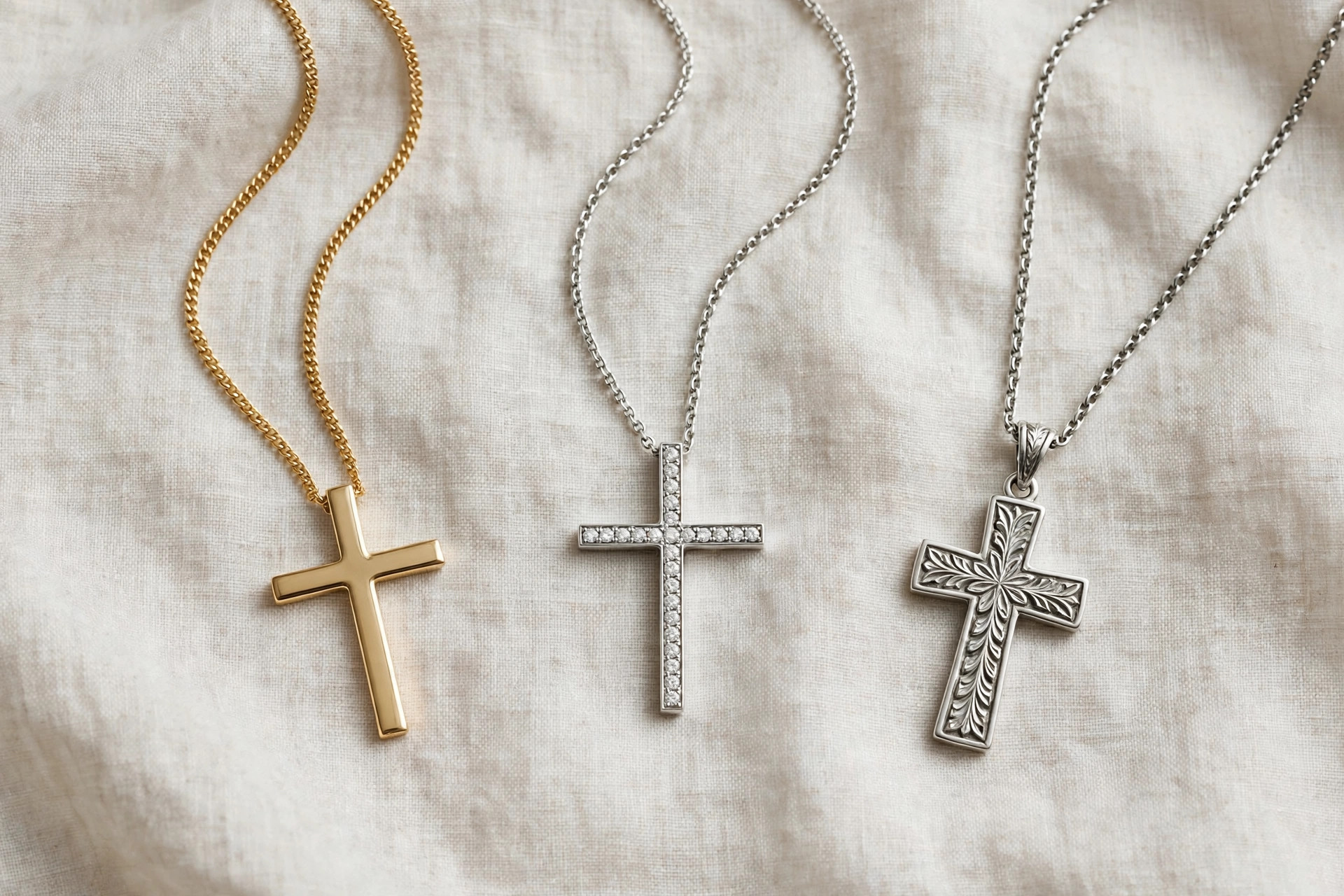
Cross necklaces hold immense religious and spiritual significance, primarily in Christianity, as they represent the central tenets and beliefs of the faith. The cross is a symbol of Jesus Christ's crucifixion and resurrection, signifying salvation, redemption, and the love of God. It's a powerful emblem of faith, hope, and a reminder of Christ's sacrifice for humanity.
Key Features and Design Elements:
Cross Shapes:
Cross necklaces come in various shapes, including the Latin cross (one vertical and one horizontal beam), the Greek cross (equal-length arms), the Celtic cross (with a circle around the intersection), and many other variations. Each shape holds its own historical and cultural significance.
Materials:
Cross necklaces can be made from a variety of materials, including precious metals like gold and silver, as well as stainless steel, wood, gemstones, or even more modern materials. The choice of material often reflects personal preferences and religious significance.
Inscriptions or Engravings:
Many cross necklaces feature inscriptions, engravings, or symbols related to Christianity, such as a depiction of Jesus, a Bible verse, a prayer, or the initials "INRI" (Latin for "Jesus of Nazareth, King of the Jews").
Significance to Christianity:
Crucifixion and Resurrection:
The cross symbolizes the crucifixion of Jesus Christ, His sacrificial
death on the cross to atone for humanity's sins, and His subsequent
resurrection, signifying victory over death and the promise of eternal life.
Salvation and Redemption:
Christians believe that through Christ's death and resurrection, individuals can attain salvation and redemption. The cross serves as a constant reminder of God's grace and the path to spiritual renewal.
Faith and Devotion:
Wearing a cross necklace is an outward expression of faith and devotion to Christianity. It serves as a symbol of one's commitment to follow Christ's teachings and lead a life in accordance with Christian principles.
Protection and Blessings:
Many individuals believe that wearing a cross necklace provides protection and blessings, serving as a talisman against harm and a source of strength during challenging times.
Prayer and Meditation:
The cross can also serve as a focal point for prayer and meditation, helping believers connect with their faith and deepen their spiritual relationship with God.
Variations in Different Christian Denominations:
Catholicism: Catholic crosses often depict the crucified Christ (a crucifix). The presence of Jesus on the cross is a reminder of His sacrifice and is central to Catholic theology.
Protestantism: Protestant crosses often emphasize an empty cross, symbolizing the risen Christ and focusing on the resurrection and eternal life.
Cross necklaces are cherished symbols for Christians worldwide, carrying profound spiritual meaning and acting as a visible representation of their faith, beliefs, and relationship with Jesus Christ.
Learn about cross design jewelry.
Learn about religion relevant jewelry such as religion theme necklaces.
Styles and Proportions
Cross design is a study in proportion: the ratio of the vertical to the crossbar, the thickness of the arms, and whether the ends are plain, flared, rounded or pointed, as in budded and flared Latin forms. Sideways cross necklaces, where the cross lies horizontally along the chain, are a modern fashion variant. Engraving, milgrain edges and two-tone gold add detail without stones, while gem-set crosses place small diamonds or a single colored stone at the center or along the arms.
Because a cross is often worn every day and under clothing, comfort details matter: smooth edges, a bail that does not pinch, and a chain length that keeps the pendant above a neckline or resting on the chest as the wearer prefers, commonly 18 to 22 inches for adults. Given as gifts, crosses are frequently engraved on the back with a date or initials, which does not affect the face of the piece.
Common Questions
What is the difference between a cross and a crucifix necklace?
A cross pendant shows the bare cross form. A crucifix includes the figure of Christ on the cross and is especially associated with Catholic tradition, though it is worn by other Christians as well. Both are faith jewelry; the choice between them is personal and often follows the wearer's own church tradition and the occasion the piece marks.
What size cross pendant suits everyday wear?
Everyday crosses most often run from about 15 to 30 millimeters tall, large enough to read clearly without catching on clothing. The chain should be sturdy enough for the pendant's weight, with a bail that lets the cross hang straight; heavier solid gold crosses pair well with curb or rope chains, while fine pendants suit cable or box chains.
Which metals are used for cross necklaces?
Yellow, white and rose gold and sterling silver are the classic choices, with stainless steel common for men's and everyday crosses. Diamond-set crosses use pavé or channel settings in gold or platinum. Plain polished finishes show scratches more than brushed or matte ones, which is worth weighing for a cross worn daily.