Women's Necklaces
Lengths, layers and pendants that work together
Women's necklaces are organized first by length, because length decides where a necklace sits and which necklines it suits. Chokers at 14 to 16 inches sit high on the neck, princess lengths at 17 to 19 inches rest at the collarbone and carry most pendants, matinee lengths at 20 to 24 inches fall to the bust, and opera and rope lengths extend further for layering or doubling. Pendant size, chain weight and neckline shape interact: a pendant should be proportioned to the chain that carries it and clear the edge of the garment rather than catch on it. This guide covers standard lengths, neckline pairing, layering combinations, pendant proportions, and the main forms from pearl strands to statement pieces. Fit, clasp ease and a short extender all affect how often a necklace is actually worn, so those practical points are covered alongside style.
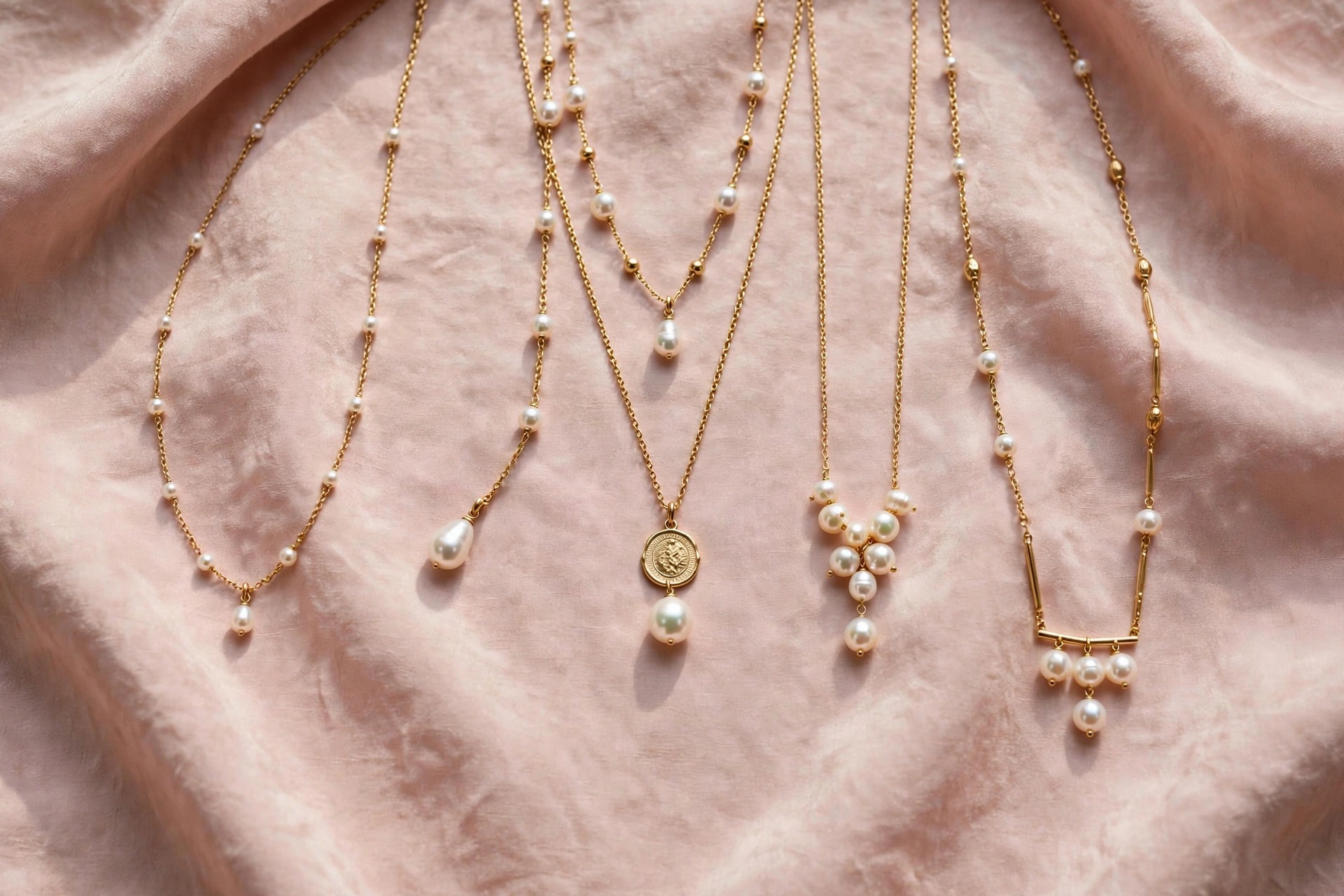
Women's Necklaces: Adorning Elegance and Expressing Individuality
Women's necklaces are a cornerstone of jewelry fashion, cherished for their ability to enhance personal style, symbolize sentiments, and add an elegant touch to any ensemble. Over the centuries, necklaces have evolved in style, material, and design, reflecting the changing tastes and cultures of women around the world.
Popular Styles:
Pendant Necklaces:
Pendant necklaces feature a central charm or pendant suspended from a chain. These pendants can range from simple, classic designs to intricate, personalized pieces. Heart-shaped pendants, initials, and gemstone-encrusted charms are enduring favorites.
Statement Necklaces:
Statement necklaces are bold and eye-catching, often characterized by large, ornate designs. They serve as focal points in outfits, making them ideal for special occasions and evening wear.
Layered Necklaces:
Layered necklaces involve wearing multiple necklaces of varying lengths simultaneously, creating a trendy and personalized look. This style allows for creativity in mixing different metals, chains, and pendants.
Choker Necklaces:
Chokers are short, snug-fitting necklaces that sit high on the neck. They have made a resurgence in recent years, often featuring minimalist designs or intricate embellishments.
Pearl Necklaces:
Pearl necklaces have timeless elegance and are available in various lengths and styles, including classic single-strand, opera-length, and multistrand designs. They exude sophistication and are popular for formal events.
History of Women's Necklaces:
The history of necklaces dates back thousands of years. The earliest necklaces were likely made from shells, animal teeth, and other natural materials. As civilizations advanced, necklaces became status symbols, with materials such as gold, precious gems, and intricate beadwork being used in their creation.
In ancient Egypt, necklaces held cultural and religious significance, often featuring amulets and symbols believed to protect wearers from harm.
During the Renaissance period, necklaces adorned with pearls and gemstones were popular among European royalty and nobility.
The Victorian era saw a resurgence of sentimental jewelry, with lockets and cameos becoming fashionable necklace choices.
In the 20th century, costume jewelry, made from less expensive materials, became popular, allowing women of various socioeconomic backgrounds to enjoy fashionable necklaces.
Modern Advancements in Necklace Design and Manufacturing:
Computer-Aided Design (CAD):
CAD technology allows jewelry designers to create intricate and precise necklace designs digitally. This streamlines the design process and enables the visualization of complex patterns and settings.
3D Printing:
3D printing technology has revolutionized the jewelry industry by enabling the rapid prototyping of necklace designs. This allows for more experimentation and customization in the design phase.
Advanced Materials:
Modern technology has introduced new materials and alloys for necklace manufacturing, expanding design possibilities. This includes the use of titanium, tungsten, and innovative alloys that enhance durability and aesthetics.
E-commerce and Customization:
Online platforms and e-commerce have made it easier for consumers to browse and customize necklaces. Virtual try-on features and customization options have improved the overall shopping experience.
Ethical Sourcing:
Technology has facilitated greater transparency in the sourcing of materials, allowing consumers to choose ethically and sustainably sourced necklaces, a growing concern in the industry.
Women's necklaces have a rich history of evolution and adaptation to changing fashion trends. Modern technology continues to enhance the design, manufacturing, and customization of necklaces, ensuring that they remain a beloved accessory for expressing personal style and sentiments.
Learn more about women's bracelets, women's rings and women's earrings.
From Pearl Strands to Statement Pieces
Beyond length, form defines a necklace's role. A single pearl or bead strand is the formal classic, worn at princess or matinee length; a pendant necklace is the everyday default, personal in its choice of stone, initial or charm; a statement necklace, wide and ornate at short length, is designed to be an outfit's focal point over a plain neckline; and a plain chain, in curb, rope or box link, works alone or as the foundation for layering. Owning one good example of the strand, the pendant and the plain chain covers most wardrobes.
Fit deserves the same attention as style: try lengths against the necklines actually in the wardrobe, check that clasps are easy to operate and proportioned to the chain, and consider a two-inch extender, which quietly makes one necklace serve several necklines. Necklaces kept in individual pouches or on a hanging organizer, fastened before storing, tangle less and need less untangling wear at their links and clasps.
Common Questions
Which necklace length suits which neckline?
Princess length, 17 to 19 inches, is the most versatile and works with most necklines. Chokers suit open, off-shoulder and strapless necklines where the neck is bare, V-necks pair best with a pendant that follows the V's angle and ends above its point, and higher crew necks take longer matinee or opera lengths worn over the fabric. Avoid a necklace that ends exactly at a neckline's edge.
How do I layer necklaces without tangling?
Layer two or three necklaces spaced at least two inches apart in length, for example 16, 18 and 22 inches, and vary chain weight or texture so each layer reads separately. Similar fine chains of near-equal length tangle and twist most. A layering clasp or extender can help, and putting the heaviest pendant on the longest chain keeps the arrangement stable through the day.
How big should a pendant be for a chain?
The pendant should look balanced on its chain and be heavy enough to hold the chain's line without outweighing it: a fine cable chain suits a small to medium pendant, while a large or stone-set pendant needs a sturdier chain and a bail that moves freely. As a guide, the pendant's width usually reads best at roughly one to two times the visual weight of the chain.