Women's Pink Clothes Guide
Staples first, statements second — how to build a pink wardrobe that mixes, layers and works from desk to weekend.
Shop Women's Pink Clothes Now
Shop Women's Pink Clothes on Amazon Shop Women's Pink Clothes on eBayThe Amazon and eBay links on this page are affiliate links. If you make a purchase through them, Apparel Search may earn a commission.
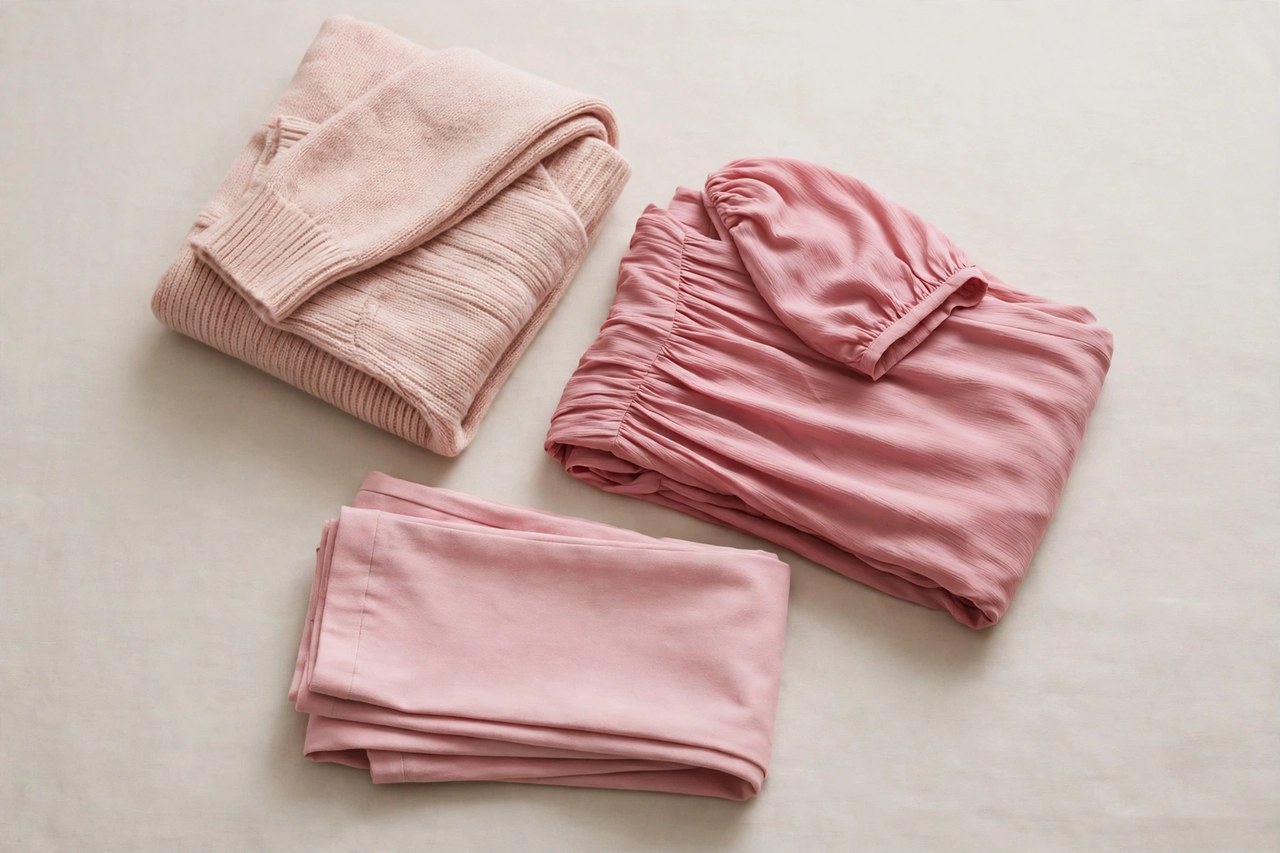
A pink wardrobe sounds like a theme, but built properly it is simply a wardrobe with a point of view. The trick is proportion: a foundation of soft, mixable pinks that work like neutrals, a middle layer of rose tones that carry everyday outfits, and a small number of bright statement pieces that appear when an outfit needs energy. Women who wear pink well rarely wear it head to toe by accident; they choose where the color sits, how much of it shows, and what calms or sharpens it. This page is about that building process across every category, from sweaters and shirts to dresses, pants and shoes, so pink becomes easy rather than occasional.
Building a Pink Wardrobe
Begin with staples in blush and powder pink, the shades that behave like warm neutrals: a fine-knit sweater, a simple tee, a blouse and a pair of soft pink pants will mix with navy, grey, white, black and denim already in your closet. Add rose and dusty pink next in dresses, skirts and knitwear, because mid-tones carry an outfit on their own without shouting. Save hot pink and fuchsia for one or two deliberate statements — a coat, a dress, a pair of shoes — that you reach for when the day calls for presence. Buying in that order, neutrals first and brights last, keeps every new piece useful from the week it arrives instead of waiting for a matching partner.
Balancing Pink Head to Toe
Head-to-toe pink can look elegant when it is treated as a tonal exercise rather than a single flat color. Combine different depths in one outfit: blush trousers with a rose sweater, or a powder pink shirt under a deeper magenta coat, and let texture separate the pieces so the eye reads layers — matte knit against smooth cotton, soft denim against satin. If a full tonal look feels like too much, break it at a natural point with a neutral shoe, belt or bag in white, tan or navy. Keep bright pink to one zone at a time, either near the face in a top or at the feet in shoes, so the outfit has a clear focal point and the rest can stay calm. Pink is associated with joy, love and happiness and can have a mood-lifting effect on the wearer, and wearing too much pink in a single outfit can be overwhelming, which is why balance matters. The wider subject is covered under clothes.
Pink for Work and Formal Dressing
Pink belongs in professional wardrobes when structure leads and sweetness is edited out. Choose tailored shapes — a blush shirt with a charcoal suit, rose wide-leg pants with a navy knit, a dusty pink sheath under a black blazer — and prefer matte fabrics, clean lines and minimal frill or bow detail. Deeper rose and muted magenta read more formal than candy brights, which are better saved for celebrations. For formal dressing, pink dresses in satin, crepe or lace move easily from powder shades at daytime weddings to fuchsia and magenta in the evening, with metallic shoes and simple jewelry. The principle is constant: let cut and fabric signal the occasion, and let pink supply the personality within it.
Mixing Pink with Other Colors
A pink wardrobe stays versatile because pink negotiates well with the colors most closets already hold. Grey softens and modernizes it, navy makes it tailored, white makes it fresh, and black makes it dramatic after dark. Denim in every wash is the casual anchor: pink sweaters, tees and shirts with blue jeans is a combination that works in every season with almost no thought. Warm neutrals — camel, cream and tan — make rose and coral pink feel rich and autumnal, while olive and burgundy create deeper, moodier pairings for winter. When adding another strong color, keep it to accessories first: a pink sweater can handle a patterned scarf, but two competing brights in large pieces rarely settle comfortably together.
Caring for a Pink Wardrobe
A wardrobe built around one color family benefits from a shared care routine. Keep a lights basket for blush, powder and white-pink pieces, since pale pinks pick up dye from dark washes and show everyday soil at collars and cuffs sooner than mid-tones do; pre-treat those areas before washing. Wash rose pieces with similar mid-tones in cold water, and give hot pink and fuchsia their own first few washes, or wash them with darks, because saturated pink dye is the most likely to bleed. Use color-safe detergent, turn printed and embellished pieces inside out, and dry brights away from harsh sun. Rotating staples rather than washing the same blush sweater weekly keeps the whole pink collection fresher for longer.
More Pink Clothing Guides
Looking for Women's Clothing Stores?
This guide helps you choose pink clothes by category, shade and role in your wardrobe. To browse where to buy, visit our women's clothing store directory, where you can find retailers that carry them.