Women's Housedress Guide
The housedress was the hardest-working dress ever designed: washable, pocketed and made for housework, from Mother Hubbard and the Hooverette to Claire McCardell's popover and today's revived house dress.
Shop Women's Housedress Now
Shop Women's Housedress on Amazon Shop Women's Housedress on eBayThe Amazon and eBay links on this page are affiliate links. If you make a purchase through them, Apparel Search may earn a commission.
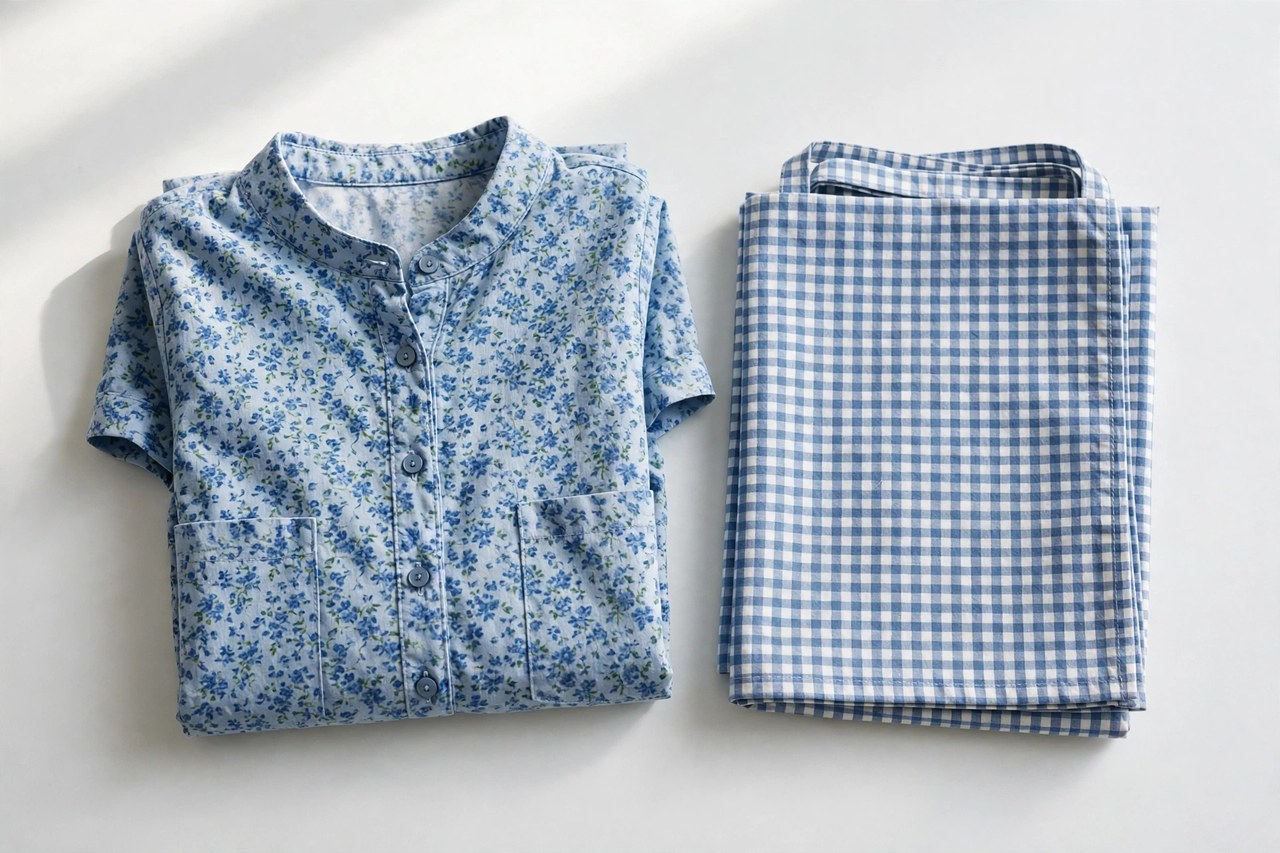
A housedress is, plainly, a simple dress suitable for wearing while doing housework — and for roughly a century it was the default daytime uniform of women at home. The word itself is a bit vintage now, kept more for historical purposes than as a modern shopping term, yet the garment never actually left. It changed names — house dress, day dress, at-home dress — and kept its job description intact.
Keep it distinct from its glamorous namesake in our hostess dress guide. The hostess dress is evening dress for entertaining at home, made to be seen in; the housedress is daytime dress for working at home, made to be used. Same house, opposite shifts. This guide follows the working dress: its wrapper and Mother Hubbard ancestry, the Hooverette, its 1950s heyday, and its quiet modern revival.
From Wrapper and Mother Hubbard to the Housedress
The term arose in the late nineteenth century for at-home garments designed for maximum practicality, usually in washable fabrics. Behind it stood the wrapper — a loose, front-fastening house gown worn for morning work — and the housedress descends directly from the Mother Hubbard dress: a long, wide, loose-fitting gown with long sleeves and a high neck, devised in Victorian society partly to free women from the constriction of corsets that fashion imposed on better-off women.
The liberation was functional before it was ideological. A dress with no corset beneath it, no train, no delicate trimmings and a fabric that survived the wash tub could be put on alone, early, and worked in all day. Every later housedress — Hooverette, popover, 1950s shirtwaist house dress — is a refinement of that founding bargain: freedom of movement and washability first, appearance a close and deliberate second.
The Hooverette and the Pattern Era
In the early twentieth century the housedress became an industry. The name that stuck was the Hooverette, a washable wrap-style house dress popularised from the late 1910s and named in the spirit of Herbert Hoover's wartime conservation campaigns: a thrifty, practical dress a woman could make or buy cheaply, wear for every household task, and replace without guilt. Its wrap front, short sleeves and patch pockets became the category's template.
Home sewing patterns completed the system. Housedresses were designed to be run up at home from a few yards of cotton print, with percale, seersucker and gingham as the standard cloths and a fresh dress costing little more than the fabric. The housedress was therefore also a literacy: generations of women learned fit, pockets and fastenings on a garment forgiving enough to learn on.
Claire McCardell, the Popover and the 1950s
The housedress's design peak arrived in 1942 with Claire McCardell's popover dress: a wrap dress so versatile it served as a house dress, a dressing gown, a beach cover-up or even a party dress — and the house-dress version famously came with a matching oven glove in its pocket. The popover became an icon of the American Look, proof that a working dress could be designed, not merely endured, and it seeded the whole family of wrap dresses that followed.
Through the 1950s the housedress held its second promise: although informal, it was intended to be stylish and feminine as well as serviceable. Shirtwaist house dresses in bright cottons, with full skirts, neat collars and those essential pockets, presented housework as skilled work deserving a proper uniform — an idea modern revivals quote constantly, whether they know the source or not.
The Modern House Dress
Today's house dress revival keeps the founding specification and updates the styling: loose smock, tiered and shirt-dress shapes in cotton, linen and gauze, with sleeves that push up, hems that allow real movement, and — non-negotiably, in any version that understands its ancestry — pockets. The work-from-home era gave the category its largest new audience in decades: a garment presentable on a call, comfortable all day, and washable without ceremony is the housedress brief restated for a laptop instead of a stove.
Choose one the way its originators did. Fabric first: a sturdy, opaque, machine-washable natural fibre or blend. Fit second: ease through the body, nothing that binds at the waist by afternoon. Fastenings third: buttons, wraps or pull-on styles you can manage one-handed and half-awake. A house dress that needs special underpinnings, dry cleaning or courage has failed its only examination, however pretty it is on the rail.
Housedress vs Hostess Dress, and Wearing It Well
The contrast is worth stating plainly, because the two guides bookend the at-home wardrobe. The housedress works: daytime, washable, pocketed, anonymous by design. The hostess dress performs: evening, dressy, floor-length by tradition, built to be looked at while its wearer works gracefully. A wardrobe with both understands that home is both a workplace and a stage, at different hours.
Wear the housedress without apology or period irony. It is not a costume and not a surrender; it is the considered uniform of the person who runs the house, designed by some of the sharpest minds American fashion produced. In a good fabric and a colour that suits you, it may be the most honestly designed dress you own.
More At-Home & H Guides
More to Explore on Apparel Search
Looking for Women's Clothing Stores?
This guide helps you choose women's housedresses and house dresses. To browse where to buy, visit our women's clothing store directory, where you can find retailers that carry them.