Electromagnetic Shielding Fabrics
Electromagnetic shielding fabrics are textiles made conductive - woven with metal fibers or coated with silver, nickel or copper - so a soft, sewable cloth can do the shielding work of a metal barrier. This page explains how they work and carries the directory's listed shielding supplier.
What Electromagnetic Shielding Is
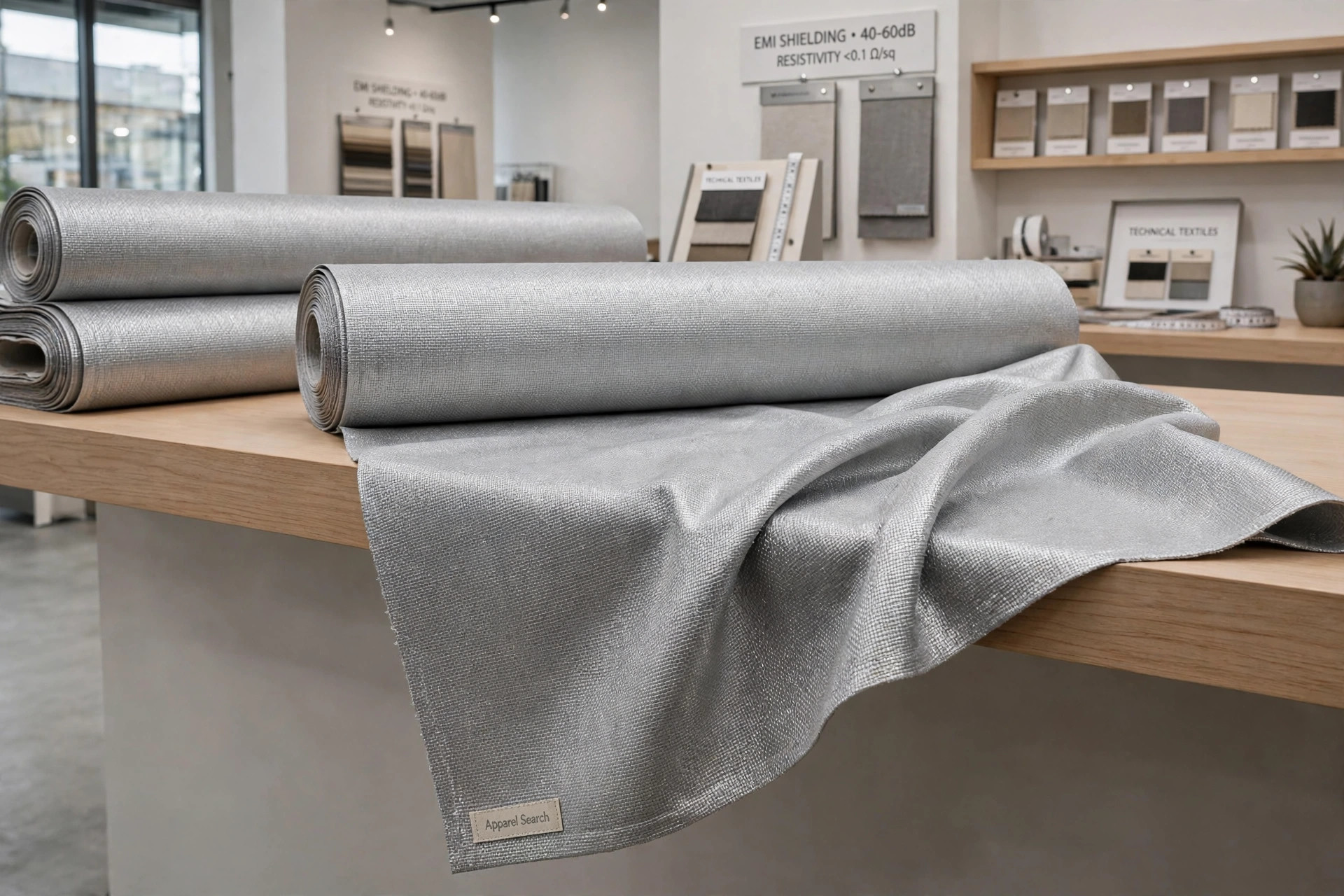
Electromagnetic shielding is the practice of reducing the electromagnetic field in a space by blocking the field with barriers made of conductive or magnetic materials. In fabric form, the barrier is a textile: a base cloth of polyester, nylon or cotton is made conductive either by weaving metal or metal-wrapped fibers into its structure, or - more commonly for shielding cloth - by coating the finished fabric with metals such as silver, nickel or copper through electroless plating. The result looks and handles like an ordinary lightweight fabric, folds and sews like one, but behaves electrically like a continuous metal sheet: radio-frequency energy striking it is reflected and absorbed rather than passing through, and the shielding is measured in decibels of attenuation across a stated frequency range.
The family covers more than flat cloth. The supplier listed below describes the standard product set of the trade: conductive fabric itself, conductive sponge and conductive elastomer for gaskets that seal the seams and doors of shielded enclosures, conductive adhesive tape for joining and grounding, conductive nickel mesh, conductive non-woven fabric, silver fabric, and finished EMI shielding pouches - the small metallized bags and cases that isolate phones, cards and electronic components. Each form answers the same problem at a different point: a shield is only as good as its weakest opening, so enclosure cloth, gasket and tape are normally specified together.
Where Shielding Fabrics Are Used
The applications named in the listed supplier's record span the field: the electronic industry uses shielding cloth in enclosures, test chambers and cable and component shielding; communication equipment uses it where signals must be contained or excluded; medical instruments use it to protect sensitive measurement from interference and to protect patients and staff in controlled environments; aerospace and the defence industry use lightweight fabric shielding where a metal enclosure would be too heavy or rigid. Clothing is its own branch of the trade - the same record lists silver fiber health clothes, garments knitted or woven with silver-coated yarns and sold for everyday wear, and protective work clothing is made from shielding cloth for people who work around strong radio-frequency sources.
Specifying a shielding fabric means asking for test numbers, not adjectives: attenuation in decibels at the frequencies that matter to the application, surface resistivity, and how the performance survives washing, abrasion and flexing, since a coating that cracks loses continuity and with it the shield. Base fabric and metal system follow from the use - silver systems where conductivity and a textile hand matter most, nickel and copper systems where cost and durability lead, stainless steel conductive fabrics (the listed supplier offers one in 12 colors) where the metal is in the fiber itself. Around this directory, the related technical textiles sit in the same section - Smart Fabrics and Reflective Fabric among them - and the Fabric Directory hub covers the full section, with the Fabric Manufacturers Directory for the wider mill trade.
Using This Directory
The listing below is the complete set Apparel Search carries for this category: one supplier, China EMI Shielding Materials Co. Ltd. of China, linked to its own website, where its product range and coating services are described in its own words. No listing has been added or removed. A one-company category is normal for a speciality this narrow - shielding fabric is a technical textile bought by engineers against test data, not a fashion cloth bought by the season, and the number of mills coating or weaving it is small worldwide. When you enquire, state the frequency range, the attenuation target and the form you need - cloth, tape, gasket material or a finished pouch - because those four facts decide which product in the range can serve you and what it will cost. Thank you for taking the time to learn more about textiles with Apparel Search.
Electromagnetic Shielding Fabric Supplier Listed in This Directory
China EMI Shielding Materials Co. Ltd. (China)
The supplier's own description, as carried in this directory: they export soft electromagnetic shielding materials such as EMI/EMC shielding fabrics and special protective cloth material, and silver fiber health clothes. Their main products are conductive fabric, conductive sponge, conductive adhesive tape, EMI shielding gaskets, conductive nickel mesh, conductive non-woven fabric, conductive elastomer, silver fabric and EMI shielding pouches.
The same record describes stainless steel conductive fabric in 12 colors, states that the products can satisfy the technical requirements of electromagnetic compatibility in the electronic industry, clothing, medical instruments, communication, the war industry and aerospace, and offers silver, nickel and copper coating processing on a customer's own materials to requirement.
Common Questions
How does a fabric block electromagnetic fields?
By being conductive. Shielding cloth is woven with metal fibers or coated with silver, nickel or copper, so it behaves electrically like a thin metal sheet: radio-frequency energy is reflected and absorbed at the surface instead of passing through. Performance is quoted as attenuation in decibels at a stated frequency.
What products belong to the shielding fabric family?
Conductive fabric itself, plus the parts that complete a shield: conductive sponge and elastomer for enclosure gaskets, conductive adhesive tape, conductive nickel mesh, conductive non-woven fabric, silver fabric, and finished EMI shielding pouches for phones, cards and components - the range the listed supplier describes.
Which supplier is listed for electromagnetic shielding fabrics?
One company: China EMI Shielding Materials Co. Ltd. (China), linked to its own website. Its record also offers silver, nickel and copper coating processing on a customer's own materials, and stainless steel conductive fabric in 12 colors.
More to Explore - The Full Fabric Directory A-Z
- Electromagnetic Shielding Fabrics
- Embroidered Fabric
- Damask Fabric Factory
- Denim Fabric Directory
- Dobby Textile Factory
- Double Knit Fabric Factories
- Drill Fabric Mills
- Duck Fabric Directory
- Dyed Fabric Manufacturers
- Canvas Fabric Directory
- Carbon Fabric
- Chambray Fabric Directory
- Chenille Fabric Mills
- Chiffon Fabric Directory
- Circular Knit Fabric Mills
- Corduroy Fabric Mills
- Cotton Fabric Mills
- Crepe Fabric Directory
- Crochet Fabric Mills
- Bamboo Fabric Mill Directory
- Basalt Fabric
- Boucle Fabric Mills
- Breathable Knit Fabric
- Broadcloth Fabric Directory
- Brocade Fabric Mills
- Burlettes Fabric Mills
- About Fabrics
- About Knitted Fabrics
- About Woven Fabrics
- Antibacterial Fabric Mills
- Fabric Mills - Fabric Section Hub
Looking for Fabric Mills and Suppliers?
Return to the Fabric Directory hub for the full fabric section, or browse the Fabric Manufacturers Directory page for the wider mill trade.