Ringspun Cotton Mills
Mills that spin cotton the ring-spun way produce yarn that is finer, stronger and softer than basic open-end yarn. This directory lists ring-spun cotton mills and explains what to ask a spinning mill before you buy.
What Ring Spinning Does to Cotton
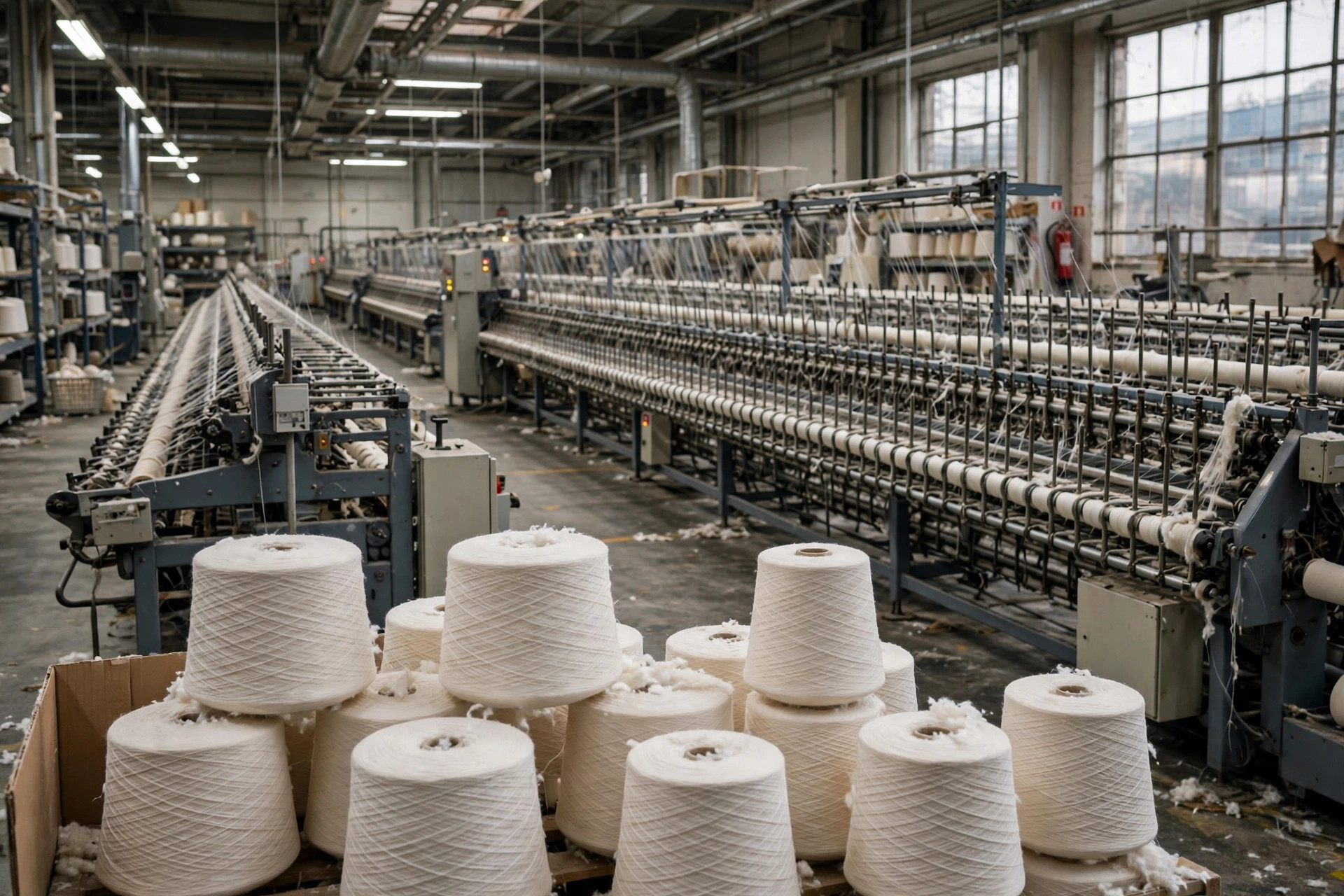
Ring spinning is a yarn-making process, not a fabric-making process, and that distinction shapes everything on this page. In ring spinning, a roving of cotton fibres is drawn out, then continuously twisted and thinned as it passes through a small ring and traveller system, winding the finished yarn onto a bobbin. The continuous twisting aligns the fibres into a tight helix, so the short hairs of cotton are worked into the yarn body rather than left loose. The result is a yarn with a smoother surface, greater strength for its count, and a noticeably softer hand than yarn spun by faster methods.
The trade-off is time and cost. Ring-spun yarn takes longer to produce than rotor or open-end yarn, because ring spinning involves extra processing steps. Mills accept that cost because the yarn commands a premium in products where feel and durability are selling points: quality T-shirts, underwear, bed linens, towels and better shirting. When a mill describes its yarn as ring-spun, buyers should still ask about the cotton grade, whether the yarn is carded or combed, and the count range offered, because ring spinning alone does not guarantee a fine result if the raw cotton is short or uneven.
Carded, Combed and Compact Ring-Spun Yarns
Within ring spinning there are meaningful grades. Carded ring-spun yarn is cleaned and aligned but retains more short fibres, giving a slightly more rustic surface at a lower cost. Combed yarn goes through an additional combing stage that removes short fibres and impurities, leaving longer, more parallel fibres that spin into a smoother, more even and more lustrous yarn, the usual choice for premium knitwear. Compact spinning is a refinement of the ring frame that condenses the fibre strand before twisting, reducing hairiness further and improving strength and abrasion resistance, which helps fabrics pill less and hold their appearance longer.
Mills also offer specialised ring-spun yarns for particular effects. Slub yarns vary in thickness along their length for a textured, casual look. Core-spun yarns wrap cotton around an elastane or polyester core for stretch or strength. Mercerised and gassed yarns are treated to increase lustre and smoothness. The listings below include mills describing exactly these kinds of ranges, from high-volume producers of knitting and weaving yarns to specialists offering dozens of counts in combed and carded quality. Matching the yarn type to the fabric you intend to knit or weave is the single most useful conversation to have with a mill.
How to Evaluate a Spinning Mill
Serious buyers look past the headline capacity and ask about consistency. Yarn evenness, strength and cleanliness determine how a fabric knits, how often a loom stops, and how the finished cloth dyes. Ask which count range the mill runs daily, what its quality testing covers, and whether it can supply the same specification reliably across repeat orders. A mill running modern, automated equipment with laboratory testing will usually produce fewer surprises in production than one competing on price alone. Certifications for the cotton source, and clear information about fibre origin, matter increasingly to brands making claims about their supply chain.
Also consider what happens after the yarn leaves the mill. Packaging, cone size and winding quality affect efficiency in knitting and weaving, and export experience matters when a mill ships internationally: documentation, lead times and communication in your working language all reduce friction. Start with a trial quantity, knit or weave it on your own equipment, wash and dye it as the finished product requires, and only then commit to volume. The mills listed here present themselves as experienced exporters with established production, which makes them reasonable starting points for that evaluation process.
Using This Mills Directory
The four listings below cover two large-scale yarn producers serving the knitting and weaving industries, a long-established Indian spinning group, and a vertically focused yarn producer exporting most of its output. Each note summarises the mill's spinning capacity, count range and product focus, so you can shortlist mills that match your yarn requirement before visiting their own websites for current contact details and specifications.
If your requirement is fabric rather than yarn, remember that many spinning mills sell yarn to knitters and weavers rather than finished cloth, so you may need a fabric mill as the next step. The wholesalers and stores pages in this section cover the distribution side, and the yarn manufacturers directory on Apparel Search widens the field further. Keeping the chain clear in your mind, fibre to yarn to fabric to garment, helps you approach the right kind of company at each stage and write a specification each supplier can actually answer.
Ringspun Cotton Mills Listed Here
Four mills are listed below, each with a short note on its capacity, yarn range and product focus.
Fountain Set Holdings Limited
Operates several cotton spinning mills in China and is one of the largest buyers of ring-spun cotton yarn, with spinning operations including mills in Jiangmen, Shaoguan and Kaiping.
Frontier Spinning Mills
One of the largest producers of spun yarns for the knitting and weaving industries, using automated technology across its yarn manufacturing process with a focus on product quality and customer service.
Sri Kannapiran Mills Limited
Flagship company of the KG Group, incorporated in 1946, producing 100% cotton yarn in ring-spun and open-end units across a wide count range in combed and carded quality, plus specialised yarns for domestic and export markets.
Usman Limited
Established in 1989 at Hub Industrial Estate, producing ring-spun knitting and weaving yarns in 100% cotton carded counts, with the great majority of its production going to export markets.
Common Questions
What is the difference between ring-spun and open-end cotton yarn?
Ring-spun yarn is made by continuously twisting and thinning the fibre strand, which takes longer but produces a finer, stronger and softer yarn. Open-end (rotor) spinning is faster and more economical, but the yarn is generally coarser and less soft, so it is used where cost matters more than hand feel.
Is combed ring-spun cotton better than carded?
Combed ring-spun yarn has had short fibres and impurities removed before spinning, so it is smoother, more even and more lustrous than carded yarn. It costs more, and it suits premium T-shirts, underwear and linens, while carded ring-spun yarn is a sensible choice for everyday products where a slightly more rustic surface is acceptable.
What should I tell a mill when requesting ring-spun yarn?
State the fibre (100% cotton or a blend), whether you want carded or combed yarn, the yarn count, the end use (knitting or weaving), the quantity and any requirements for dyeing, certification or special effects such as slub or core-spun construction. A complete specification gets you an accurate quotation and a usable sample.
More to Explore
Looking for Fabric Mills and Suppliers?
To widen the search beyond ring-spun producers, browse the fabric mills directory on Apparel Search or start again from the Fabric Search hub.