Ringspun Cotton Guide
Ringspun cotton starts at the yarn stage: cotton fibres are continuously twisted and thinned into a finer, stronger yarn, and fabrics made from it feel softer and wear better. This hub explains the process and links the mills, wholesalers and stores in this section.
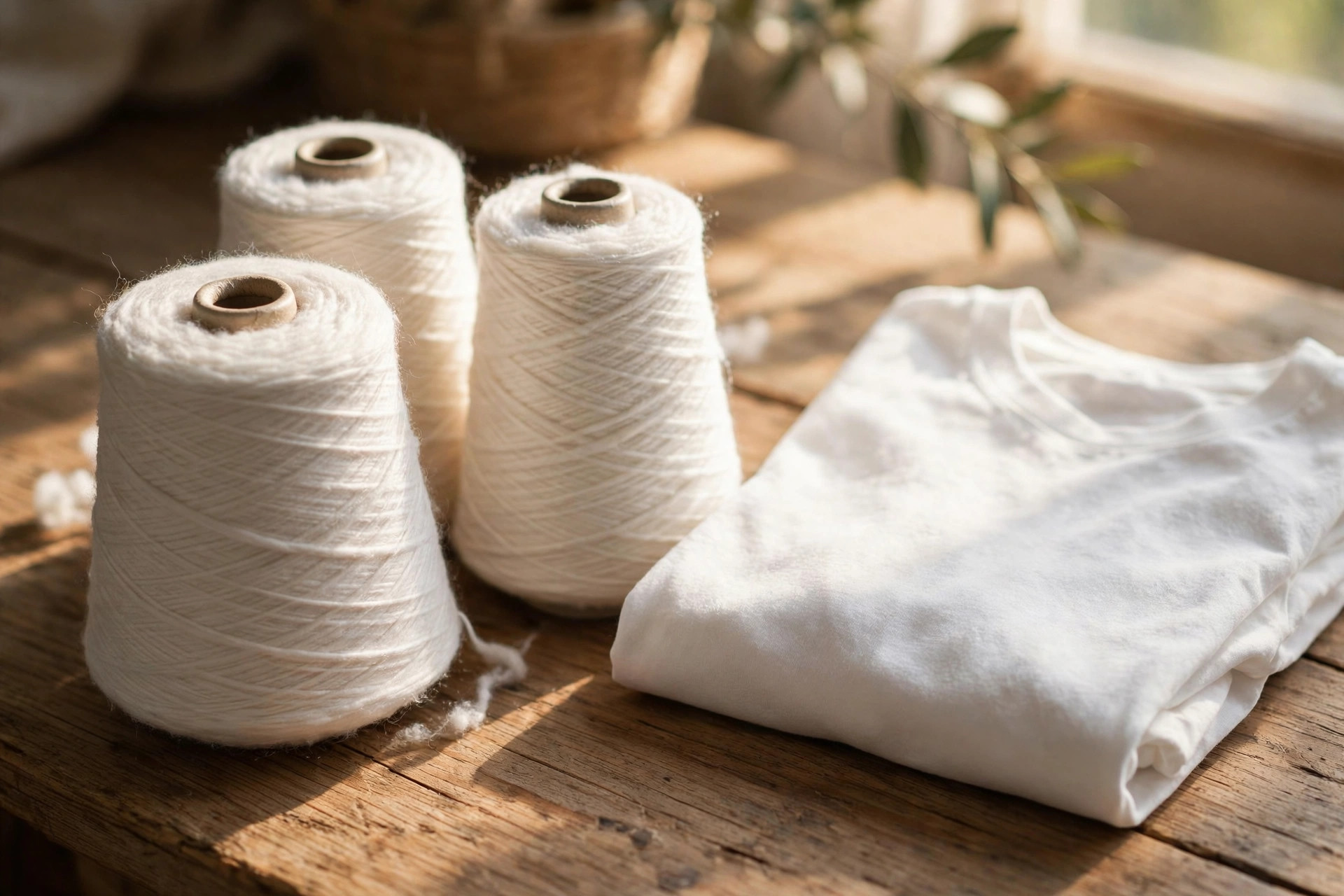
Ringspun Is About the Yarn, Not the Fabric
When discussing ringspun cotton, the first point to understand is that making cotton ringspun happens during the yarn-making process, not during the fabric-making process. When you buy a ringspun cotton T-shirt, it means the fabric of that shirt was knitted or woven from ringspun yarn. The softness and strength were built in before the fabric existed, at the spinning mill, which is why this section is organised around mills and yarn suppliers as well as the wholesalers and stores that handle the resulting fabrics and garments.
There are three main commercial methods of spinning yarn: ring spun, rotor spun and friction spun, and each produces different results in the yarn. Ring spinning is the oldest of the three and remains the benchmark for quality. The spinning process draws the cotton fibres out into a fine strand and twists them continuously, producing longer, stronger strands. Because the twist makes the short hairs of cotton stand into the yarn body rather than sitting loosely on the surface, ring-spun yarn is stronger and has a significantly softer hand than yarn from faster, high-volume methods.
Why Ring-Spun Yarn Feels Softer and Lasts Longer
The original guide on this page put it plainly: ring-spun yarn is a superior cotton yarn that results in a softer, more durable fabric than open-end yarn. The time-honoured process of ring spinning requires more processing steps than open-end yarn production, and ring-spun yarn takes considerably longer to produce. Those additional steps involve continuously twisting and narrowing the rope of cotton fibres, and the continuous fibre helix, or twist, gives the yarn its extra softness and strength. Garments made from it feel softer, and they keep feeling softer wash after wash, because the fibres are locked together rather than shedding from a loose surface.
Durability follows from the same structure. A tightly twisted yarn resists abrasion and pilling better, seams hold with less fraying, and fine counts stay even enough to knit smooth jersey without a fuzzy halo. That is why ring-spun cotton dominates better T-shirts, polo shirts, underwear, socks, baby clothing, bed sheets and towels, all products where the fabric touches skin and is washed often. It is also why ring-spun garments cost more: slower production, and often better cotton and an extra combing stage, are real costs a manufacturer has to recover in the price.
Ring-Spun, Carded and Combed: Reading a Label
A label that says ringspun tells you the spinning method, but not the whole quality story. Carded ring-spun cotton is cleaned and aligned but keeps more of its short fibres, giving good softness at a moderate price. Combed ring-spun cotton has passed through an additional combing stage that removes short fibres and remaining impurities, so the yarn is smoother, stronger and more even, and the fabric surface looks cleaner and prints better. When a premium T-shirt feels noticeably smoother than a standard one, combed ring-spun yarn is usually the reason, especially in a fine count with a tight knit.
Weight and construction complete the picture. Two shirts can both be combed ring-spun cotton and still feel very different if one is a lightweight jersey and the other a heavyweight knit. Check the fabric weight, whether the garment is pre-shrunk, and how it is finished, alongside the yarn description. For fabric buyers, the equivalent discipline is to specify the yarn type, count and fabric construction together rather than asking for ringspun fabric in the abstract, because mills and knitters work from yarn specifications, and a clear specification is what turns a marketing word into a repeatable product.
Exploring This Ringspun Cotton Section
This hub links the three working pages of the section. The mills page lists spinning companies producing ring-spun cotton yarn, including large producers serving the knitting and weaving industries and specialists offering wide count ranges. The wholesalers page covers distributors and yarn suppliers who trade ring-spun yarn and fabric in quantity, useful if you buy for production rather than for a single project. The stores page is honest about its limits: dedicated retail listings for ringspun fabric are scarce, so it points you toward jersey and knit fabric retailers, where ring-spun cotton jersey is most often sold by the yard.
However you arrive here, as a shopper comparing T-shirts or as a professional sourcing yarn, the underlying lesson is the same. Softness in cotton is manufactured, not accidental: it comes from fibre selection, combing, and the slow, continuous twist of ring spinning. Once you understand that chain, labels become easier to judge, supplier conversations become more precise, and the difference between a shirt that stays soft for years and one that roughens in a season stops being a mystery. Use the pages in this section to follow the chain from the spinning mill to the finished fabric.
Photos

Looking for Fabric Mills and Suppliers?
For other fibres and fabric types, return to the Fabric Search hub or browse the broader Apparel Search fabric directory.